

Security window film for glass
Security window film is a multilayer polyester film bonded to the inside of a glass pane. If the glass is struck and cracks, the film holds the pieces together as one sheet. It does not make glass unbreakable and is not bulletproof. Glacier supplies security, safety and anti-graffiti film to tint shops and installers.
Glacier Manufacturing, wholesale window film supplier to tint shops and installers, shipped nationwide.
How security film works
Glass is strong against pushing but brittle when struck. When a pane breaks, the danger is the fragments: they fall out of the frame, scatter and cut. Security film changes what happens after the crack, not whether the crack happens.
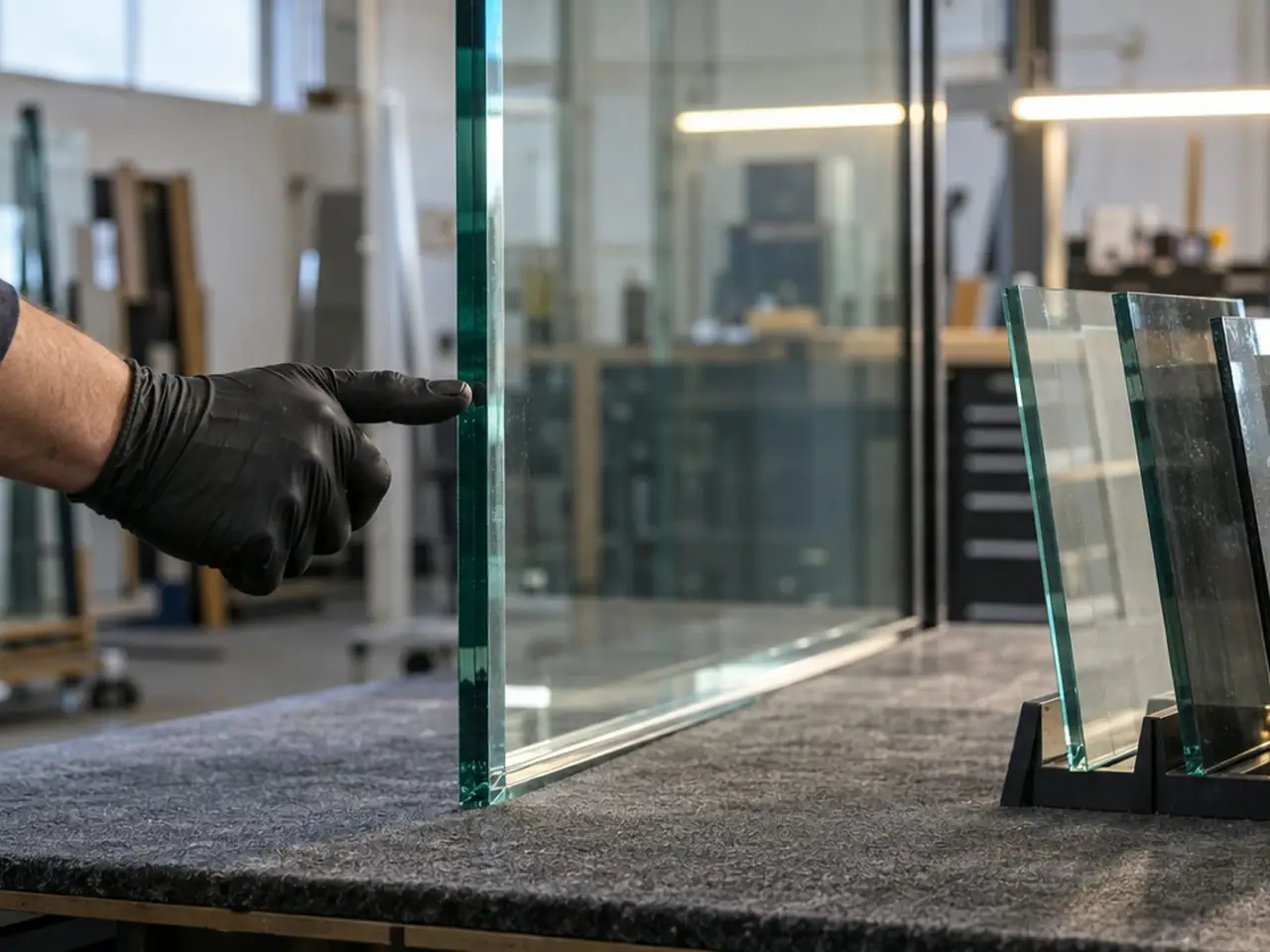
The film is a stack of thin polyester layers laminated together, with a pressure-sensitive adhesive on one side. The adhesive bonds the film to the glass. When the glass cracks, the adhesive keeps the fragments stuck to the film, and the tough polyester layers stretch and hold them as a single sheet. This is the held-glass concept: the pane may be cracked all over, but it stays in one piece and, depending on how it is installed, may stay in the opening.
The energy of an impact is spread across the film and the glass instead of ending in loose shards. How well that works depends on the film, the glass, the frame and how the film is attached. There is no single number that applies to every window.
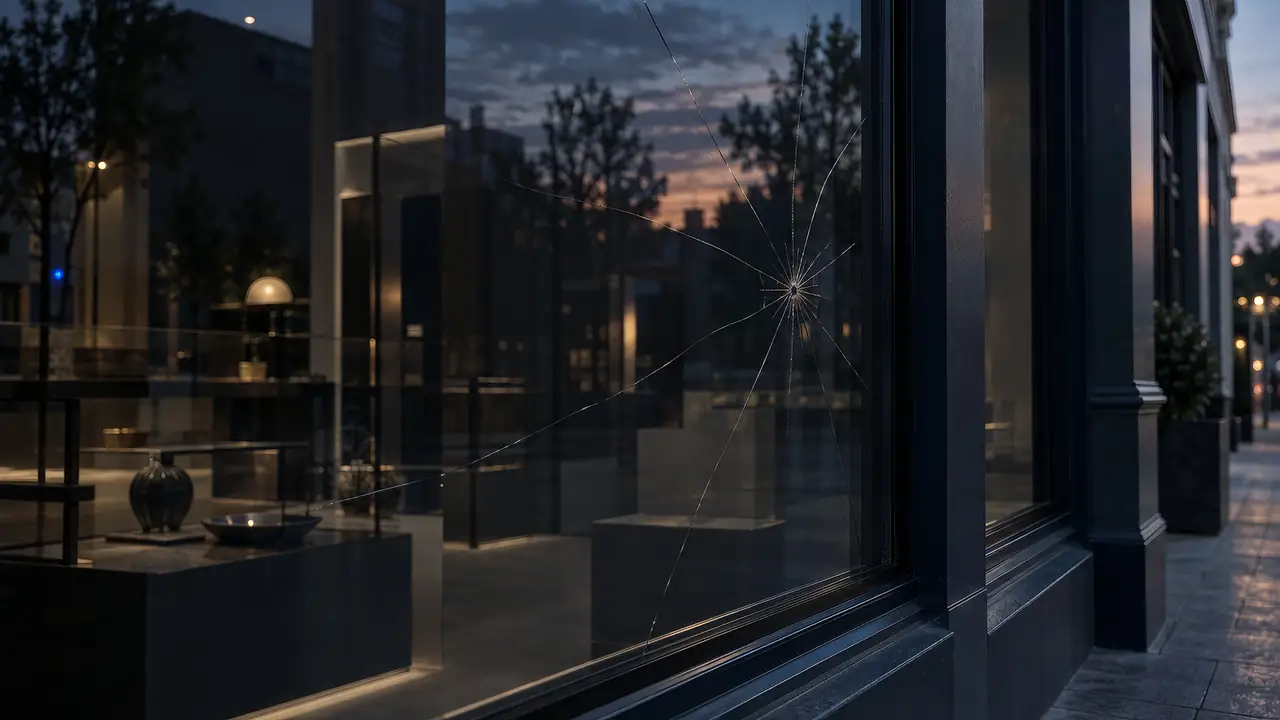
- Glass pane The existing window. It still cracks when hit hard enough.
- Pressure-sensitive adhesive Bonds the film to the inside face of the glass so fragments stay stuck to it.
- Polyester film layers Tough layers laminated together. They stretch and hold the cracked glass as one sheet.
- Scratch-resistant surface A protective face on the room side that stands up to cleaning and everyday contact.
See the idea in motion
The videos on this page are illustrations made to show the process. They are not footage of a Glacier job, not test footage, and do not show results for any specific film, glass or installation.
Anchoring options, explained simply
How the film meets the frame matters as much as the film itself. There are four common approaches, and the right one depends on what the job needs to do.
- Daylight application: the film covers the visible glass and stops a small gap short of the frame. It is the simplest install and keeps fragments together, but the cracked pane can still fall out of the frame as one sheet.
- Wet-glaze attachment: the film is run to the frame and bonded there with a structural sealant. This helps the whole pane act as one unit and stay in the opening longer.
- Dry-glaze attachment: the film edge is held to the frame with a preformed gasket or adhesive strip instead of wet sealant. It is a cleaner install, and the system maker's instructions need to be followed closely.
- Mechanical attachment: a metal batten, plate or channel is fastened to the frame over the film edge. It adds retention without wet sealant, but the frame, fasteners and glass all have to be suitable.
Film alone and film with attachment are different levels of protection, and attachment can be an install consideration. Your installer and your Glacier rep can talk through which fits the window and the goal.

What security film is designed to help with
Security film is a layer of protection, not a guarantee. It is designed to help in situations like these, with results depending on the film, glass, frame and installation:
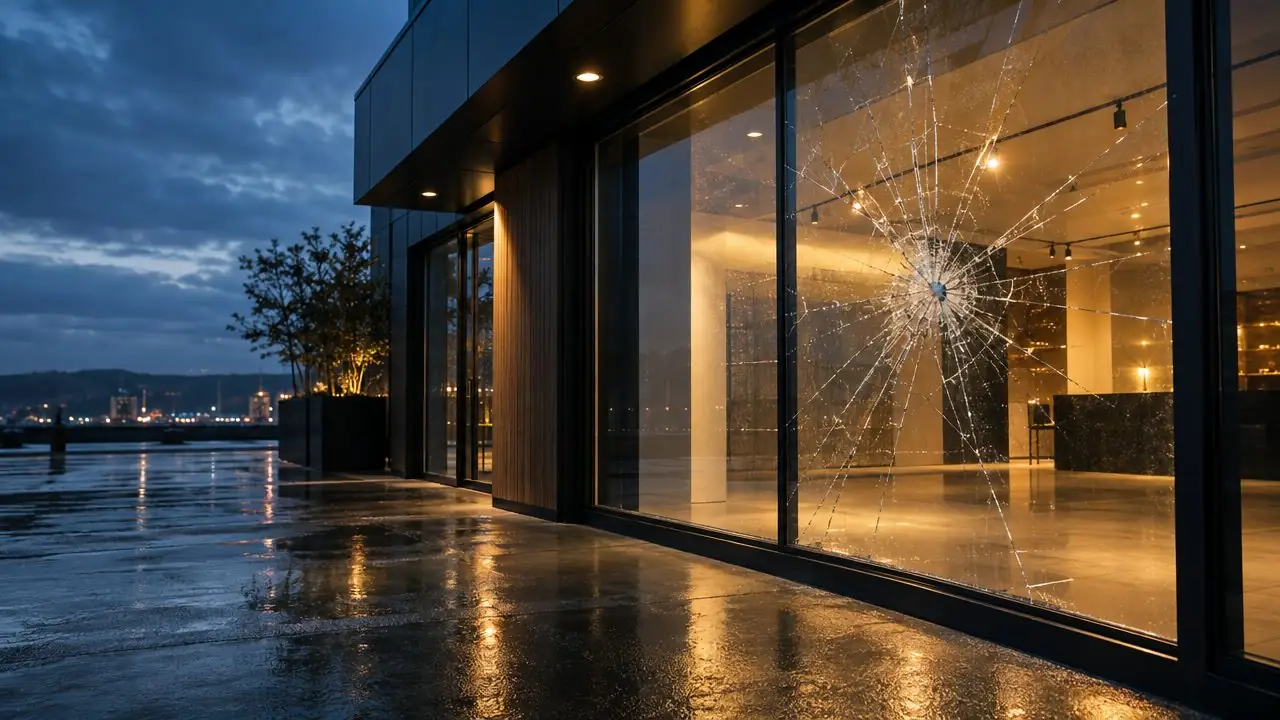
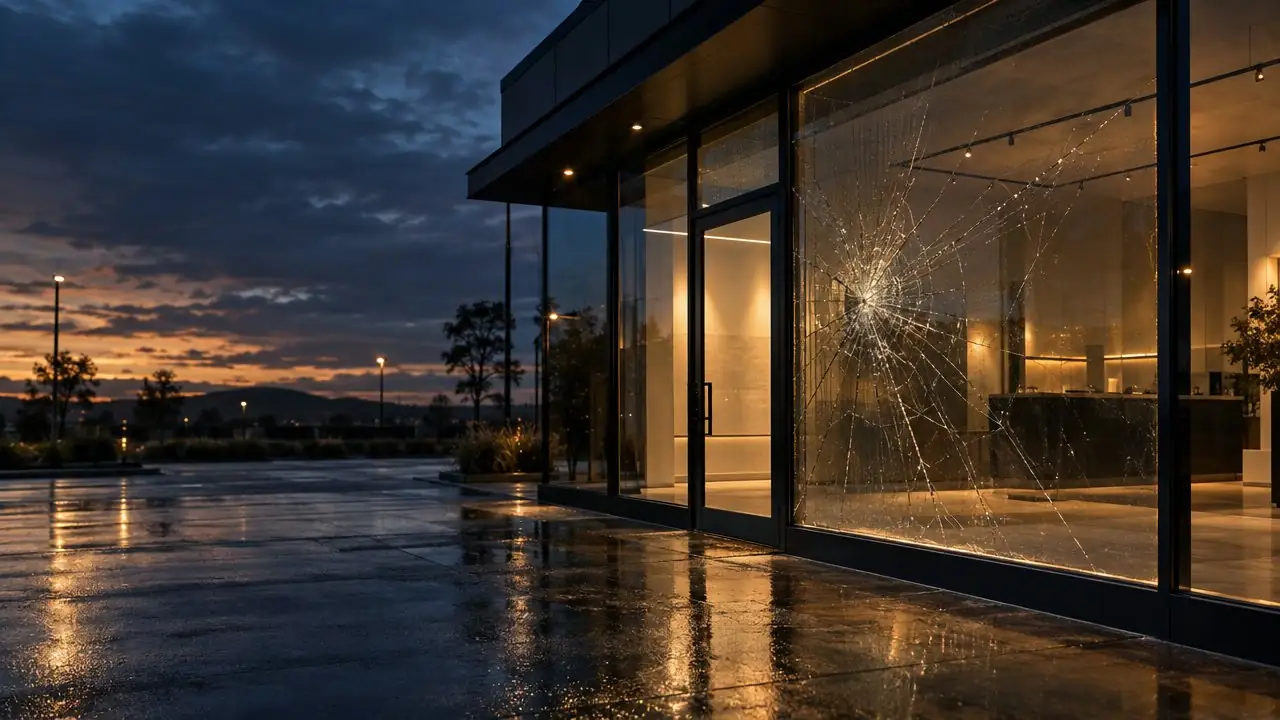
Smash-and-grab
A struck window that stays together in one piece takes more effort to get through than one that falls away in shards. That extra effort can mean extra time for alarms, staff or people nearby to react.
Forced-entry delay
Film, especially thicker film with frame attachment, is meant to slow an attacker rather than stop one. It can buy time. It does not make an opening secure.
Storm and seismic debris
In severe weather or an earthquake, glass can fail from wind-borne debris or building movement. Film is meant to keep fragments together rather than flying through the room. It is not a substitute for products tested and rated for hurricane or impact zones.
Accidental breakage
A person walking into a glass door, a ball in a gym, a dropped load: accidents can break glass near people. Held fragments reduce the risk of cuts.
Vandalism
Thrown objects and tools can crack glass in seconds. Film helps hold the pane together, and for scratching and tagging, a sacrificial anti-graffiti layer is a better fit.
Schools, clinics, retail, government, offices and homes
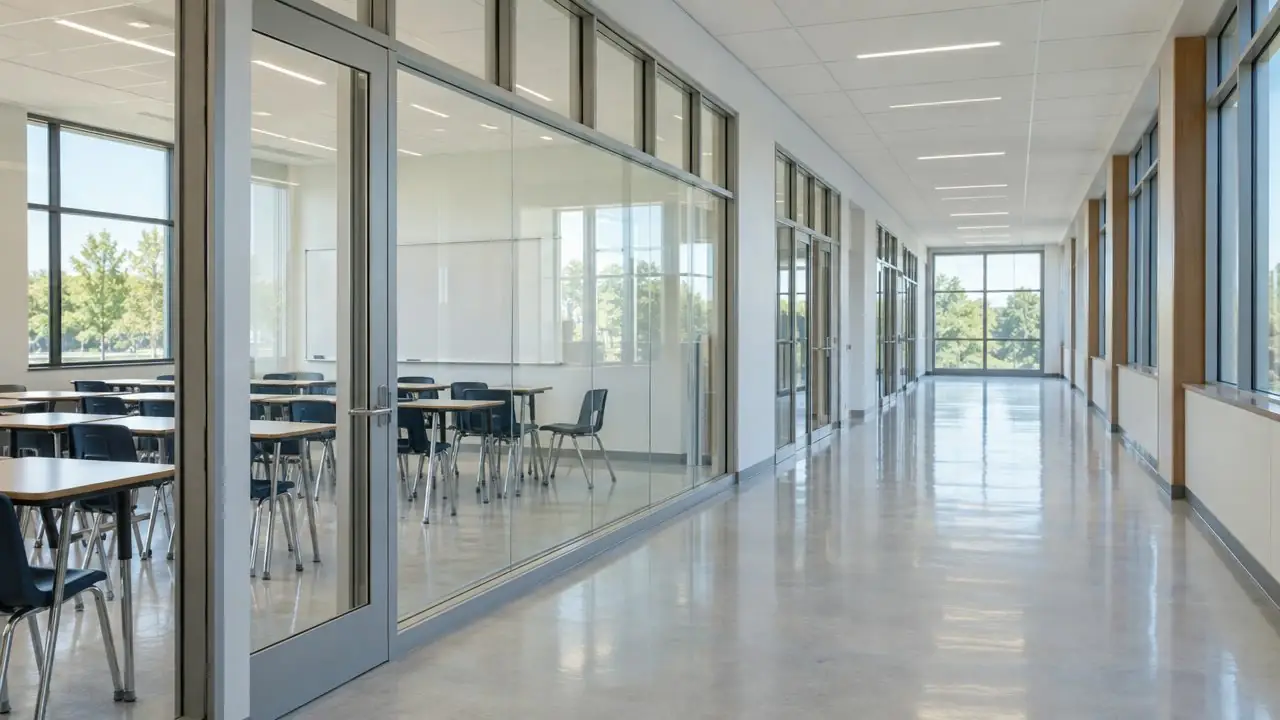
Anywhere people and large glass share a space: classroom and corridor glass, clinic and waiting-room walls, storefronts and doors, courthouse and lobby windows, office entries, and sliding doors and sidelights at home.



What security film does not do
Being clear about limits is part of choosing film well.
- It does not stop glass from breaking.
- It is not bulletproof, blast-proof or a ballistic product, and Glacier does not describe it that way.
- It is not a substitute for rated laminated security glazing where a project or code requires that glazing.
- It does not make a window impossible to break through. A determined attacker with time and tools can get through filmed glass.
- Performance depends on the glass type and condition, the frame and glazing bead, and how the film is attached. A film that works on one window may behave differently on another.
- Some insulated, coated, tempered or laminated glass units limit or exclude film. Check the glass or window maker's guidance before installing.
- Specific protective claims belong with the tested data for the exact assembly, not on a general web page. Ask your Glacier rep for the test data on the film you are specifying.
Film options
Ask your Glacier rep for current security film thicknesses and shades. Glacier also supplies safety film and anti-graffiti film to tint shops and installers. Ask your rep to confirm current availability, and which shade comes in which thickness, for your project.
- Security film thickness: ask your Glacier rep. A higher mil number means a thicker film.
- Security film shades: ask your Glacier rep for current options. Ask your rep what each shade looks like on your glass.
- Ask your Glacier rep about other film types.
- Safety film: aimed at keeping broken glass together to reduce injury. See safety film.
- Anti-graffiti film: a replaceable sacrificial layer that takes scratches and tags so the glass behind stays clean. See anti-graffiti film.
| Safety film | Security film (Glacier: ask your rep) | Anti-graffiti film | |
|---|---|---|---|
| Main job | Keep broken glass together to reduce injury | Hold glass in place longer against forced entry | Take scratches and tags instead of the glass |
| Thickness | Varies by film | Ask your Glacier rep | Sacrificial layer or stack |
| Attachment to frame | Often not needed | Often specified | Not applicable |
| Applied to | Interior face | Interior face | Exterior face |
| Typical places | Schools, clinics, public buildings | Storefronts, offices, banks, jewelers | Transit, retail, schools |
How security film is installed (overview for shops)
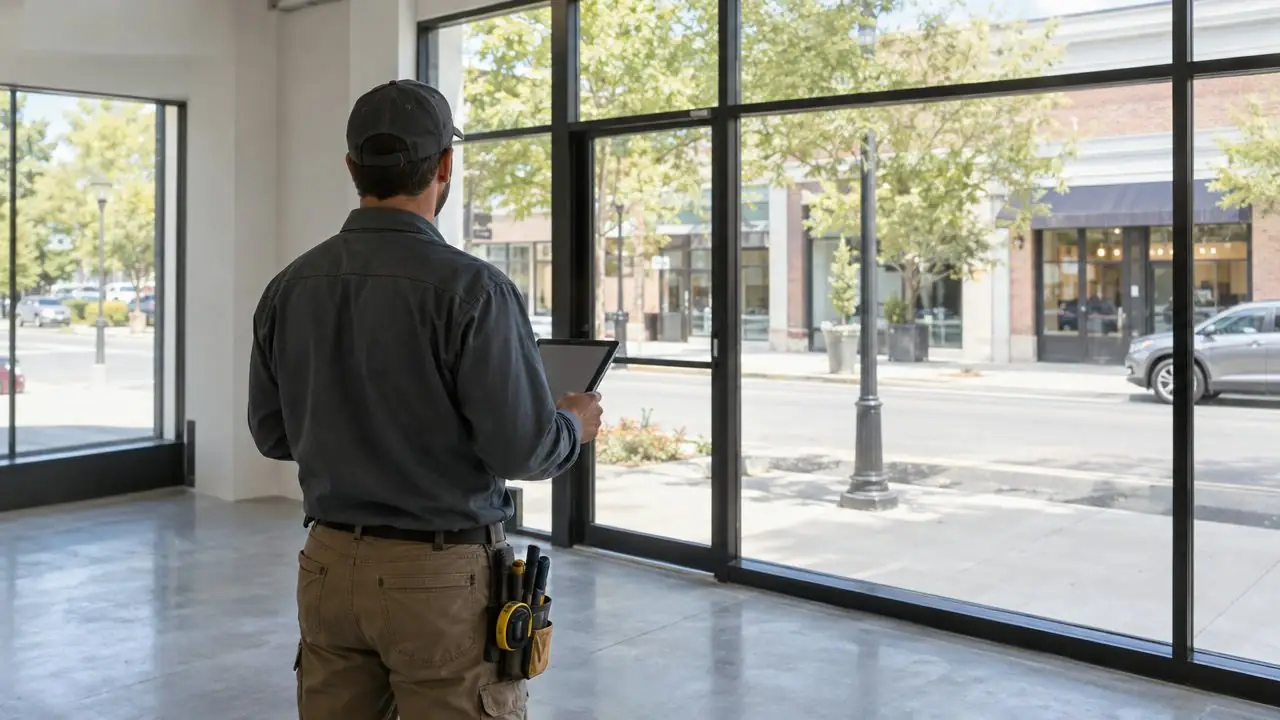
- Survey and prep Identify the glass type, check edges and seals for chips, note any glass or window warranty terms, and agree the scope: daylight, wet-glaze, dry-glaze or mechanical attachment.
- Surface preparation Scrape, clean and inspect the glass and frame. Contamination under the film and edge damage in the glass can cause problems later.
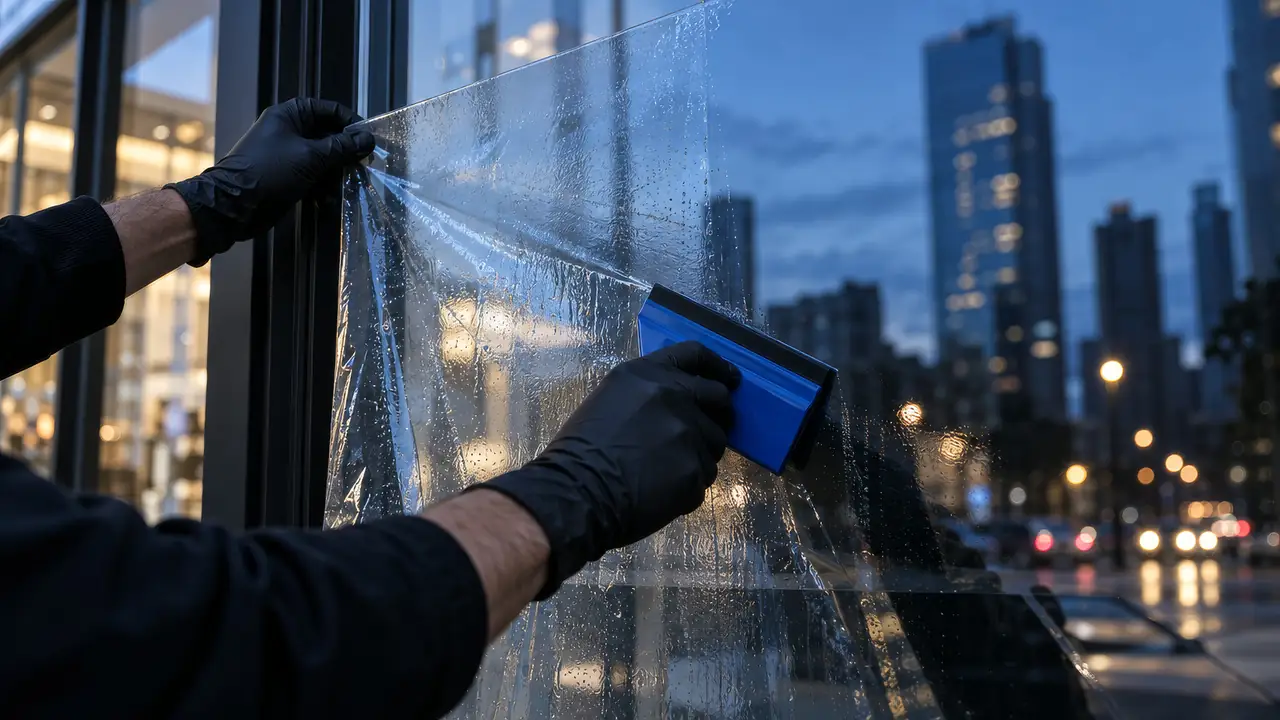
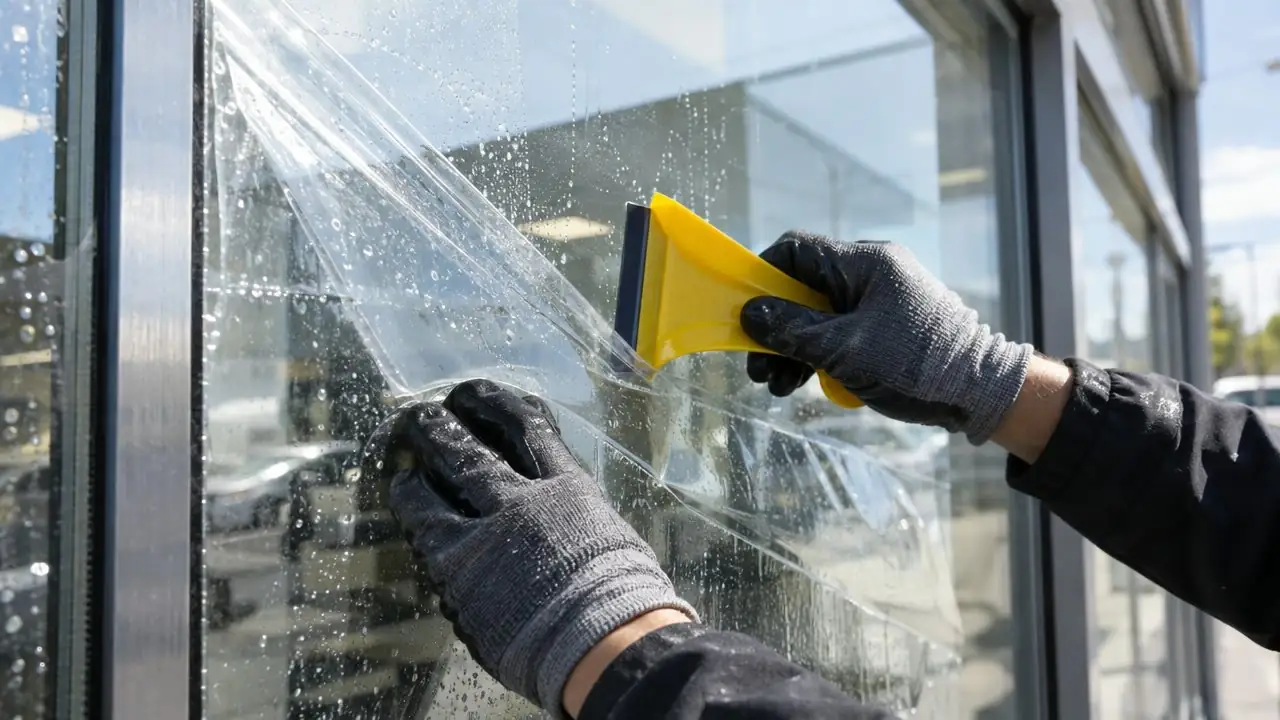
- Wet application Spray the glass and the adhesive side with slip solution, position the film and squeegee from the center outward to push out water and air. Thicker film is stiffer, so take extra care at corners and edges.
- Trim and edge Trim to a neat, consistent edge. Daylight installs leave a small gap at the frame. If attachment is specified, the film runs to the frame edge.
- Edge sealing and attachment (when specified) Wet-glaze sealant, a dry-glaze strip or a mechanical retention system is installed according to the system maker's instructions.
- Cure, clean and hand over Let the film cure as the installer advises, then clean with a soft cloth and an ammonia-free cleaner. Avoid razor blades and abrasives on the surface. Explain care and what to do if the glass breaks.
Pro installer checklist
- Glass identified: annealed, heat-strengthened, tempered, laminated, insulated, coated, any visible damage.
- Glass or window maker's film guidance checked and recorded.
- Existing warranties noted; the customer informed before work starts.
- Scope agreed in writing: daylight, wet-glaze, dry-glaze or mechanical attachment, per pane.
- Film and any attachment system ordered together, to the same spec.
- Test data requested from Glacier for the film being specified.
- Panes measured with film width and roll direction planned to limit seams.
- Frame, bead and sealant condition checked where attachment is specified.
- Prep, tools and slip solution ready; edges and corners planned before the film is cut.
- Clean, bubble-free, contamination-free finish checked in daylight.
- Care and replacement guidance handed to the customer. A filmed pane that has been struck should be assessed and replaced when needed.
How to sell security film
Security film sells best as a conversation about risk, not a spec sheet.
Consultation questions
- What are you most worried about: break-ins, accidents, storms, vandalism or all of them?
- Has there been an incident, an insurance conversation or a landlord request?
- Which panes matter most: doors, sidelights, street-facing display glass, low glass near people?
- Do you also want less glare, more privacy or less fading?
- Is there a schedule, alarm or monitoring system the film should work alongside?
- Who maintains the glass and frames, and who needs to approve changes?
Contractor bid checklist
- Pane list with sizes, glass types and condition.
- Film thickness and shade (ask your Glacier rep for current options).
- Attachment method per pane, with frame condition noted.
- Access: lifts, ladders, working hours, occupied or empty building.
- Prep and clean-up, glass repair or replacement exclusions.
- What is and is not claimed: no guarantee against break-in; results depend on glass, frame and attachment.
- Documents to attach: product data from Glacier for the film being specified.
Upsell with tint and privacy
A job that already involves the glass is a natural time to talk about how the glass will look and about privacy. Ask your Glacier rep for current security film shades, and agree the shade with the customer before ordering. Frosted or decorative privacy film suits offices and clinics. See privacy film and flat glass film.
Is security window film right for your shop?
It depends on what you want it to do and what is on the glass today. Security film can be worth considering if a window faces break-in risk, if broken glass near people is a worry, if storms or earthquakes are a regional concern, or if vandalism keeps costing you glass.
It is probably the wrong tool if the requirement is a rated forced-entry, ballistic or blast-resistant assembly. Those are glazing system decisions, often with a design professional involved.
A good installer will start with the glass, the frame and your goals, tell you what the film can and cannot do, and put the scope in writing.
What can security film do for a storefront?
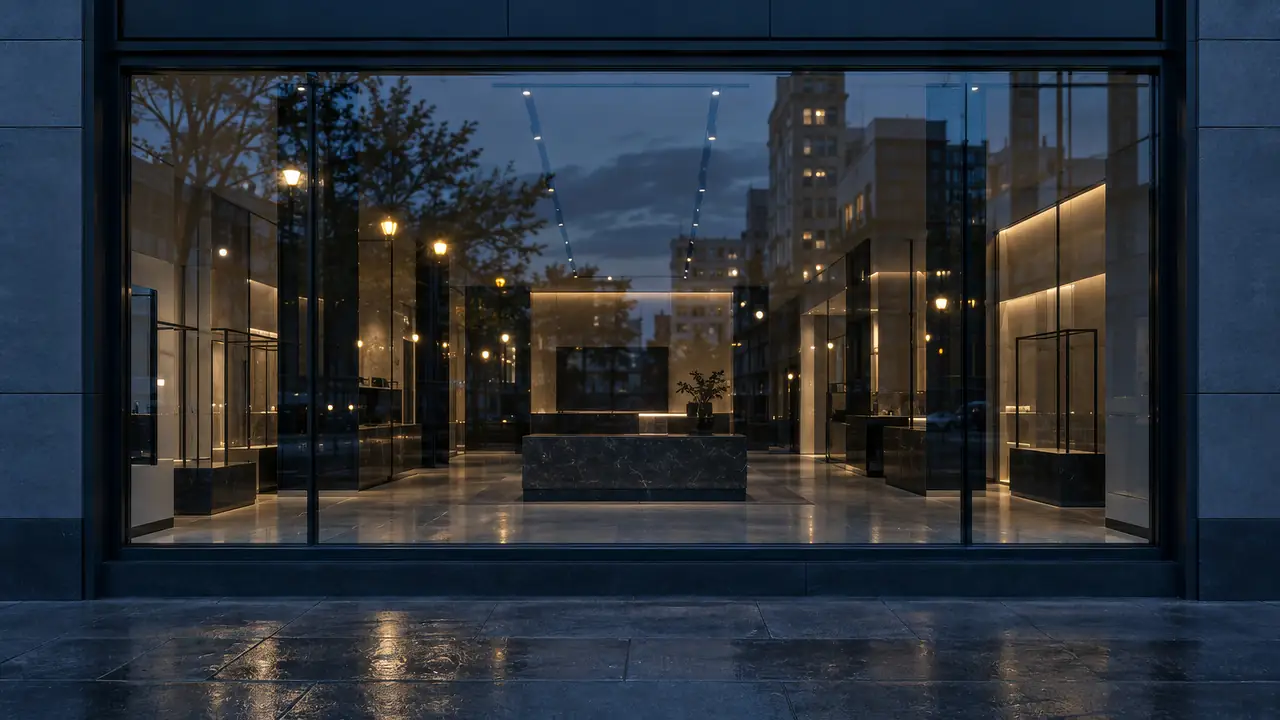
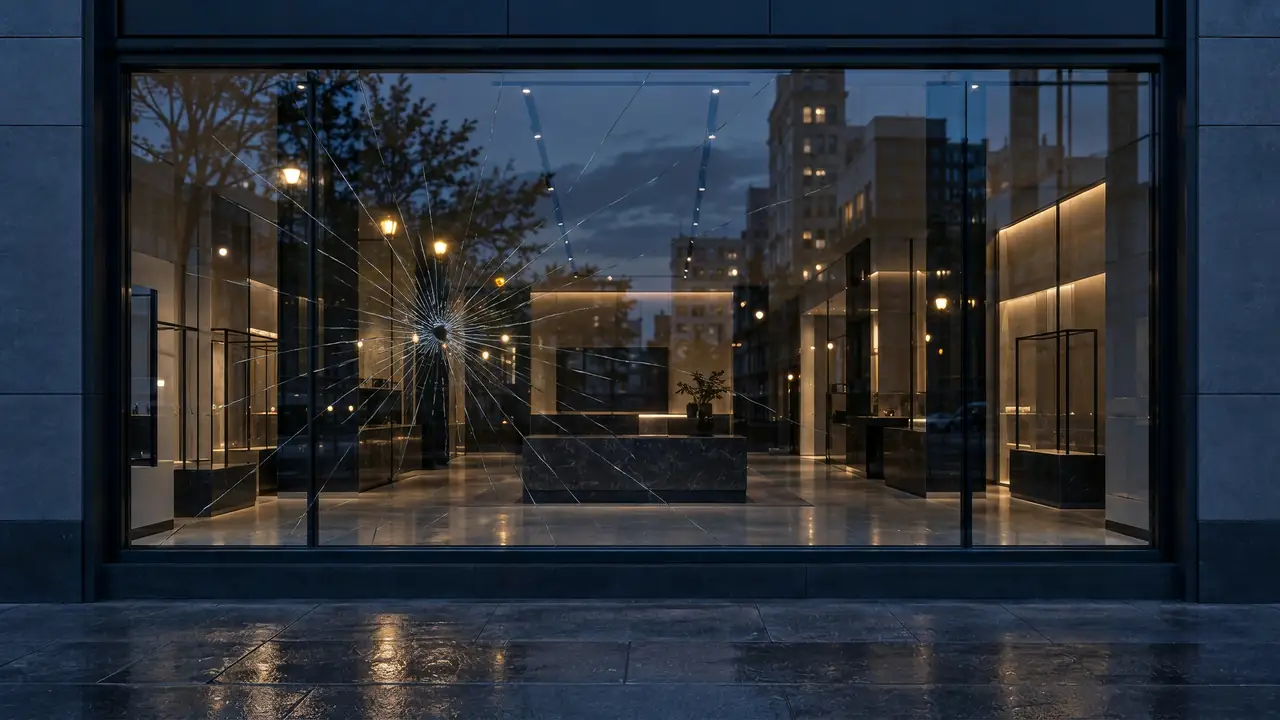
Large street-facing glass is a common smash-and-grab target. Film is designed to keep a struck pane together so it is harder and slower to get through, and so glass is less likely to land on staff, customers or merchandise. For storefronts that need more, an attachment system helps keep the pane in the frame.
Film can also help after a break-in attempt: a cracked pane that stays in place is easier to secure than an open hole, and cleanup is simpler. It does not replace alarms, lighting, locks or cameras.
How to choose a pro installer
- Ask how many security or safety film jobs they have done and whether they can describe a similar project.
- Ask what they will check on your glass and frame before quoting.
- Ask which attachment method they recommend and why.
- Ask what the product data says for your glass type, and ask for it in writing.
- Ask what is covered and excluded, and what happens if a pane breaks.
- Be wary of anyone who promises break-in-proof glass or leaves the scope vague.
Glacier sells to tint shops and installers, not directly to the public. Use the dealer finder and tell us where the job is.
Find a dealerWhich glass can take security film, and what about code?
Most flat glass can take film, but annealed glass is where film helps most. Heat-strengthened, tempered and laminated glass behave differently, and some insulated or coated units limit or exclude film. Always check with the glass or window maker.
Schools, healthcare and public buildings often have glazing requirements. Check local code and ask the authority having jurisdiction how film fits. Ask your Glacier rep for the test data on the film you are specifying.
Short glossary
- Mil
- One thousandth of an inch. Film thickness is measured in mils. A higher number means a thicker film, but thickness alone does not tell you how a window will perform.
- Annealed glass
- Ordinary flat glass that breaks into large, sharp pieces. It is where film helps most.
- Tempered glass
- Thermally toughened (fully tempered) glass that breaks into small pieces. It behaves differently, and glass makers may restrict film on it.
- Heat-strengthened glass
- A different product from fully tempered glass: roughly half as strong and it breaks into larger pieces. Check with the glass maker before filming it.
- Laminated glass
- Two or more sheets of glass bonded to an interlayer that holds fragments in place. It is a glazing product, not a film.
- Safety glazing
- Glass or glass-and-film products intended to reduce injury when broken. Safety-glazing standards apply to a tested product, not to film in general. Ask your Glacier rep for the test data on the film you are specifying.
- Daylight application
- Film applied to the visible glass only, stopping short of the frame.
- Wet-glaze
- Film bonded to the frame with a structural sealant.
- Dry-glaze
- Film edge held to the frame with a preformed gasket or strip instead of wet sealant.
- Mechanical attachment
- Film edge captured by a metal batten, plate or channel fastened to the frame.
- Sacrificial film
- A layer meant to be damaged and replaced instead of the glass.
Common questions
12 questions. Select one to open it.
What is security window film and how does it work?
Security window film is a tough polyester film, available clear or tinted, applied to the interior face of glass. When the glass is struck, the film holds the cracked pieces together as one sheet. It does not stop glass from breaking; it keeps the fragments in place so the pane is harder to get through.
Will security film stop a break-in?
Not by itself. It can slow a smash-and-grab by holding broken glass in place, but it does not make glass unbreakable. Results depend on the film, the glass, the frame and how the film is attached, so ask for the film maker's tested data for the exact assembly.
How do safety, security and anti-graffiti film differ?
Safety film keeps fragments off people, security film is thicker and aimed at slowing forced entry, and anti-graffiti film is a sacrificial layer that takes scratches and tags so the glass stays clean. Glacier supplies all three, so the first step is deciding which threat the job is about.
What security film thicknesses and styles does Glacier offer?
Ask your Glacier rep for current security film thicknesses and shades. For widths and current availability, see the spec table or ask your Glacier rep.
Does thicker security film always protect more?
Generally, thicker film holds glass together longer, but it is not the only factor. The glass type, frame and attachment method all matter. Thicker film is also stiffer and takes more care at corners and edges, so choose thickness based on the threat and what the film maker has tested.
What does anchoring security film to the frame mean?
Anchoring attaches the film to the window frame so the whole sheet stays in the opening instead of falling out. Installers may use wet-glaze adhesive, dry-glaze or mechanical retention. Film alone and film plus anchoring are different levels of protection, so decide which the job needs before quoting.
What glass can security film go on?
Flat glass can take film, and annealed glass is where film helps most. Laminated, tempered, insulated and coated units behave differently, and some glass makers restrict film on them. Always check the glass and window maker's guidance and warranty before installing.
How should shops prep and install security film?
Scrape, clean and inspect the glass for edge damage first. Apply the film wet and squeegee from the center out, then trim with a small gap at the frame, or run to the frame edge when anchoring is specified. Thicker film is stiffer, so take extra care at corners.
How do you clean glass with security film?
After the film cures as your installer advises, clean with a soft cloth and a mild ammonia-free cleaner, and keep razor blades and abrasives off the surface. On anchored jobs, ask the customer or facility staff to look over the glass edges and frame attachment from time to time.
Does security film meet building code or school glazing rules?
Code and glazing requirements depend on the project and location. Check local code, ask the authority having jurisdiction, and ask the film maker for test data covering your glass type. Do not assume film alone satisfies a requirement. Glacier does not give code advice.
Does security film work on car windows?
Safety and security films are mainly made for buildings. Vehicle glass has different needs, including how it is shaped and mounted, so ask your installer or Glacier rep before using building security film on a vehicle.
How does a shop buy security film from Glacier?
Glacier supplies safety, security and anti-graffiti film and sells them by the roll to tint shops, installers and dealers, not to building owners. Request a quote with the film, thickness, width and quantity you need, or apply for a trade account. A building owner should ask a tint shop or installer.
What Glacier supplies to shops and installers
Glacier Manufacturing is a wholesale window film supplier to tint shops and installers, shipped nationwide. Glacier sells security film, safety film and anti-graffiti film by the roll to trade customers, alongside installation tools and shop equipment. Request a quote with the film, thickness, shade and quantity you need, apply for a trade account, or ask your rep for spec sheets and test data.
