
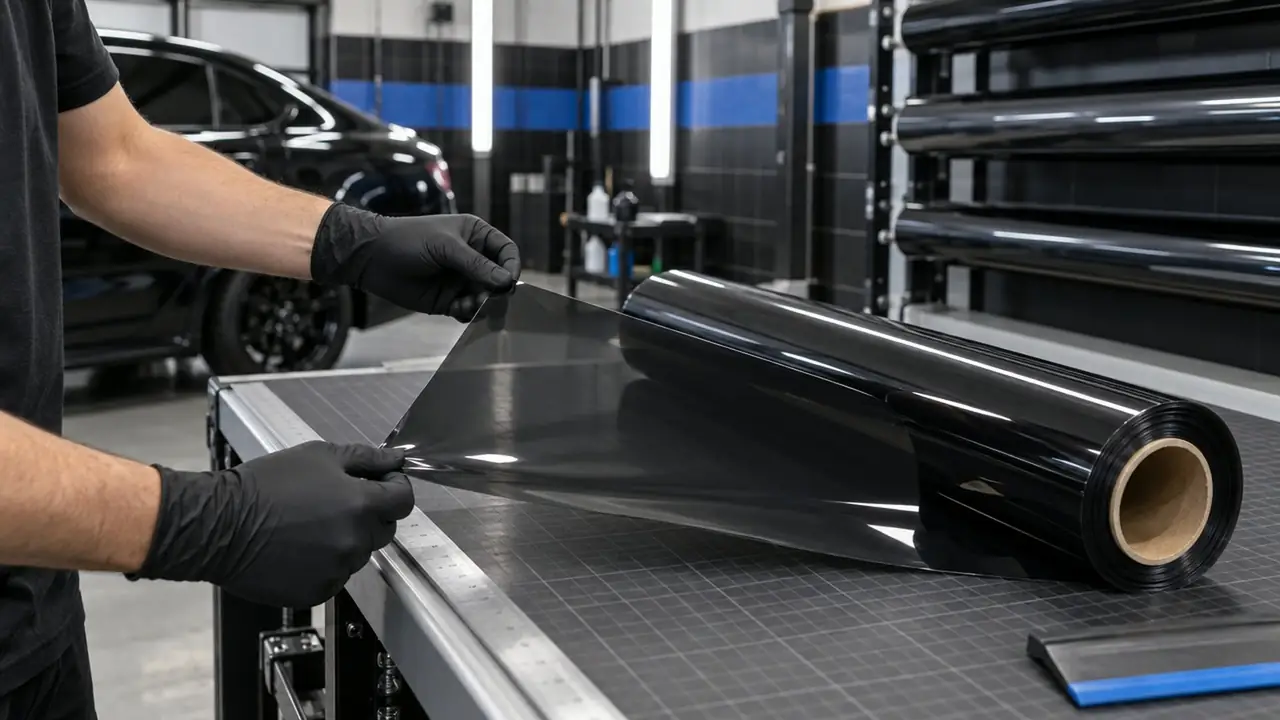
What to look for in a ceramic window film supplier
A good ceramic window film supplier gives you clear spec sheets, says how performance was measured, keeps your shades and widths available, supports your installers and puts claim handling in writing. This guide explains the spec terms and the questions tint shops should ask any ceramic film supplier, Glacier included.
What does "ceramic" window film actually mean?
Ceramic film uses non-metallic ceramic particles in place of dye or metal. That is the construction; it is not a performance guarantee.
Ask any supplier what the film is made of. A clear answer should say whether it is dyed, metalized or non-metallic, and whether any layer is carbon or a hybrid.
Which spec terms should a shop understand?
Five terms appear on most window film spec sheets. Knowing what each measures is the fastest way to read a sheet honestly.
| Term | What it measures | What to ask |
|---|---|---|
| VLT | Share of visible light that passes through. Lower VLT is darker. | Is this the film alone or film on glass, and what shade tolerance applies? |
| UV rejection | Share of ultraviolet light blocked | Which UV range was measured? |
| IR rejection | Share of infrared energy blocked within a stated range | Which wavelength range? Ranges differ between sheets. |
| TSER | Share of total solar energy kept out, counting UV, visible and infrared | At what VLT, on what glass, by which test method? |
| Clarity | How clear the film looks from inside, including haze | Can I see a sample on real glass? |
How do I compare two spec sheets fairly?
Two sheets only compare cleanly when they were measured the same way. Check the basics before you read a single number.
- Compare films at the same VLT. Darker film usually rejects more energy.
- Check that both sheets name the test method and the glass the film was applied to.
- Check the IR range, because a wider or narrower range changes the figure.
- Be wary of "up to" values and single flattering numbers.
- Match the sheet to the exact film code you will install.
What should I ask any ceramic film supplier?
- 1. Can I have a spec sheet for each film code, and how was it measured?
- 2. What is the film made of: dyed, metalized, carbon, hybrid or non-metallic ceramic?
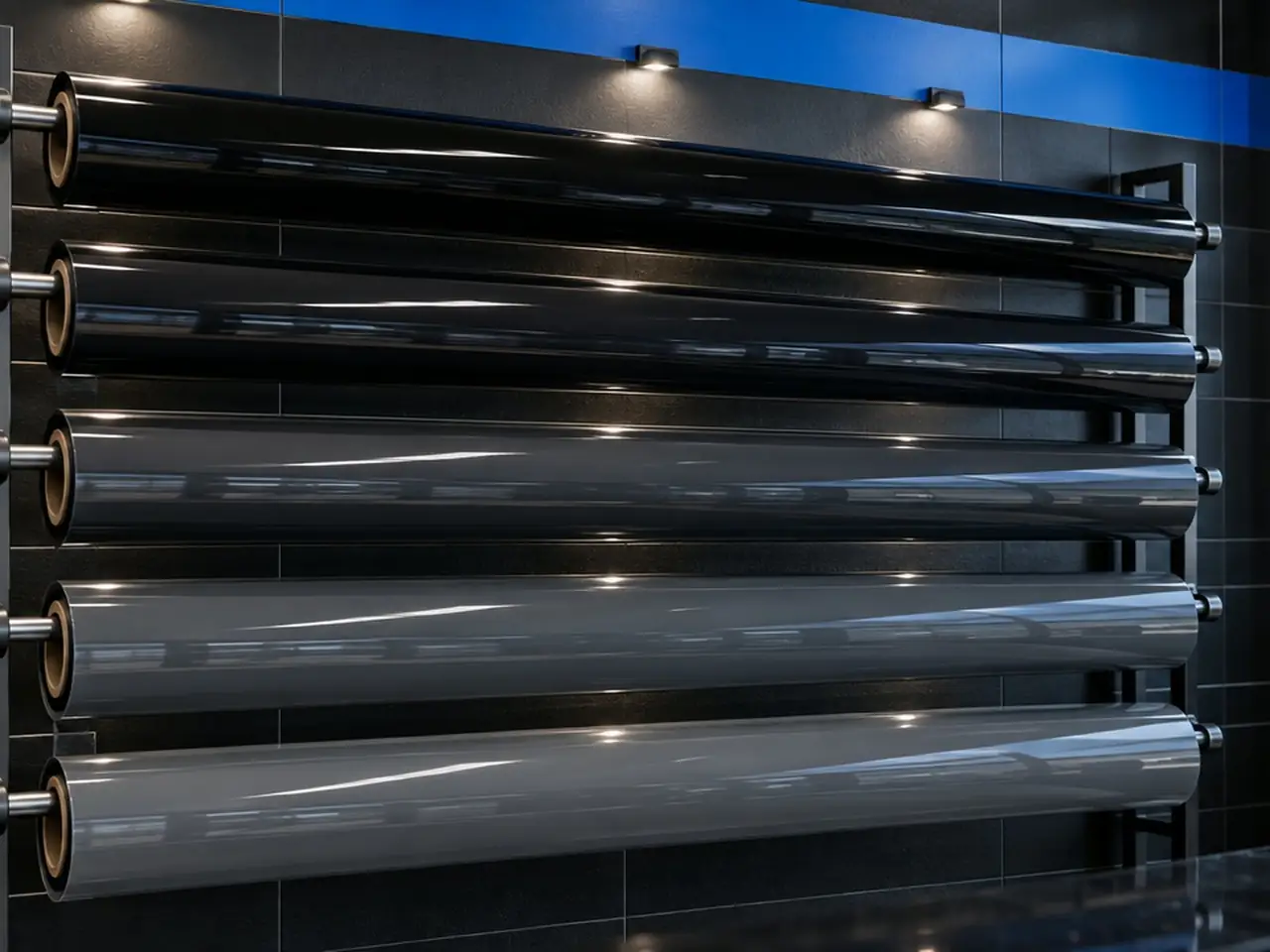
- 3. What shades and roll widths are offered, and how is availability handled?
- 4. How consistent is the shade from one roll to the next?
- 5. Will the film work on my plotter and with the tools I already use?
- 6. Is the film signal-friendly for vehicles with embedded antennas?
- 7. How do I get samples, and who is my rep?
- 8. What are the claim steps if I find a defect?
- 9. Can I see the warranty terms for the film I would install, in writing?
What are warning signs in a performance claim?
- Numbers with no VLT, test method or glass type attached.
- A heat figure that cannot be matched to a spec sheet for a specific film code.
- "Ceramic" used without saying what the film is made of.
- No willingness to put answers or terms in writing.
- Only one flattering number for a whole range of shades.
How do ceramic, carbon and dyed constructions change the questions?
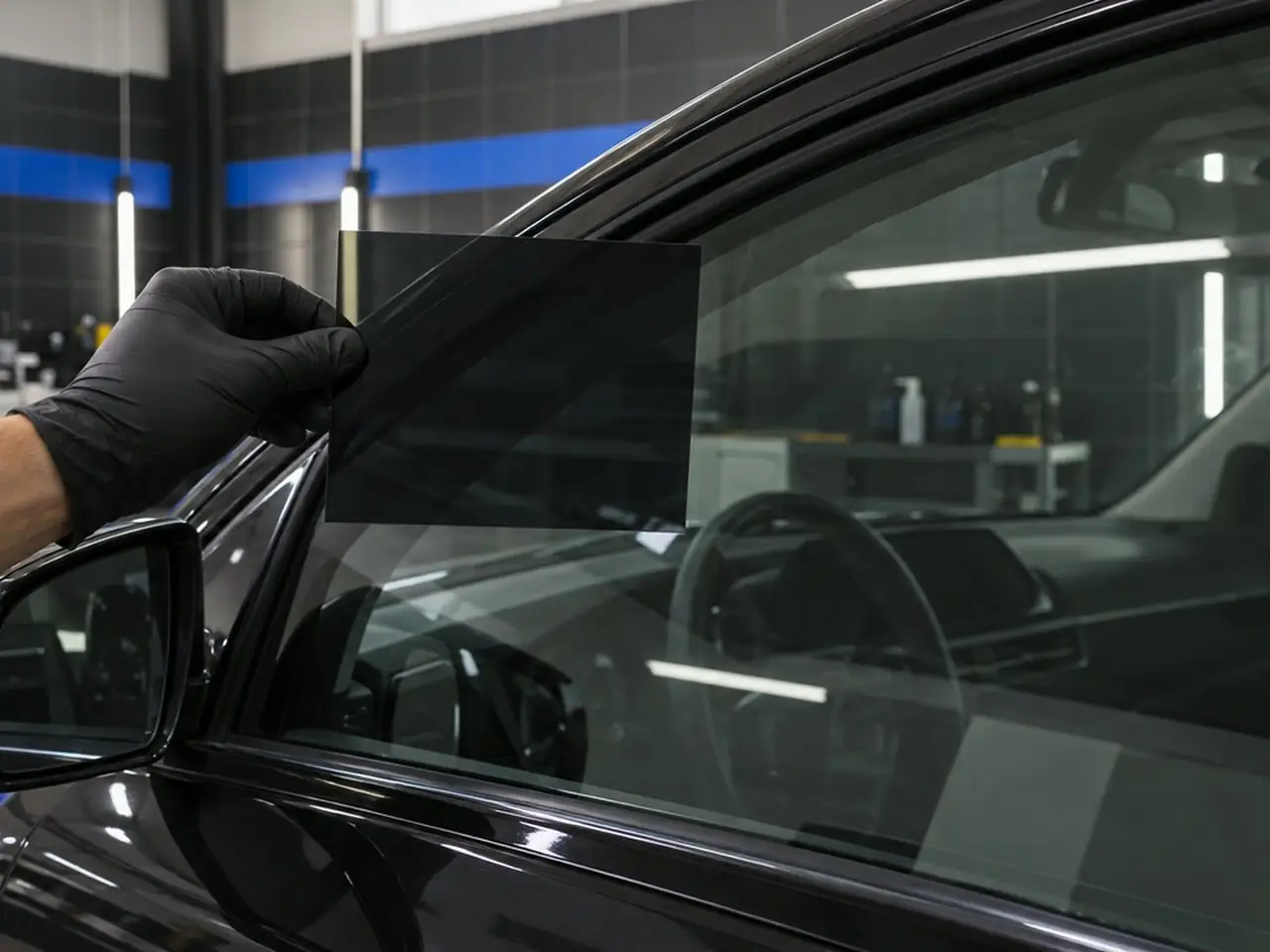
Dyed film uses dye, carbon film uses carbon particles and ceramic film uses non-metallic ceramic particles. A supplier's answers should line up with the construction.
Glacier's window film is ceramic only and non-dyed. The ceramic vs carbon vs dyed guide covers the full comparison.
What support should a supplier give installers?
Film quality is only part of the picture. A shop also depends on the support behind it.
- A named rep who answers questions.
- Spec sheets and care instructions you can hand to customers.
- A clear way to order, reorder and track shipments.
- A written process for claims.
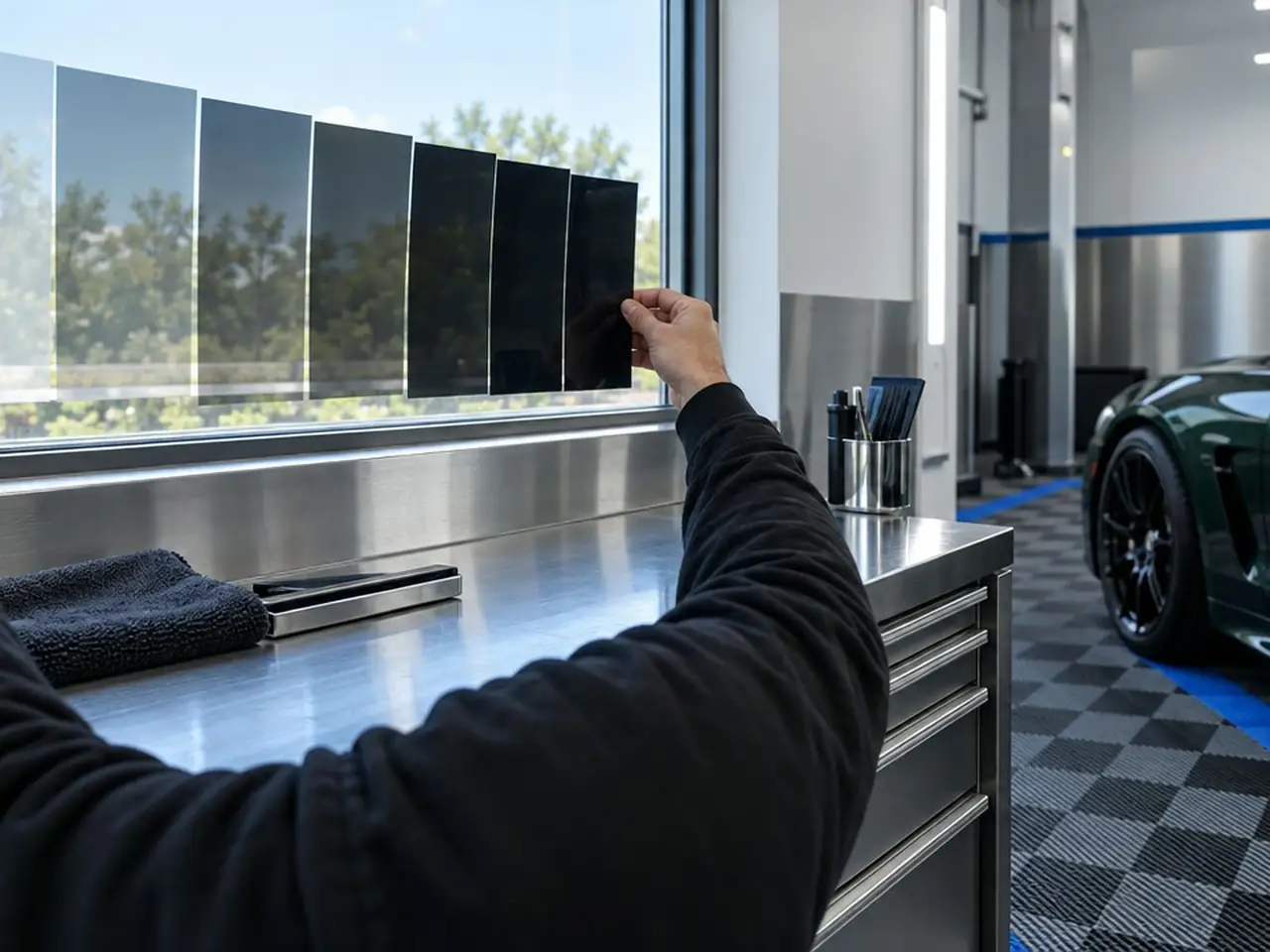
- Samples before you commit to a roll.
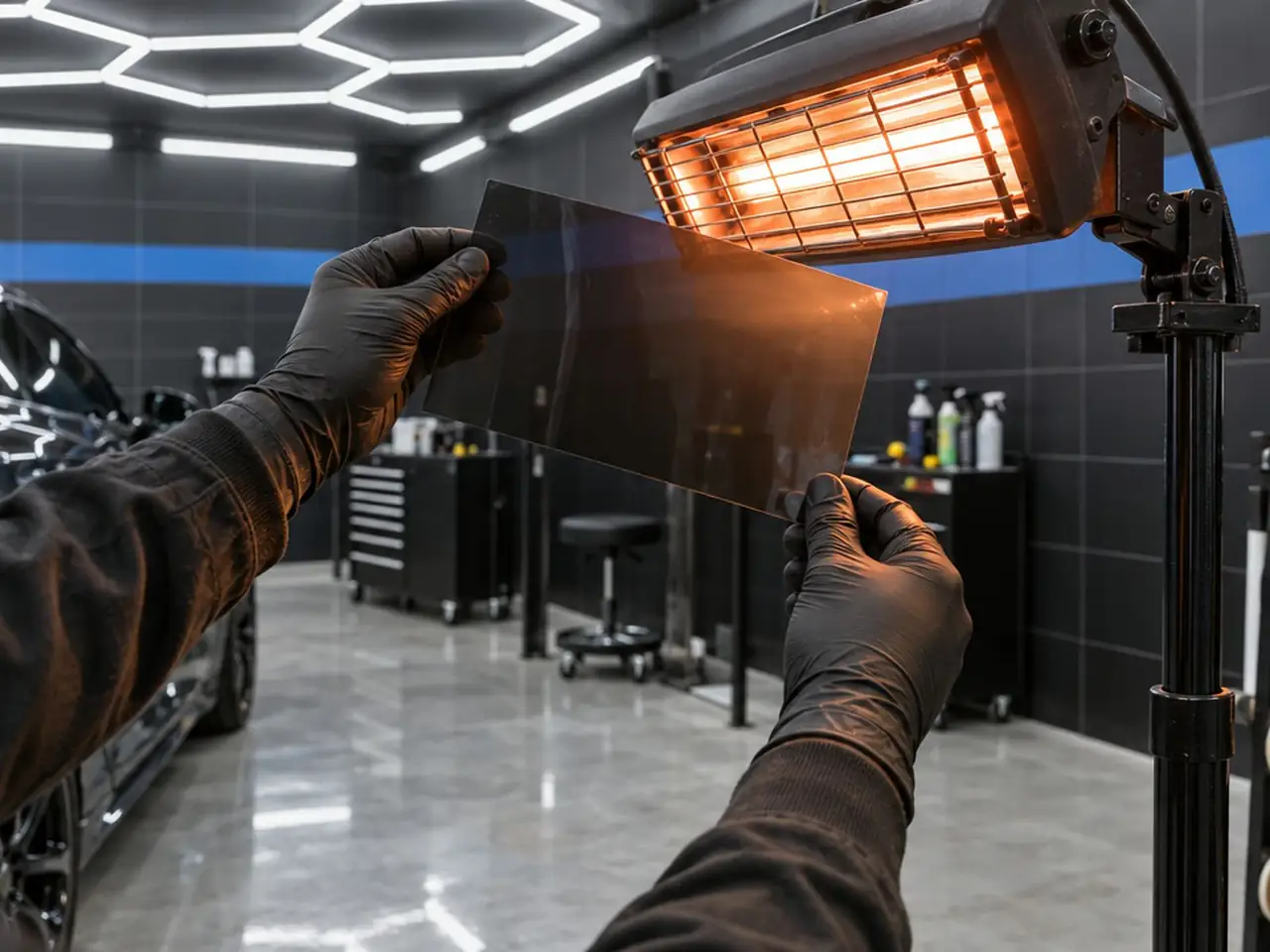
How should I test a ceramic film sample?
- 1. Check the shade with a VLT meter against the sheet.
- 2. Cut it on your plotter and note how it handles.
- 3. Heat-shape it where the glass is curved.
- 4. Install it on a shop vehicle and check clarity from inside.
- 5. Keep notes with the film code so you can compare lines later.
How can a shop verify what it receives?
Do not rely on the sheet alone. A VLT meter lets a shop check shade on a sample before it cuts a roll.
Keep install notes and the film code for each job. If a problem appears later, those records make a claim easier to support.
What can a Glacier rep provide?
Sales reps provide samples, and some line pages show a spec table. Ask your Glacier rep for the warranty terms on each automotive film line.
In this guide
- What does "ceramic" window film actually mean?
- Which spec terms should a shop understand?
- How do I compare two spec sheets fairly?
- What should I ask any ceramic film supplier?
- What are warning signs in a performance claim?
- How do ceramic, carbon and dyed constructions change the questions?
- What support should a supplier give installers?
- How should I test a ceramic film sample?
- How can a shop verify what it receives?
- What can a Glacier rep provide?
Quick answers
10 questions. Select one to open it.
What should a tint shop look for in a ceramic window film supplier?
Look for clear spec sheets with the test method stated, available shades and widths, samples, installer support, and claim and warranty steps in writing.
What does TSER mean on a window film spec sheet?
TSER is total solar energy rejected: the share of incoming solar energy kept out, counting UV, visible and infrared. Compare TSER only at the same VLT and test method.
Is IR rejection the same as heat rejection?
Not exactly. IR rejection covers only infrared energy within a stated range. Total solar energy rejection counts UV, visible and infrared together.
Why compare films at the same VLT?
A darker film usually blocks more energy than a lighter one, so a comparison across different VLTs is not fair.
Which brands have accurate VLT and TSER specs?
No one can answer that from outside your shop. Ask each supplier for the spec sheet and test method, then check the shade with a VLT meter.
What is the difference between ceramic, carbon and dyed film?
Dyed film uses dye, carbon film uses carbon particles and ceramic film uses non-metallic ceramic particles. Glacier's window film is ceramic only. See the ceramic vs carbon vs dyed guide.
Does ceramic window film block GPS or cell signals?
Ceramic film is non-metallic, so it is not built with metal that can block signals. Ask your installer about any specific vehicle.
What are Glacier's ceramic window film lines?
Premium Ceramic, Ceramic Plus and Ceramic Ultimate Plus. Compare them in the spec tables on each product page.
Does Glacier provide spec sheets and samples?
Some line pages show a spec table, and sales reps provide samples. Ask your Glacier rep what product information is available for the lines you are considering.
What warranty does Glacier window film carry?
Ask your Glacier rep for the warranty terms on each automotive film line.
Ready to source ceramic film for your shop? Apply for a wholesale account.