Privacy window film for installers and dealers
Privacy window film is an adhesive film applied to glass that blocks the view through it while still letting daylight in. It comes in frosted, gradient, patterned and custom-cut looks, goes on in place of etching or curtains, and can be removed later. Glacier supplies privacy film as rolls to tint shops, installers and dealers.
What is privacy window film, and what is it not?
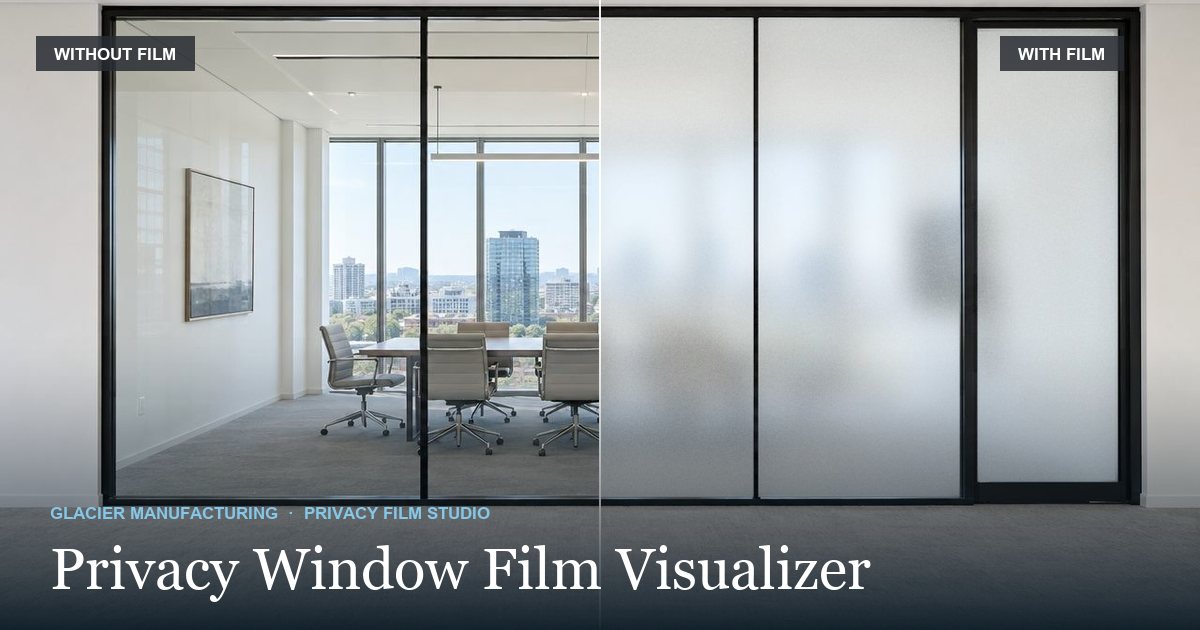
Privacy film (also called frosted, decorative or obscure film) scatters or blocks the view through a pane, so people on one side cannot see details on the other, but light still passes. It is a trade-off: the more privacy, the less clear the glass looks from both sides.
It does not make a room soundproof and does not make glass stronger. Impact resistance or code-rated glazing is a separate decision; see safety and security film.
Which privacy looks can a shop offer?
A qualitative guide. Always view a sample against the actual glass.
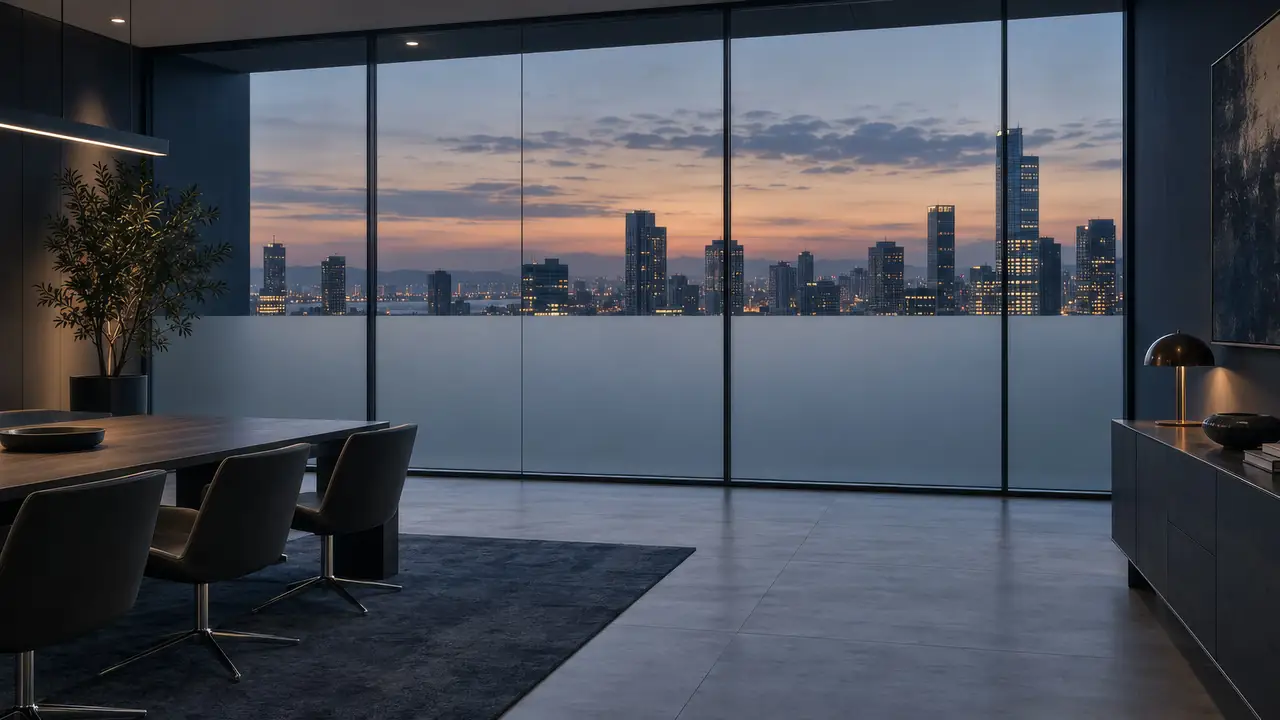
Match the look to the sightline, not just the room. In a meeting room, mark the height of seated and standing eyes, then place a gradient or a pattern band across that zone and leave the rest clear, so the room keeps daylight and an open feel. Uniform frost suits rooms where full privacy is needed at every height, while a band of dots or lines can be enough elsewhere. Mock up the layout in the Film Studio first so the client approves the band height before any film is cut.
| Type | Look | Typical use | Plotter-cut? |
|---|---|---|---|
| Uniform frost | Even, soft white haze | Conference rooms, restrooms, exam rooms | Optional |
| Gradient | Dense to clear across the pane | Partition walls, storefronts | Optional |
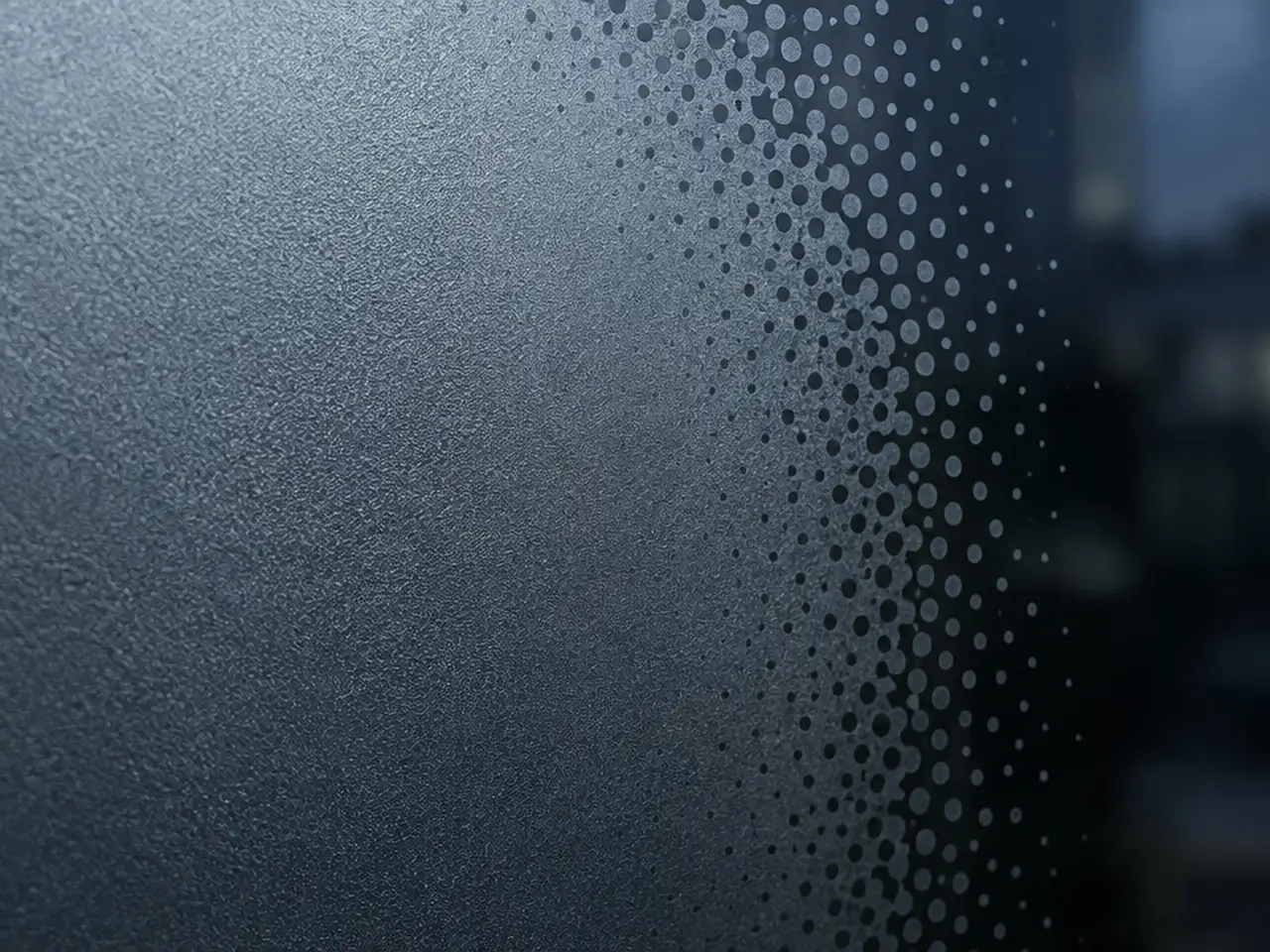
| Dot, line or pattern | Repeating shapes, partial privacy | Offices, restaurants, retail | Optional |
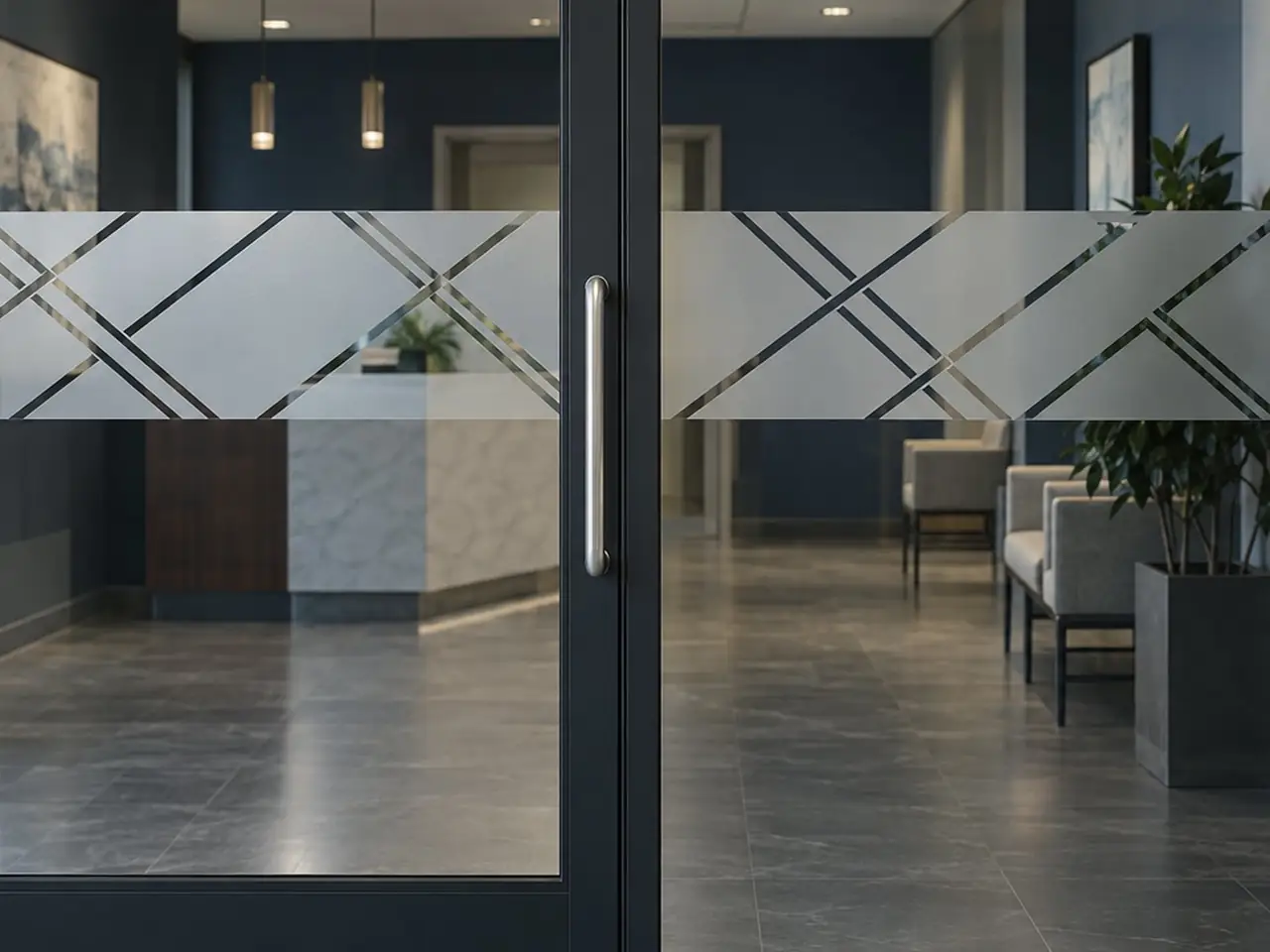
| Frost with clear graphics | Logo or lettering in clear | Branded glass walls and doors | Yes |
| Custom-cut | Bands, shapes, lettering from a stock roll | Branding, door manifestations | Yes |
Who buys Glacier privacy film?
- Tint shops and installers working on offices, healthcare, retail and homes.
- Sign and graphics shops cutting logos and bands from stock rolls.
- Dealers who resell Glacier film.
- Facilities and glass contractors through those shops (Glacier sells to shops, not end users).
Where is privacy film used?
- Offices and coworking: meeting rooms and phone booths.
- Healthcare: exam rooms, consult rooms and reception glass.
- Retail and hospitality: branded window bands, fitting rooms, hotel bathrooms.
- Education and public buildings: door and sidelite panels, counseling offices.
- Homes and multifamily: bathroom windows, entry sidelights, shower doors.
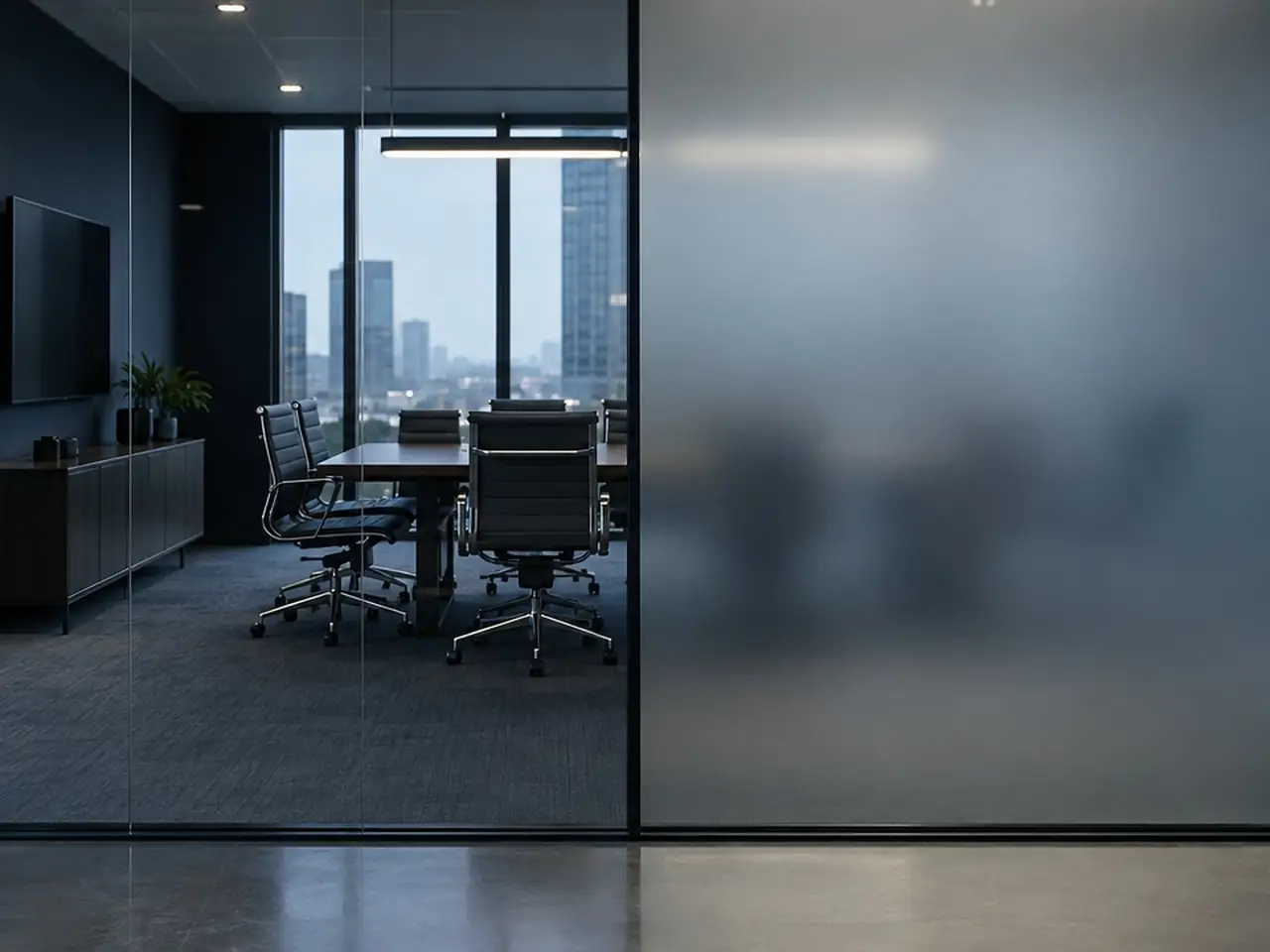
What does privacy film do and not do, day versus night?
Frosted film gives strong privacy by day. At night, with bright lights inside and darkness outside, any film shows more silhouette than people expect, so talk about lighting with the customer.
If the need is see-out, see-in-blocked for graphics, that is perforated film, not frosted film.
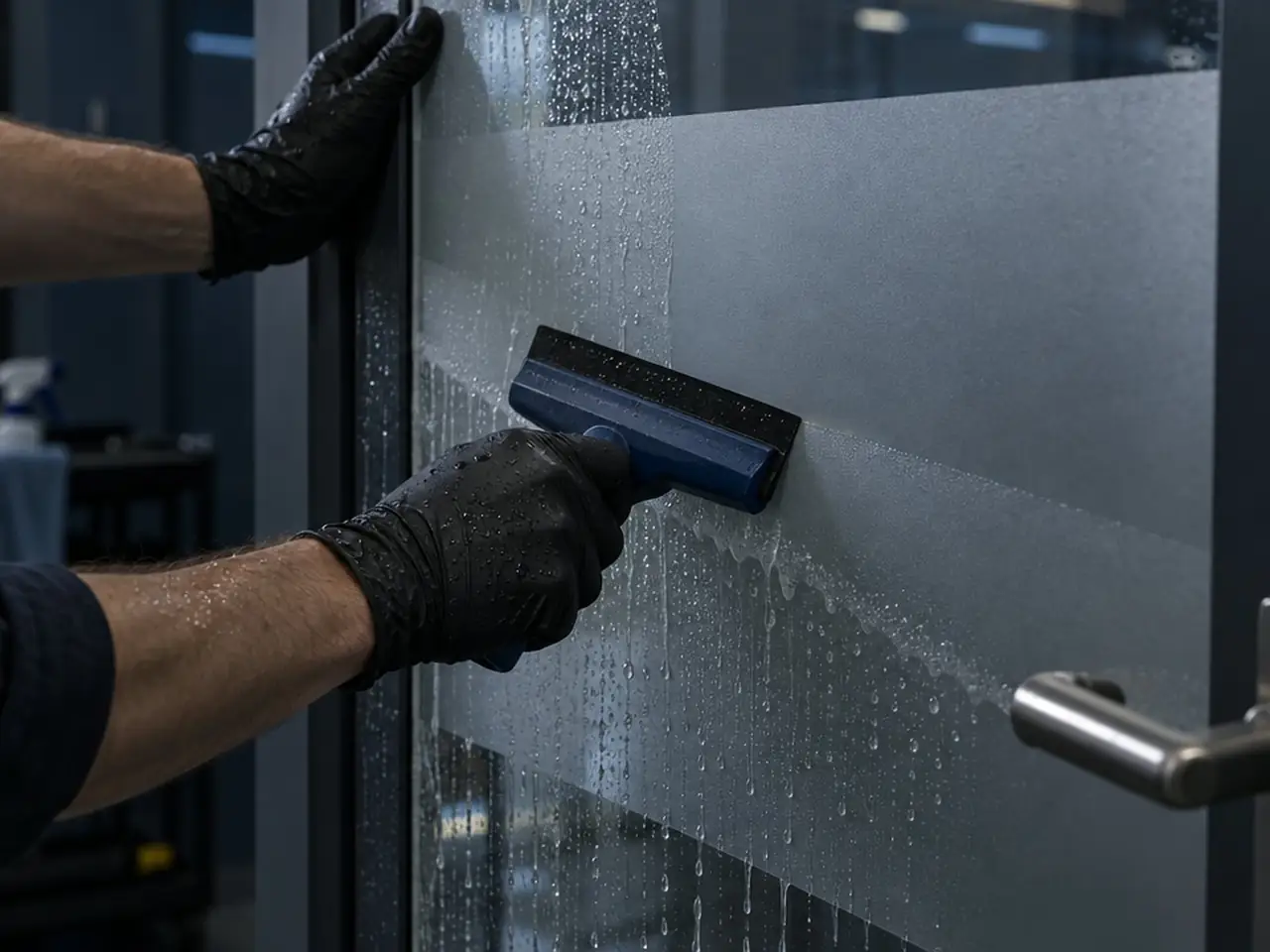
What glass can it go on, and how is it installed?
Single-pane, laminated, tempered and insulated glass can often take film, but check the glass maker's guidance and warranty first, especially on coated or tempered glass. Privacy film is not safety glazing; doors, sidelights and low glass may fall under safety-glazing rules, so check local code.
Pattern alignment is the quiet trouble spot on multi-pane jobs. Start every pane from the same reference, such as the upper edge, and note which way a dot or line pattern runs so neighboring panes match across the mullion. Frosted film shows dust and trapped grit more than clear film, so inspect each pane from inside and outside under raking light before trimming. Leave a small gap at the frame rather than butting film to the gasket, and number each cut piece so the layout goes up in order.
Installation is general good practice:
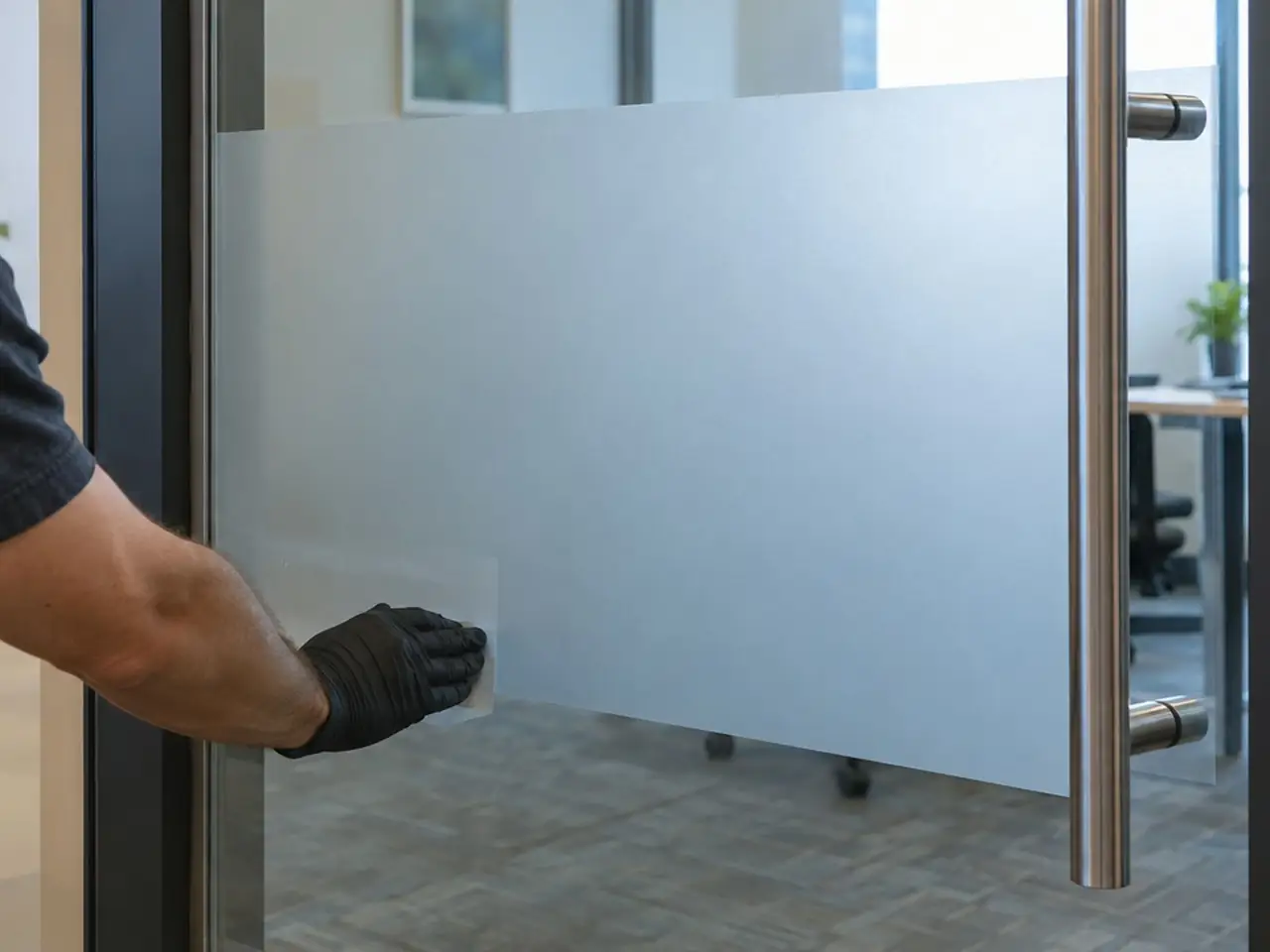
- 1. Scrape, clean and inspect the glass; trapped dirt shows on frosted finishes.
- 2. Spray slip solution and position the film, usually on the interior face.
- 3. Squeegee from the center to the edges.
- 4. Trim with a sharp blade, leaving a small gap at the frame.
- 5. Let the film cure as directed before cleaning.
- 6. Clean later with a soft cloth and ammonia-free cleaner; avoid abrasive pads.
How does frosted film compare with etched glass and blinds?
Etched or sandblasted glass is permanent. Blinds are flexible but take space and can be left open. Frosted film works the same every day, needs no operation and can be removed without replacing the glass, though removal effort depends on the film, the glass and how long it has been up.
Can customers preview it before the install?
Yes. Use the privacy simulator or the Film Studio to show a finish on glass before you pitch the job.
Does Glacier sell privacy film only to the trade?
Yes. Glacier sells to shops, installers and dealers and ships nationwide. Request a quote with the finish, roll size and quantity, or apply for a wholesale account. Ask your Glacier rep about current finishes, roll widths and samples.
Homeowners should ask a local installer, or use the dealer finder to see Glacier dealers near you.
If the customer needs a graphic seen from outside with a view out, choose Perforated Window Film for Sign Shops, Installers instead; for glass that must hold together on impact, see Safety Window Film for Installers.
Related guides on this site include how ceramic and carbon tint differ, window film basics and what film a tint shop should carry.
Keep exploring
Explore the tools
Related products

At a glance.
- Finishes
- Frosted, gradient, patterned, custom-cut
- Roll widths
- 36", 48", 60", 72"
- Removable
- Ask your Glacier rep

Common questions
12 questions. Select one to open it.
What is privacy window film?
An adhesive film applied to glass that blocks or scatters the view through it while still letting light pass. Common looks are frosted, gradient, patterned and custom-cut graphics.
What are the types of privacy window film?
Uniform frost, gradient, dot or line patterns, frost with clear graphics and custom-cut shapes. Ask your Glacier rep what finishes are currently available.
Where can an installer buy privacy window film wholesale?
Glacier supplies privacy film as rolls to tint shops, installers and dealers. Apply for a wholesale account or request a quote.
Does privacy film block light?
Most frosted films pass a good share of daylight while obscuring the view. A denser frost or pattern will feel darker than a light gradient.
Is privacy film the same as decorative film?
The terms overlap. Privacy emphasizes blocking the view; decorative emphasizes the pattern or design.
Does one-way window film work at night?
No. One-way vision depends on the outside being brighter than the inside. At night with indoor lights on, people outside can see in. That film is perforated film.
Is privacy film good for offices and conference rooms?
Yes, uniform frost and gradient looks are common for meeting rooms. Plan for lighting at night and view a sample on the glass.
Can privacy film be removed?
It is designed to be removable, which is its main advantage over etching. Ease depends on the film, the glass and how long it has been installed.
Can privacy film go on a shower door or bathroom window?
Often yes, as the maker directs, but wet areas and tempered or coated glass need care. Ask your Glacier rep for product information and check local requirements.
Does privacy film meet safety glazing codes?
Standard privacy film does not make glass code-compliant by itself. Where safety glazing is required, use a safety-rated construction and check local code.
How do I match a pattern across several panes?
Start each pane from the same reference edge and note which way the pattern runs. Cut pieces in sequence, number them, and check alignment across each mullion before trimming. Keeping one layout sheet for the whole job avoids mismatched panes.
Why does frosted film show dust more than clear film?
Frosted surfaces scatter light, so grit or a trapped bubble stands out against the even haze. That is why glass should be scraped and cleaned carefully before film goes on, and why a final look from both sides matters before the customer signs off.
Compare across window film.
Automotive
Premium nano-ceramic film for vehicle tint shops. Full VLT range.
Architectural / Flat Glass
Solar-control film for commercial and residential glazing. Energy and glare reduction.
Perforated
One-way vision film for storefronts, vehicle graphics, and transit advertising.
Ask your Glacier rep about Privacy.