Carbon vs ceramic window film for tint shops: dyed and metalized compared
Carbon vs ceramic tint comes down to what darkens the film. Carbon film uses carbon particles and reads flat and matte-leaning; ceramic film uses non-metallic ceramic particles and reads clear and neutral. Neither contains metal. Glacier supplies ceramic-only, non-dyed window film wholesale to tint shops and installers and does not supply carbon film.
What is the difference between ceramic, carbon and dyed window film?
Every window tint is layered polyester film with an adhesive. What differs is the material that darkens and filters the film.
That material changes how the tint looks, how it ages and how it behaves around electronics.
- Dyed: dye in the film. Simple and widely used, but dye can fade with long sun exposure, often toward purple.
- Metalized: tiny metal particles. They can interfere with GPS, cellular, radio and keyless-entry signals.
- Carbon: carbon particles. A flat, matte-leaning dark look with stable color and no metal.
- Ceramic: non-metallic ceramic particles. No metal, stable color and a clear, neutral look.
- Hybrid: layers that combine constructions. Names and claims vary by maker, so ask what is inside.
How do the four tint types compare side by side?
This is a general comparison. Performance varies from film to film, so ask the shop or supplier for the data sheet on the exact product.
| Film type | What darkens it | Typical look | Signals | Aging | Where it fits |
|---|---|---|---|---|---|
| Dyed | Dye layer | Smooth dark; can shift toward purple with age | No metal, so no interference | Dye can fade with sun | Simple, entry-level jobs |
| Metalized | Metal particles | Reflective, shiny | Can interfere with GPS, cell, radio and key fobs | Metal layer is stable; signal concerns remain | Fewer shops use it on modern cars |
| Carbon | Carbon particles | Flat, matte-leaning dark | No metal, so no interference | Color is generally stable | A step between dyed and ceramic |
| Ceramic | Non-metallic ceramic particles | Clear, neutral dark | No metal, so no interference | Does not rely on dye for darkness | Customers who want clarity and heat comfort |
Ceramic vs carbon tint: how do they compare head to head?
This is a general comparison of ceramic tint vs carbon tint. Performance varies from film to film, so compare the data sheet for the exact product.
| Row | Carbon | Ceramic |
|---|---|---|
| Construction | Layered polyester film with an adhesive; carbon particles darken and filter it. | Layered polyester film with an adhesive; non-metallic ceramic particles darken and filter it. |
| Look | Flat, matte-leaning dark. | Clear, neutral dark. |
| Heat and IR feel, in general | Rated good in general; depends on the specific film. | Rated high in general; depends on the specific film, so compare data sheets rather than labels. |
| Signal behavior | No metal, so not built to interfere with GPS, cellular or radio signals. | No metal, so not built to interfere with GPS, cellular or radio signals. |
| Color stability | Holds its color well; does not rely on dye. | Stays true; does not rely on dye, so it does not shift purple. |
| Menu position | A step between dyed and ceramic on a shop's tiered menu. | The step above carbon on a tiered menu, for customers who want clarity and heat comfort. |
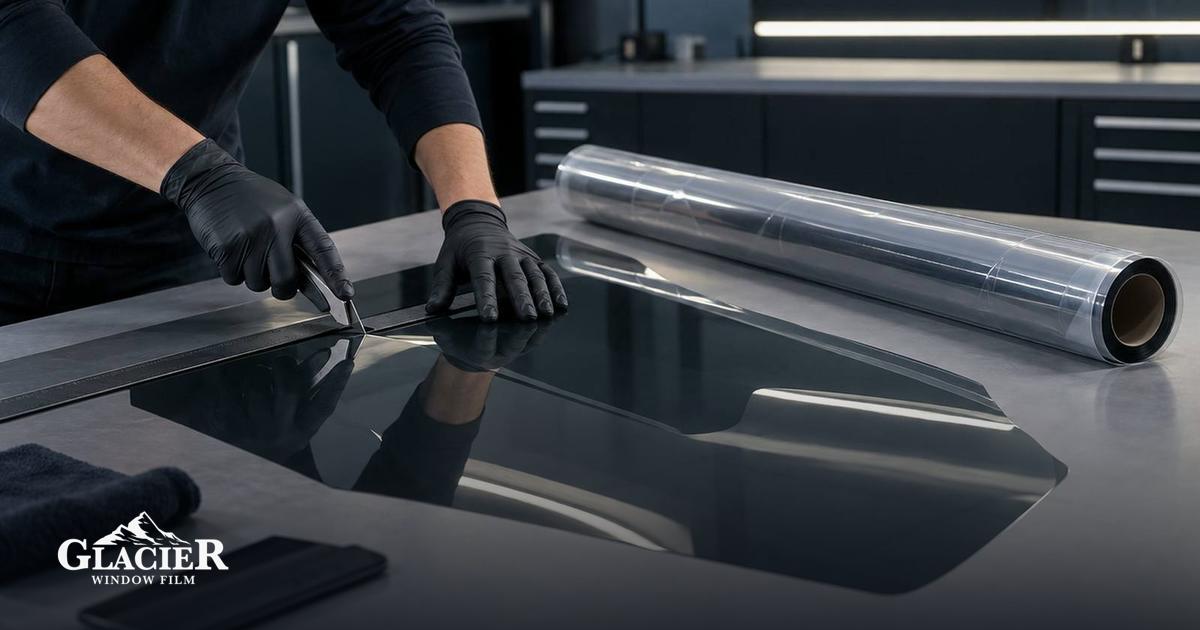
| Installer handling | Goes on the inside of the glass and is applied wet like other tint film; prep, a clean bay and edge work decide how it looks and lasts. | Goes on the inside of the glass and is applied wet like other tint film; prep, a clean bay and edge work decide how it looks and lasts. |
Carbon vs ceramic vs dyed window film: which should my shop offer?
Most shops build a tiered menu so a customer can choose by look and budget. Decide what each step means in your bay, then stock accordingly.
Glacier automotive window film is ceramic and non-dyed. Ask your Glacier rep what each automotive line offers.
- Offer a clear explanation of dyed, carbon and ceramic on your counter, not just a shade chart.
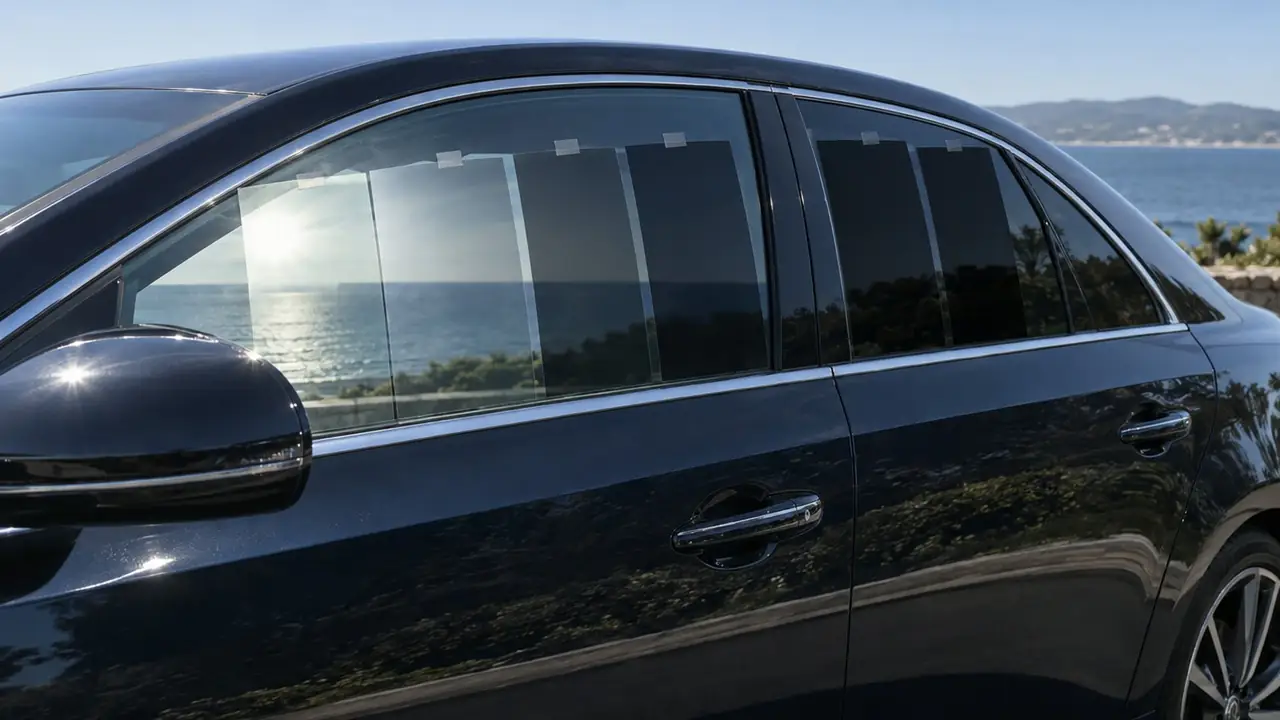
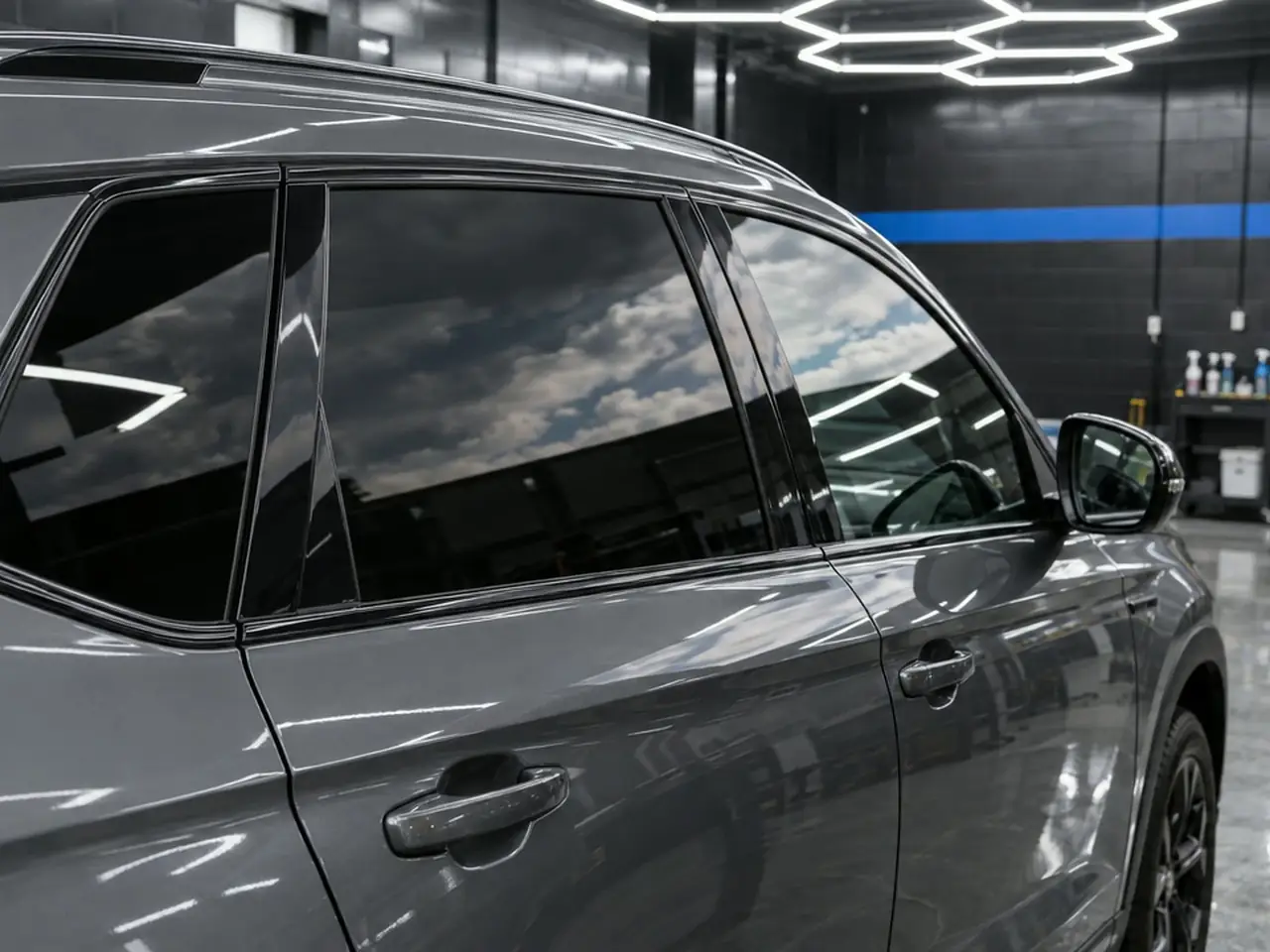
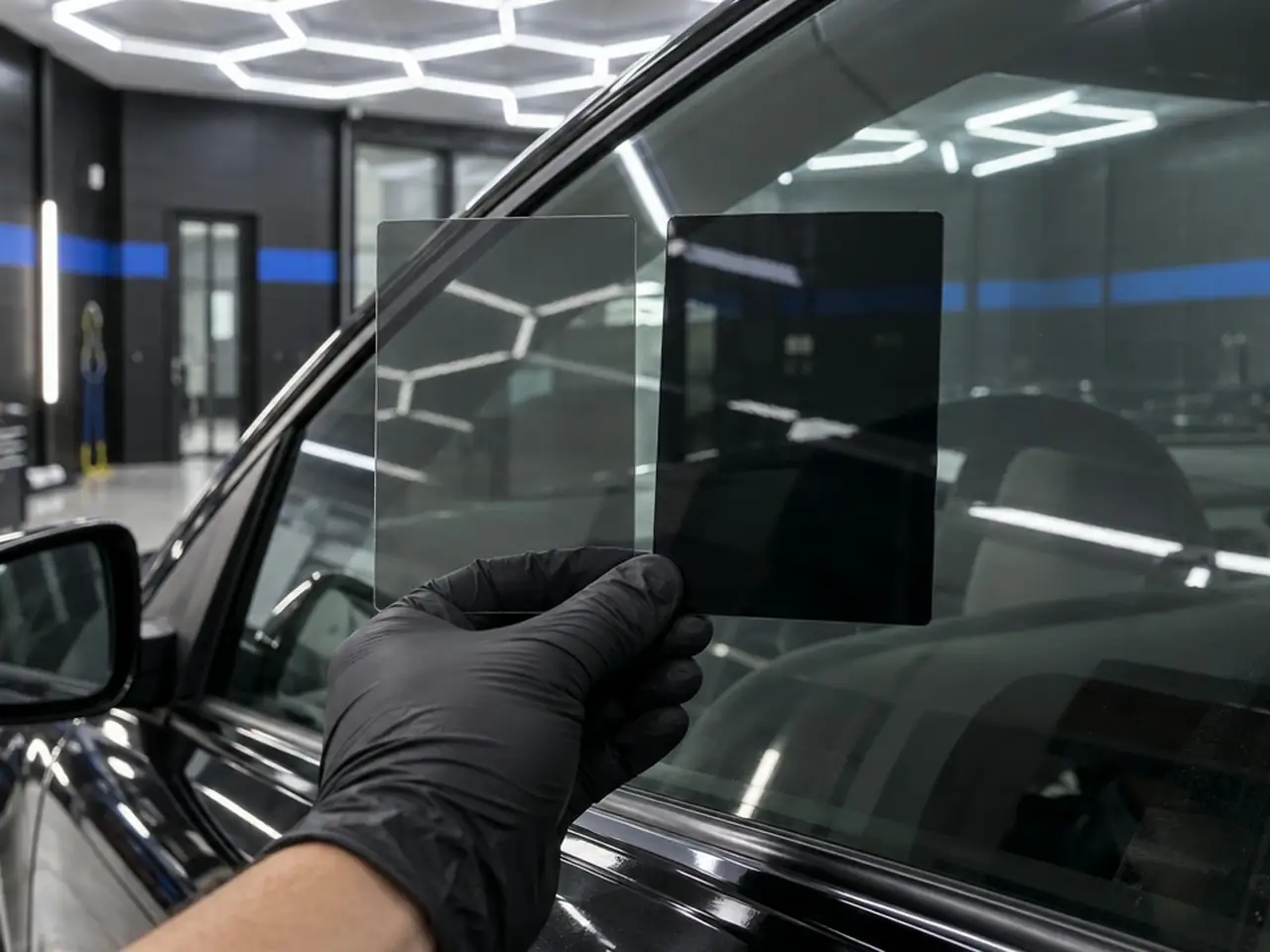
- Show film samples on glass in daylight so customers see the look.
- Avoid metalized film on cars with glass antennas, driver-assist features or heavy phone and GPS use.
- Keep data sheets handy and quote from them, not from memory.
- Check your state's rules before promising a shade.
Carbon vs ceramic window film: which fits a tint shop's customers?
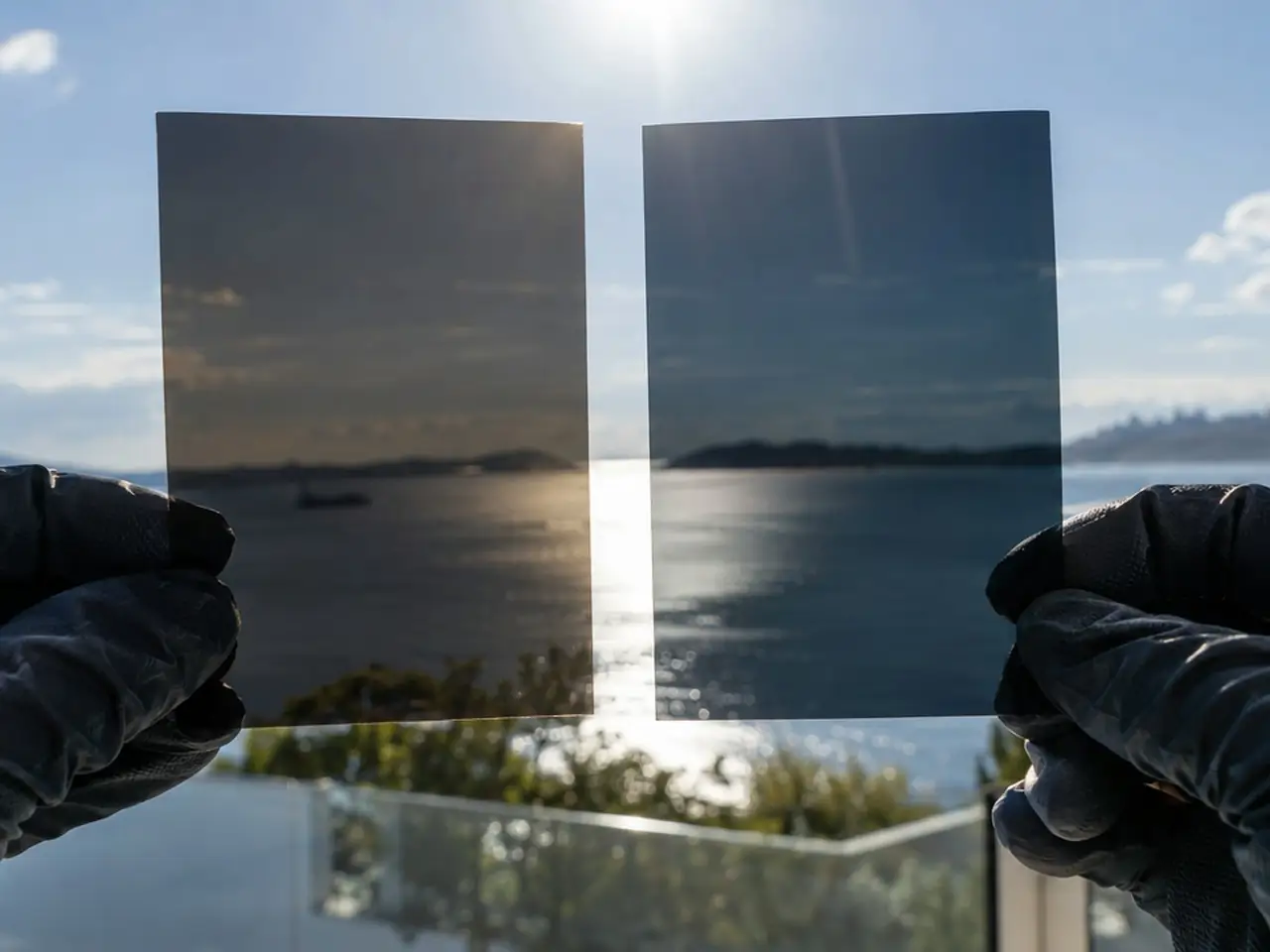
Neither is better for every car or customer. Ceramic is usually chosen for a clear, neutral look and heat comfort; carbon is usually chosen for its matte look at a step up from dyed.
Heat performance depends on the specific film, not just the category, so compare data sheets rather than labels.
- Hot, sunny climate and long drives: ask about ceramic and look at its data.
- Look: ceramic reads clear and neutral; carbon reads more matte.
- Legal shade: choose the shade first, then the film.
How does a shop decide between carbon and ceramic tint?
Start with the customers you serve, not the catalog. Ask what the customer wants from the film: a matte-leaning dark look as a step up from dyed, or a clear, neutral look with heat comfort. Both constructions are non-metallic, so signal behavior is rarely the tie-breaker. Choose the legal shade for each window first, then the film. Compare data sheets for the exact films rather than category labels, because heat performance depends on the specific film. Many shops show dyed, carbon and ceramic as menu steps. A ceramic-only shop explains its ladder with its lines instead: Premium Ceramic, Ceramic Plus and Ceramic Ultimate Plus.
How long does ceramic window tint last?
Tint life depends on the film, the climate, how the car is parked, how the film was installed and how it is cleaned. Dyed film tends to show its age first, usually as color shift.
Clean glass, careful edge work and gentle aftercare matter for every type. Ask the shop what warranty applies and get it in writing.
Which tint myths should shops correct?
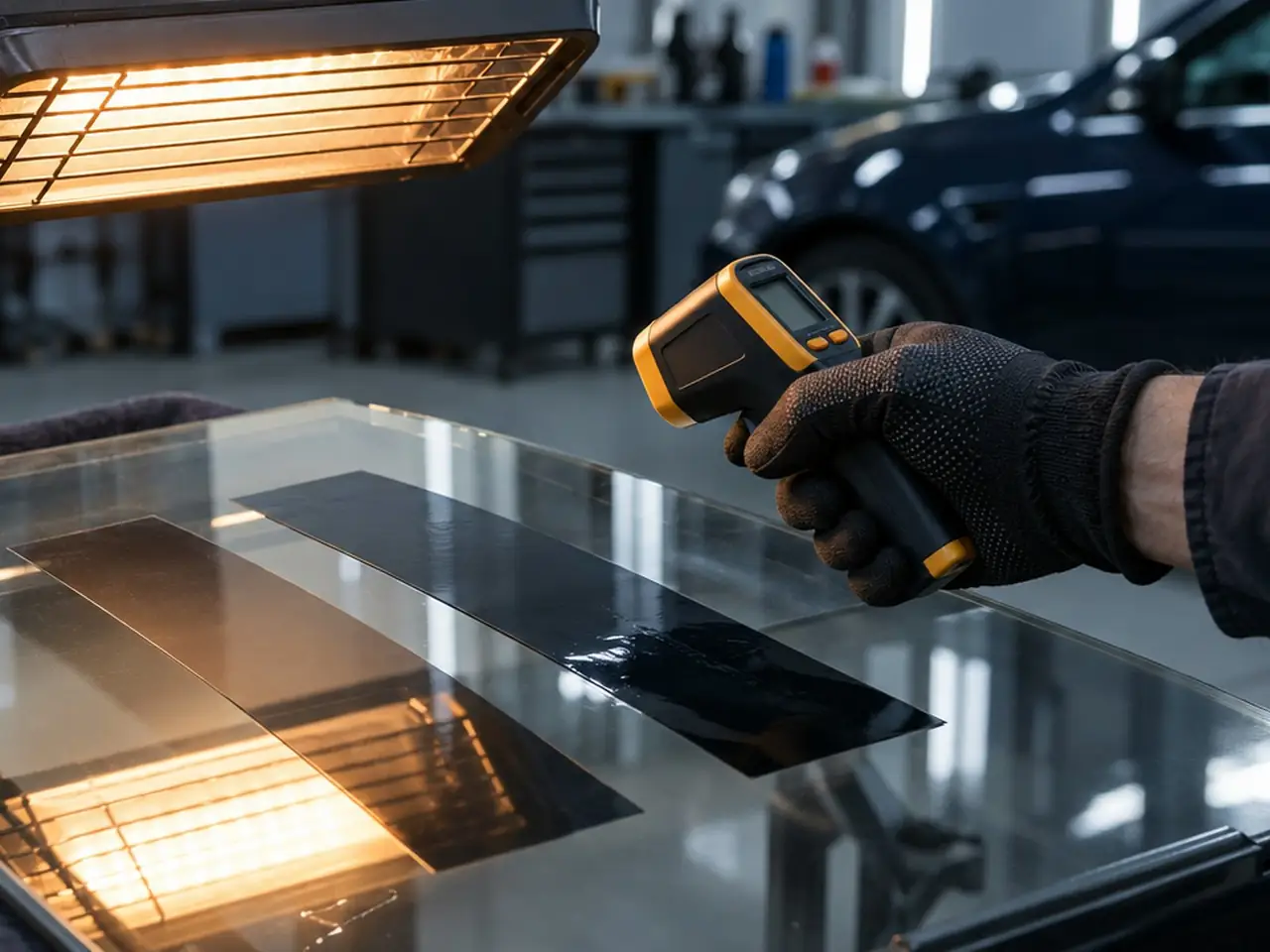
- Darker means cooler. Shade and heat comfort are different things; construction matters as much as darkness.
- All tint is the same. Dyed, carbon, ceramic and metalized films age differently and behave differently around signals.
- You can see every difference on day one. Some differences only show after long sun exposure.
- Any shop installs the same. Prep, a clean bay and edge work decide how the job looks and lasts.
What should I ask a tint shop?
- 1. Which film brand and line will you use, and can I see its data sheet?
- 2. What is the film made of: dyed, carbon, ceramic or a hybrid?
- 3. What shade is legal for my car in my state?
- 4. Do you cut by plotter or by hand?
- 5. How long until I can roll the windows down?
- 6. What does the warranty cover, in writing?
Where can I see shades and get Glacier film?
Glacier sells to tint shops, installers and dealers, not directly to drivers. Drivers can ask their tint shop for Glacier film by name, or use the dealer finder to see Glacier dealers near you.
The Film Studio previews shades on an example vehicle. Shops and installers can apply for a wholesale account, and Glacier ships nationwide. Ask your Glacier rep for the warranty terms on each automotive film line.
To go further, read what film a tint shop should carry, the tint shop supplier guide to film and tools and the start-a-tint-shop checklist.
In this guide
- What is the difference between ceramic, carbon and dyed window film?
- How do the four tint types compare side by side?
- Ceramic vs carbon tint: how do they compare head to head?
- Carbon vs ceramic vs dyed window film: which should my shop offer?
- Carbon vs ceramic window film: which fits a tint shop's customers?
- How does a shop decide between carbon and ceramic tint?
- How long does ceramic window tint last?
- Which tint myths should shops correct?
- What should I ask a tint shop?
- Where can I see shades and get Glacier film?
Quick answers
12 questions. Select one to open it.
What is the difference between ceramic, carbon and dyed window film?
Dyed film is darkened with dye, carbon film with carbon particles and ceramic film with non-metallic ceramic particles. Metalized film uses metal particles. They differ in look, aging and signal behavior, and the film's data sheet gives the specifics.
Ceramic vs carbon vs dyed window tint: which should my shop offer?
Offer the types that match the customers you serve and explain each plainly. Many shops show dyed, carbon and ceramic as steps. Glacier automotive window film is ceramic and non-dyed.
How long does ceramic window tint last?
Ask your Glacier rep for the warranty terms on each automotive film line.
Does metalized window tint block cell phone and GPS signals?
It can. Metal particles can interfere with GPS, cellular, radio and keyless-entry signals. Dyed, carbon and ceramic films are not built with metal layers, so they are not designed to.
Why does dyed window tint turn purple?
Dyed film depends on dye for its darkness, and dye can break down with long sun exposure. That often shows as a shift toward purple. Carbon and ceramic films do not rely on dye.
What is hybrid window tint?
Hybrid tint layers different constructions, for example dyed and carbon layers. Names and claims vary by maker, so ask the shop what the film contains and read its data sheet.
Does darker window tint block more heat?
Not automatically. Shade is how much light passes through, while heat comfort depends on the film's construction. A lighter ceramic film can feel cooler than a darker dyed film, so compare data sheets.
Does Glacier make dyed, carbon or metalized window film?
Glacier's automotive window film is ceramic-only and non-dyed. For any other Glacier film line, ask your Glacier rep what it is made of.
What tint shade is legal on my car?
It depends on your state and the window position. Choose the legal shade first, then the film. See the state tint laws page, and preview shades in the Film Studio.
Does carbon tint interfere with GPS or phone signals the way metalized tint can?
No. Carbon film is built from carbon particles, not metal, so it is not designed to interfere with GPS, cellular or radio signals. Ceramic film is non-metallic too, so signal behavior does not separate carbon from ceramic. It separates both from metalized film, which can interfere.
In carbon vs ceramic tint, is carbon a legitimate choice for a shop?
Yes. Carbon film is a legitimate construction: it holds its color well, does not interfere with electronics and sits between dyed and ceramic on a menu. Glacier supplies ceramic-only, non-dyed film and does not supply carbon, so a shop that wants to offer carbon sources it elsewhere.
Ceramic tint vs carbon tint: what should a shop tell a customer who asks for carbon?
Explain the construction plainly. Carbon uses carbon particles for a matte-leaning look; ceramic uses non-metallic ceramic particles for a clear, neutral look; neither has metal. Show the shades on glass in daylight, confirm the legal shade for the window, and quote from the data sheet for the film you actually install.
Looking for ceramic-only, non-dyed film for your shop? Apply for a wholesale account.