Paint protection film buying guide for installers
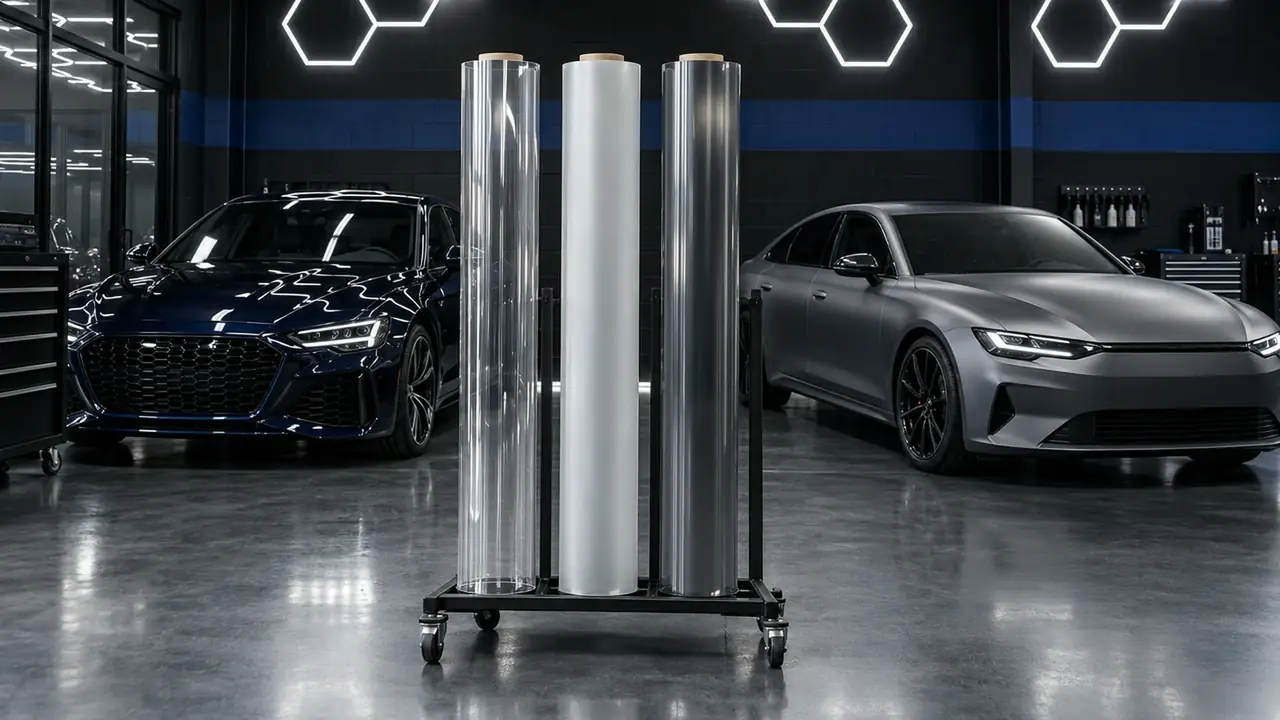
Paint protection film (PPF) is a clear urethane film applied over paint to guard against rock chips, scuffs and road wear. Installers choose PPF by finish, how it installs and what information the supplier provides. Glacier supplies Iceberg gloss clear PPF and Blizzard satin PPF as rolls for installers, tint shops and detailers.
What is PPF and is it worth it?
PPF is a transparent, flexible urethane film with an adhesive layer. Installers apply it over painted panels so chips, scuffs and wash marks land on the film instead of the paint.
It is removable, so a shop can offer protection or a finish change without touching the paint underneath. Whether it is worth it depends on how the car is driven, parked and valued, which is a conversation for the owner and installer.
What is urethane or TPU film in plain terms?
Most PPF is made from thermoplastic polyurethane, usually shortened to TPU and often called urethane film. It is a flexible plastic that stretches over curves and sits in a clear layer on paint.
The material name alone does not tell an installer how a roll will behave. Judge each film on a sample, on a real panel.
What is the difference between gloss and satin PPF?
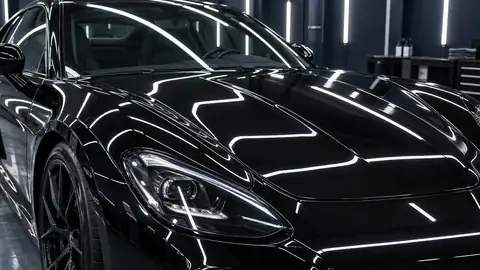
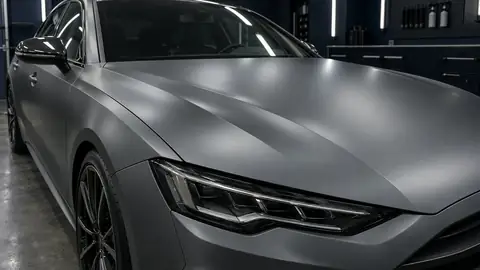
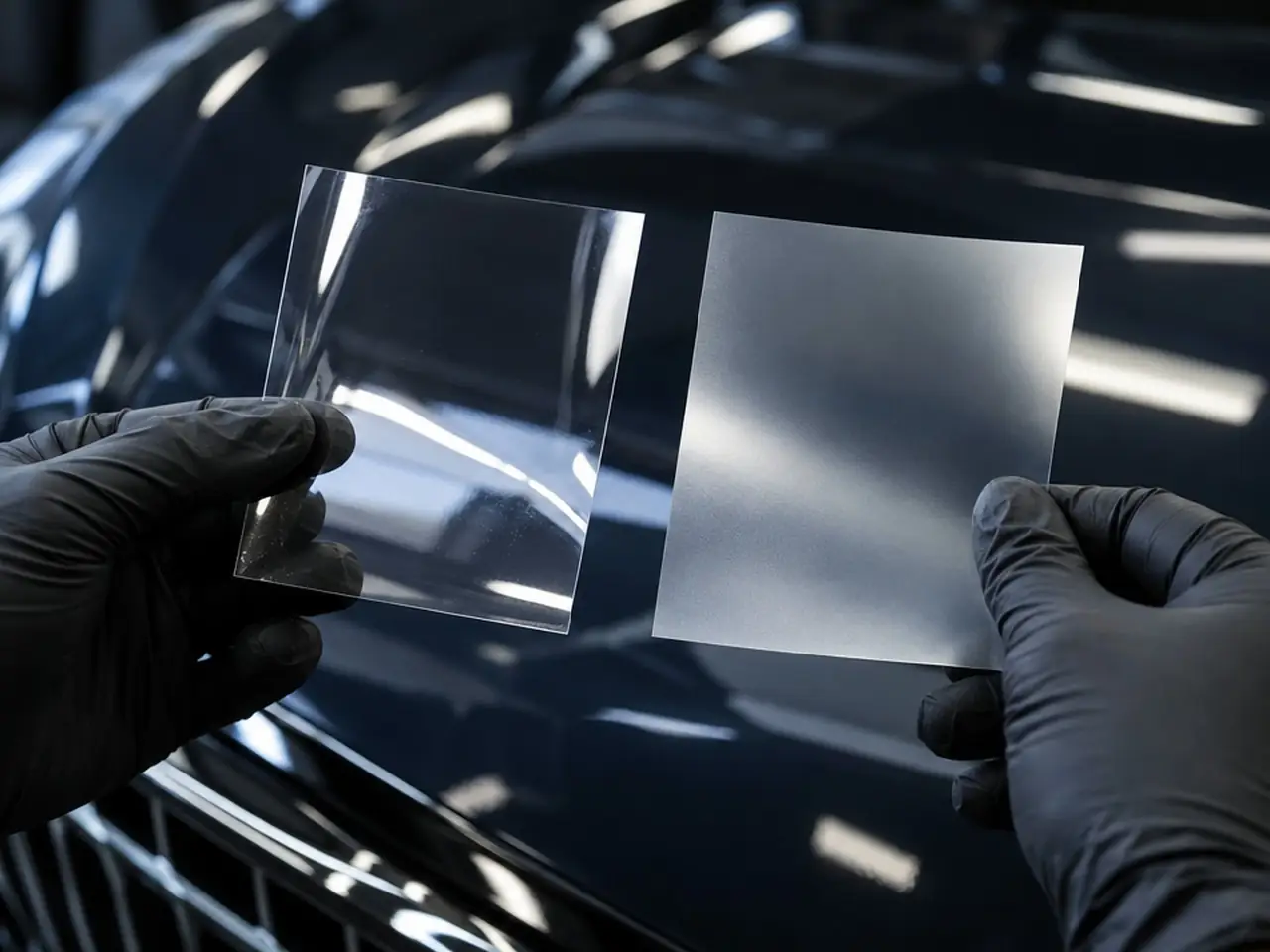
Finish is the main choice. Gloss clear film keeps the paint looking like factory paint. Satin film gives glossy paint a softer, lower-sheen look.
Finish names are not standardized across the industry, so judge a sample on the actual panel in daylight.
- Gloss clear: disappears on the panel and keeps the factory gloss.
- Satin: soft, lower sheen that still shows body lines.
- Satin film can need different care than gloss; ask your installer what to use and avoid.
How do gloss and satin compare side by side?
| Question | Gloss clear | Satin |
|---|---|---|
| Look on the car | Looks like the factory paint | Soft, lower-sheen look over glossy paint |
| Who asks for it | Owners who want the car to look unchanged | Owners who want a different look without repainting |
| Sample test | Check clarity and finish across the panel in daylight | Check sheen and evenness across the panel in daylight |
| Customer care talk | Gentle washing, edges, bird and bug residue | Same, plus what to avoid on a satin surface; ask the installer |
| Glacier line | Iceberg | Blizzard |
How do I choose between Iceberg and Blizzard?
Start with the finish the customer wants, then match the film. Both are Glacier PPF sold as rolls, and the finish is the main difference.
If customers want the paint to look as it came, stock Iceberg. If they ask for a satin look over glossy paint, stock Blizzard. Shops that sell both finishes can offer either one.
Ask your Glacier rep for samples and what product information is available for each film.
| Question | Iceberg | Blizzard |
|---|---|---|
| Finish | Gloss clear | Satin |
| Customer wants | Factory paint to look like factory paint | Glossy paint turned satin without repainting |
| Sold as | Rolls cut to each vehicle | Rolls cut to each vehicle |
| Product page | Iceberg gloss PPF (see related links) | Blizzard satin PPF (see related links) |
How do I choose PPF for different customers?
Customers rarely ask for a film name. They describe a car and how they use it. Translate that into a finish and a coverage level.
| Customer | What they usually say | Where to start |
|---|---|---|
| Daily commuter | I want to stop chips on the front | Gloss clear on the front end; see the coverage guide |
| New car owner | I want the paint to stay perfect | Gloss clear, wider coverage |
| Enthusiast | I want a different look | Show both finishes on a sample panel |
| Fleet or dealer | I need a repeatable process | Standard menu and one film line per finish |
What do installers look for in a PPF roll?
Installers judge film by how it behaves on the car, not only by the label. Test a sample on a panel before committing to a roll.
Run the same test for each finish you plan to sell, because gloss and satin can behave differently under the squeegee.
- Clarity and a consistent finish across the roll.
- How the film conforms to curves, edges and compound shapes.
- How the adhesive behaves while positioning and squeegeeing.
- How edges settle and whether they lift.
- Roll consistency, handling and storage requirements.
- A supplier that answers questions and supplies samples.
How do I run a sample test before I buy a roll?
A repeatable test beats a gut feeling, and it lets you compare any two films fairly.
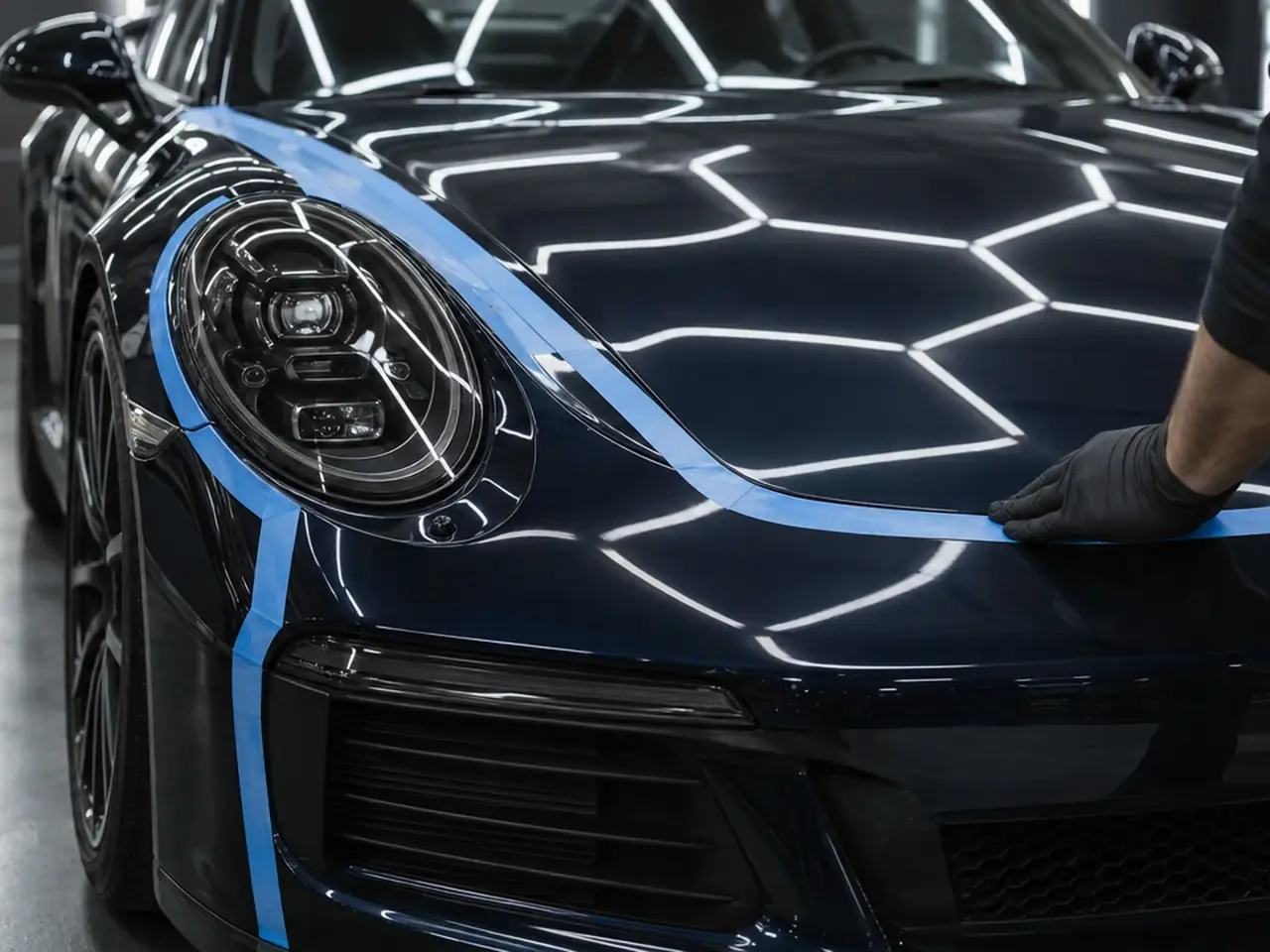
- 1. Pick a spare panel or donor part with a flat area, a curve and an edge.
- 2. Prep it the way you prep a customer car.
- 3. Cut the same shape from each film you are comparing.
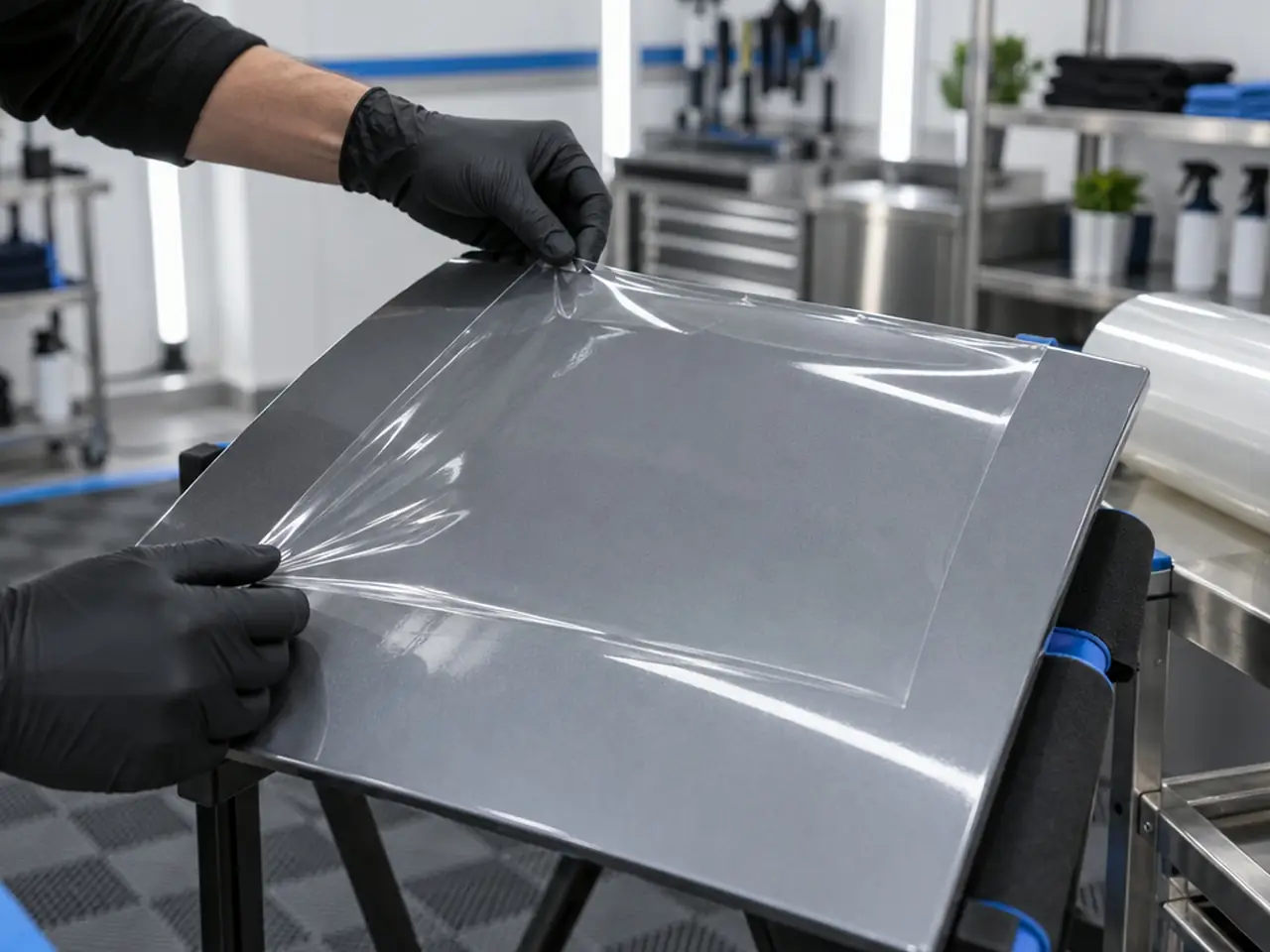
- 4. Install each with the same tools and the same slip solution.
- 5. Note how each positions, squeegees, wraps the edge and settles.
- 6. Look at both finishes in daylight and bay light.
- 7. Write your notes down against the film name so the comparison survives the week.
What should I ask a PPF supplier before buying rolls?
For Glacier, ask your Glacier rep what product information is available for Iceberg and Blizzard, and about availability and timing for your order.
- 1. Which finishes do you offer, and can I get samples?
- 2. What format is the film sold in, and does it suit my plotter or hand cutting?
- 3. What do you say about material aging, including yellowing on white cars?
- 4. What written product information is available for this film line?
- 5. What else does Glacier supply to PPF installers?
- 6. How do you handle availability for my order?
What roll format does Glacier PPF come in?
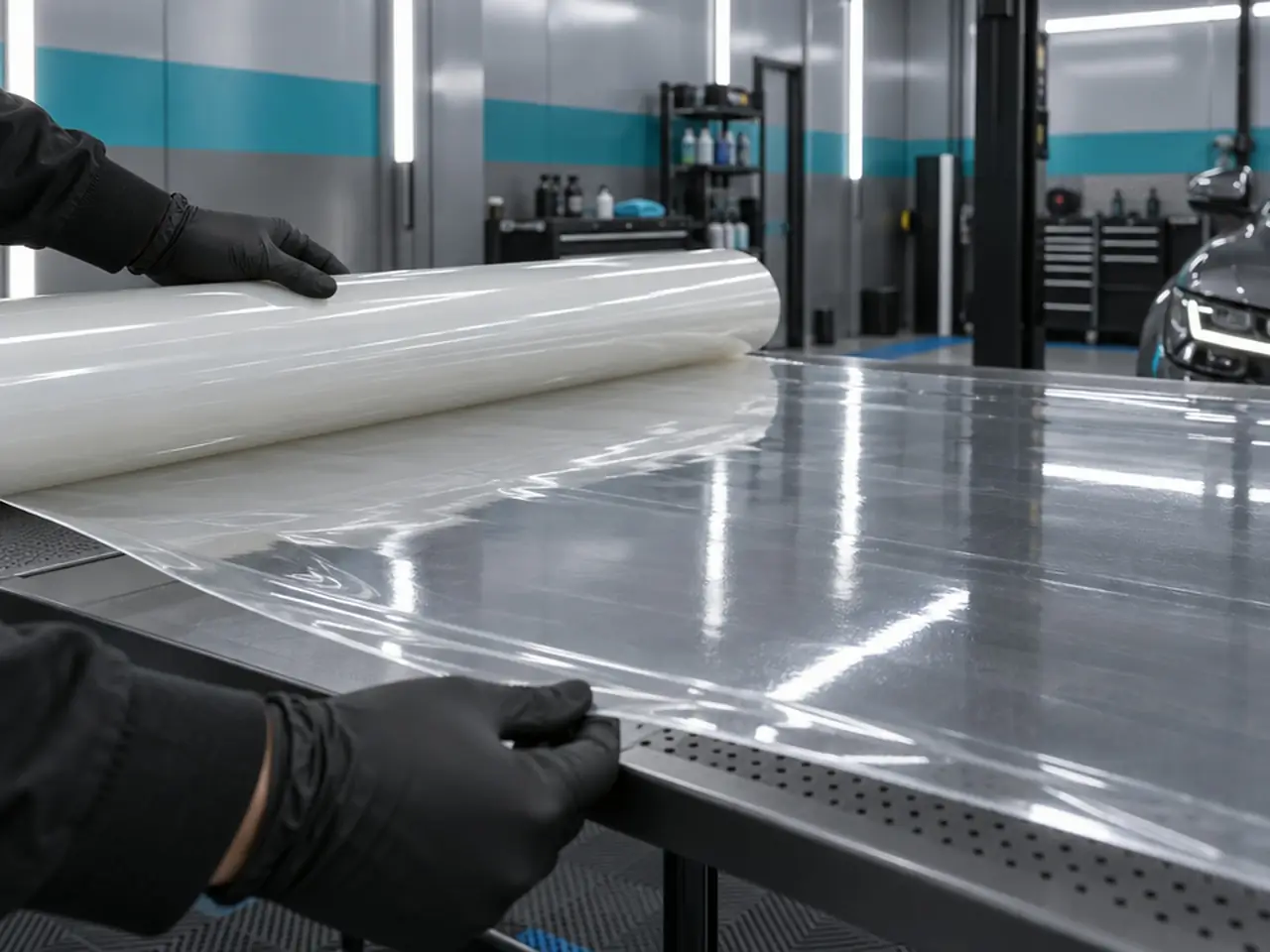
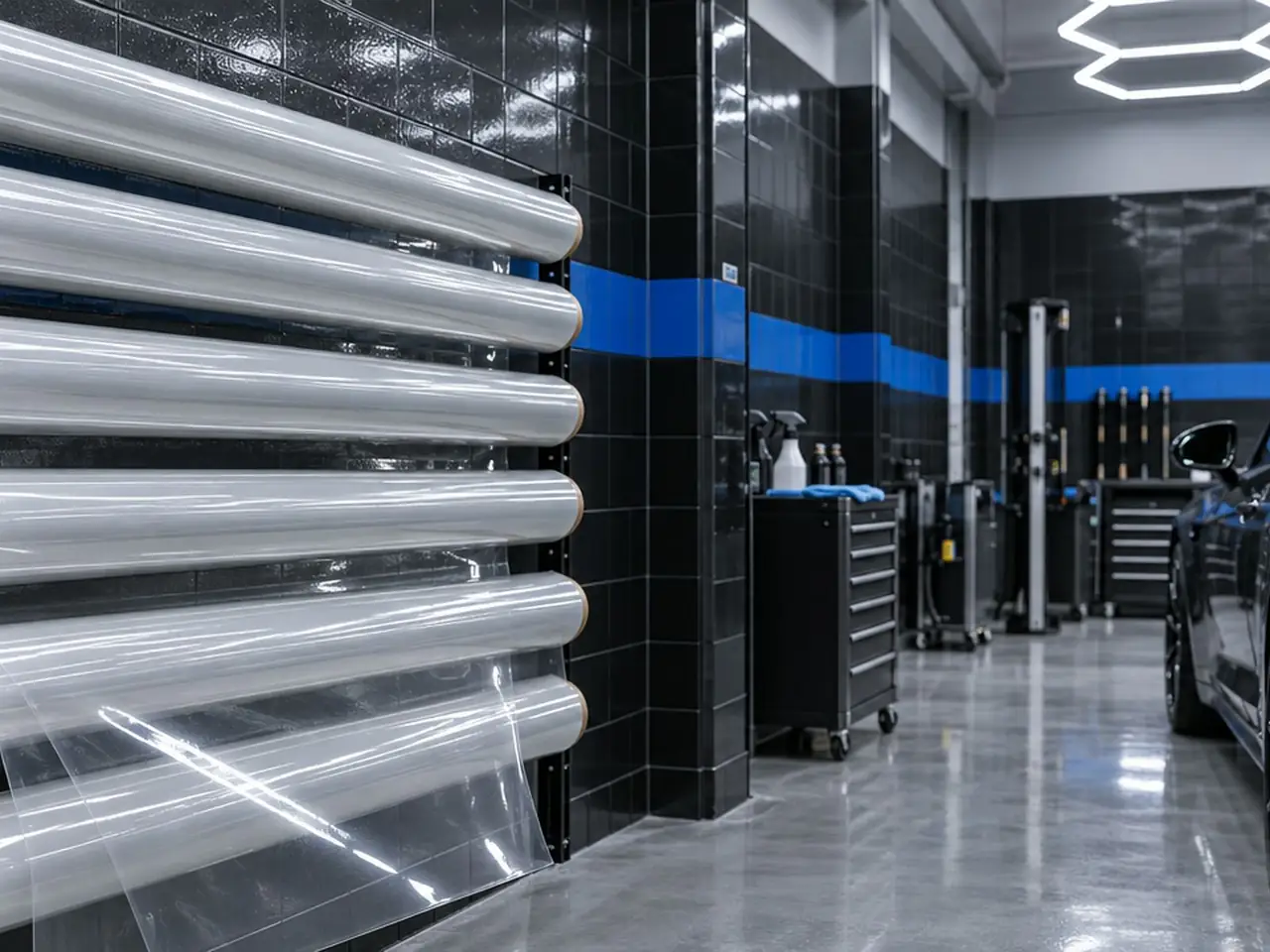
Glacier supplies PPF on rolls.
Should I buy rolls or pre-cut kits?
Glacier supplies PPF on rolls.
What should I tell customers before the job?
- PPF protects against chips and light abrasion, but it is not armor.
- Haze or small water pockets can show while the film settles.
- Follow the shop's guidance on when to wash, and avoid close-range pressure washing at edges.
- Satin film can need different care than gloss; ask the shop what to use and avoid.
- Visible edges can appear on some panels; ask where they will fall.
Does PPF yellow, and what should I tell customers?
Yellowing can come from the film material or adhesive aging under UV and heat. Contaminants, edge buildup and installation contamination can look like yellowing but are staining or haze.
Our general guide explains each factor without making claims about any brand. For product-specific questions about Glacier film, ask your Glacier rep.
Where does windshield protection film fit?
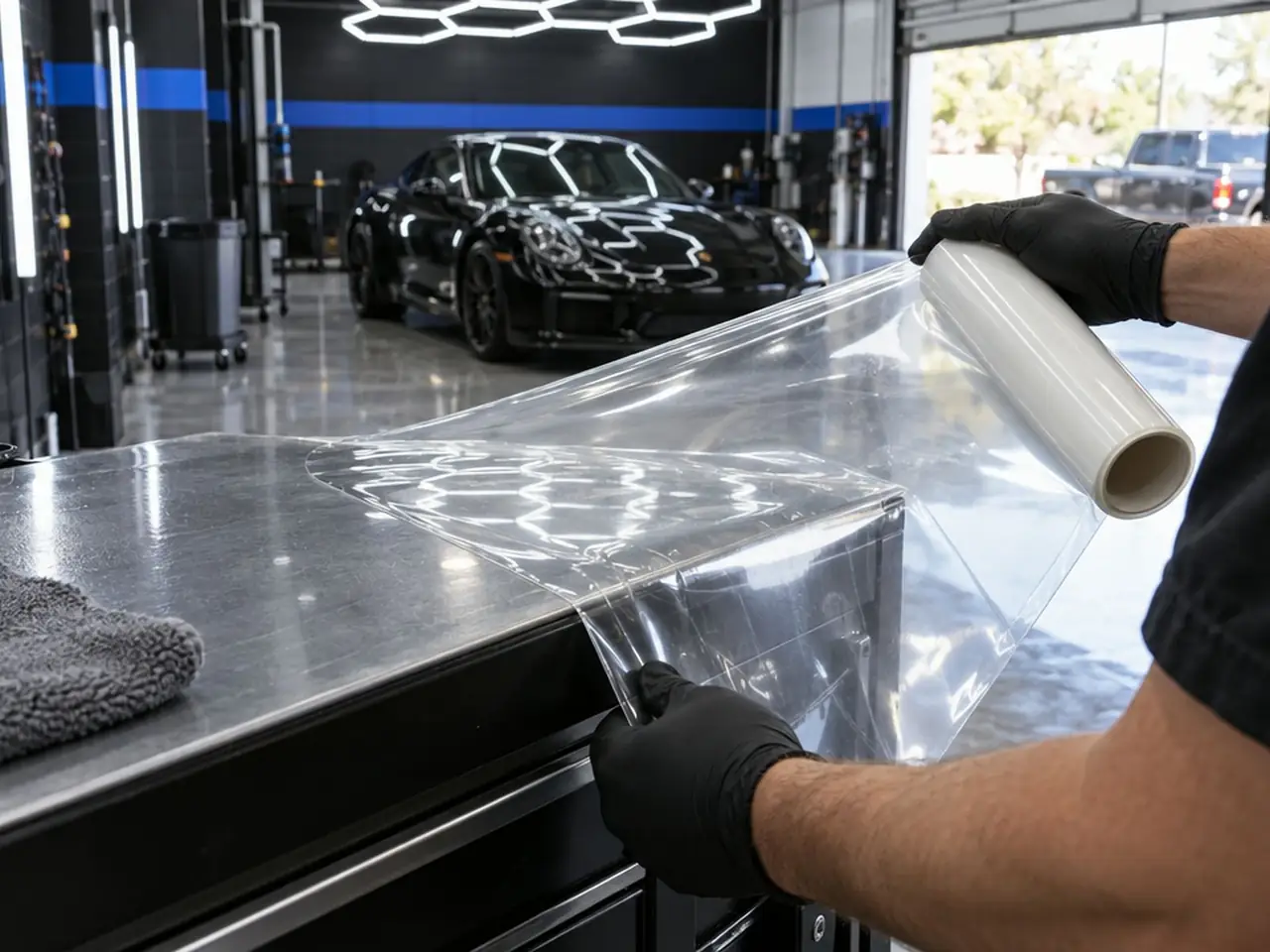
Windshield protection film is a glass service, not a paint film. Glacier Guard is Glacier's windshield protection film, supplied on a roll to installers.
Shops usually add it next to a paint film order. Check your state's rules on film on windshields before offering it.
How is PPF installed, in general?
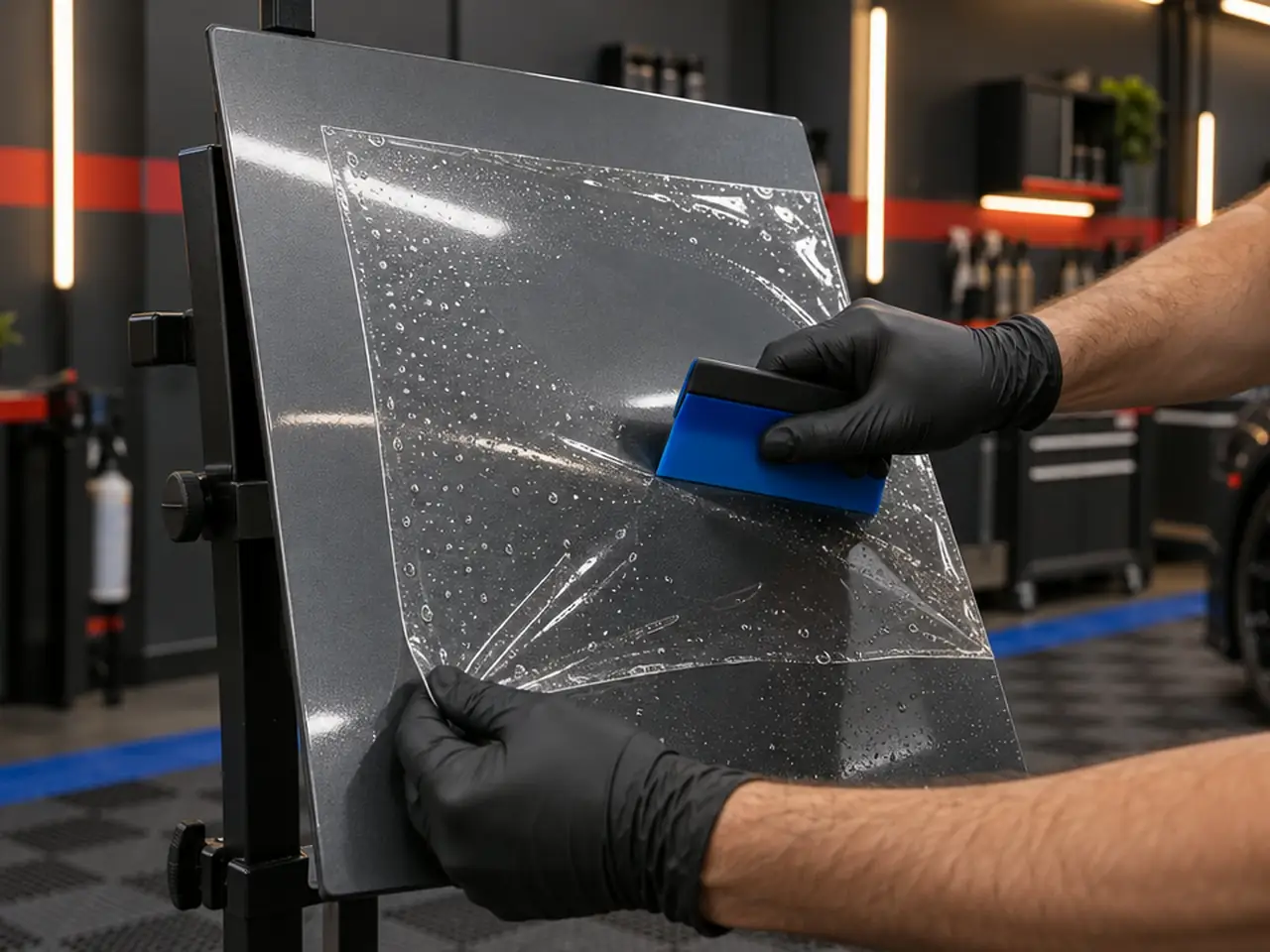
The install guide has the full sequence. In short:
- 1. Wash and decontaminate the paint.
- 2. Cut the panel pattern from the roll.
- 3. Apply slip solution to the paint and the adhesive side.
- 4. Position the film and squeegee out the solution.
- 5. Finish edges and give the owner a care card.
How do I switch PPF suppliers without risking customer jobs?
Run the new film beside your current one before it touches a customer car.
- Order samples first and test them on a donor panel.
- Compare handling, edges and finish against your notes.
- Move one finish at a time, starting with a low-risk job.
- Keep records of the film line and install date on every job.
How do shops order Glacier PPF?
Glacier sells wholesale to PPF installers, tint shops, detailers and dealers, not directly to vehicle owners. Apply for a wholesale account or request a quote with the finish and quantity you need.
Glacier ships nationwide. Sales reps provide samples. Dealers: find a Glacier dealer, or apply to become one.
In this guide
- What is PPF and is it worth it?
- What is urethane or TPU film in plain terms?
- What is the difference between gloss and satin PPF?
- How do gloss and satin compare side by side?
- How do I choose between Iceberg and Blizzard?
- How do I choose PPF for different customers?
- What do installers look for in a PPF roll?
- How do I run a sample test before I buy a roll?
- What should I ask a PPF supplier before buying rolls?
- What roll format does Glacier PPF come in?
- Should I buy rolls or pre-cut kits?
- What should I tell customers before the job?
- Does PPF yellow, and what should I tell customers?
- Where does windshield protection film fit?
- How is PPF installed, in general?
- How do I switch PPF suppliers without risking customer jobs?
- How do shops order Glacier PPF?
Quick answers
13 questions. Select one to open it.
What is PPF and is it worth it?
PPF is a clear urethane film applied over paint to guard against rock chips, scuffs and road wear. It is removable. Whether it is worth it depends on how the car is driven and parked and how much the owner values the finish.
What is the difference between gloss and satin PPF?
Gloss clear PPF keeps the factory gloss. Satin PPF gives glossy paint a soft, lower-sheen look. Finish names vary by maker, so judge a sample on the panel in daylight.
What is TPU or urethane PPF?
TPU, short for thermoplastic polyurethane, is a flexible plastic that most paint protection film is made from. Shops also call it urethane film. The material name does not tell you how a roll installs, so test a sample.
How do I choose between Iceberg and Blizzard?
Choose by finish. Iceberg is Glacier's gloss clear PPF for keeping factory paint looking factory. Blizzard is Glacier's satin PPF for giving glossy paint a satin look. Ask your Glacier rep for samples.
What do installers look for when choosing PPF?
Clarity, a consistent finish, how the film conforms to curves, how the adhesive behaves during positioning, how edges settle and how the roll handles. Test a sample on a panel before buying a roll.
How do I test a PPF sample?
Prep a spare panel the way you prep a customer car, cut the same shape from each film, install each with the same tools and solution, then compare positioning, edges and finish in daylight and bay light. Write the notes down against each film.
What should I ask a PPF supplier before I buy rolls?
Ask about finishes, samples, whether film comes as rolls or kits, how the supplier addresses material aging, what written product information is available, whether tools and plotters are available, and availability for your order.
Which PPF should a new installer stock and where do I buy rolls?
Both gloss and satin are protective films; the difference is finish. Choose by the finish your customers ask for, and buy from a supplier that gives samples and answers questions. Glacier sells Iceberg gloss and Blizzard satin as rolls to installers on a wholesale account.
What does a PPF shop need to get started?
A clean, well-lit bay, a plotter or good hand-cutting skills, squeegees, blades, slip solution and prep supplies, plus film. Glacier sells film, tools and Jaguar plotters. Ask your Glacier rep what is available on a wholesale account.
Does PPF yellow on white cars?
It can, and it shows most on white and light paint. Yellowing can come from the film material or adhesive aging under UV and heat. Contaminants, edge buildup and installation contamination can look like yellowing but are staining or haze. See our general guide to why PPF yellows, or ask your Glacier rep about a specific film.
What roll format does Glacier PPF come in?
Glacier supplies PPF on rolls. Glacier also sells Jaguar plotters in 40 inch and 72 inch widths.
What product information is available for Glacier PPF?
Ask your Glacier rep what product information is available for Iceberg and Blizzard.
Can a dealer or detailer buy Glacier PPF?
Yes. Detailers, PPF installers, tint shops and dealers can apply for a wholesale account or request a quote. Glacier sells wholesale only. Dealers can also find a Glacier dealer or apply to become one.
Ready to source PPF for your shop? Apply for a wholesale account.