How to start a window tinting business: a setup checklist by phase
To start a window tinting business, set the shop up in phases: plan the space and local rules, build the bay with modular floor tile plus hexagon ceiling and straight wall lights, add tools and a plotter, then stock ceramic film. Glacier supplies each item to new tint shops. Ask your Glacier rep what is available on a wholesale account.
What order should I set up a new tint shop in?
Work in five phases so that nothing is bought before the thing it depends on. The space and the floor come first, because lights, plotter and film all sit on top of them.
This page is the phase-by-phase checklist. For the full list of what a new shop needs, read the Window film 101 guide. For bay layout and plotter placement, read the shop buildout planning guide.
| Phase | Focus | What you decide | Glacier page |
|---|---|---|---|
| 1. Plan | Space, services, local rules, wholesale account | Tint only, PPF only or both; what your city and state require; apply for a wholesale account and ask for samples | Trade |
| 2. Build the bay | Floor and lighting | Floor layout; hexagon lights for the ceiling and straight lights for the walls | |
| 3. Equip | Hand tools and plotter | Starter tool kit; whether to cut by hand or buy a plotter, and which width | |
| 4. Stock | Film (and PPF if you offer it) | Which ceramic lines to hold on the shelf first | Window Film |
| 5. Open | First jobs and customer handoff | Pattern and install routine; aftercare handout; shade rules for your state | Resources film aftercare for customers |
What goes on a tint shop startup checklist?
Use this table as a working list. Each row says what to decide and what "done" looks like.
| Item | Decide | Glacier supplies | Done when |
|---|---|---|---|
| Bay space | How many vehicles you will work on at once | Layout planning in the buildout guide | The footprint is marked and kept clear |
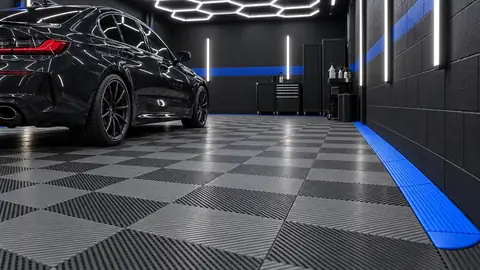
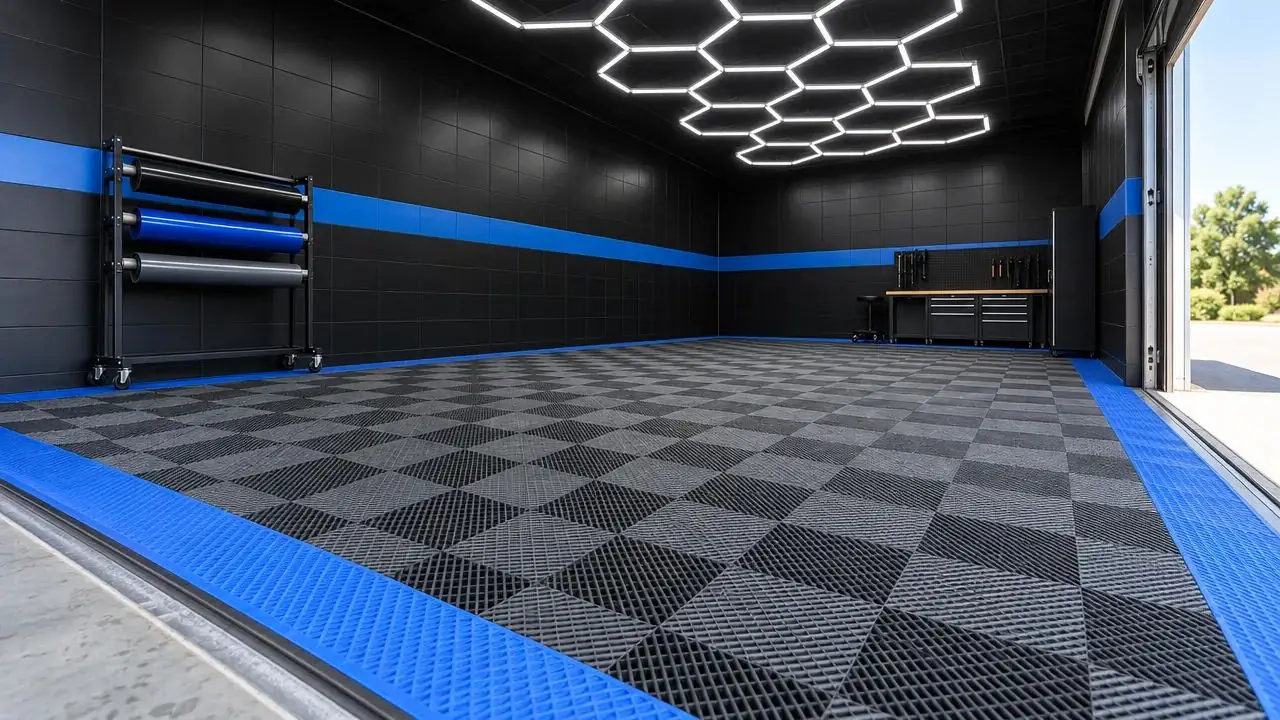
| Floor | Tile color and layout | Modular interlocking polypropylene tile (not epoxy) | The bay is covered and easy to sweep and mop |
| Ceiling lighting | Hexagon lights to fill the ceiling | Hexagon lights | The vehicle is lit evenly from above |
| Wall lighting | Straight lights along the walls | Straight lights | The glass edges and door seals are visible |
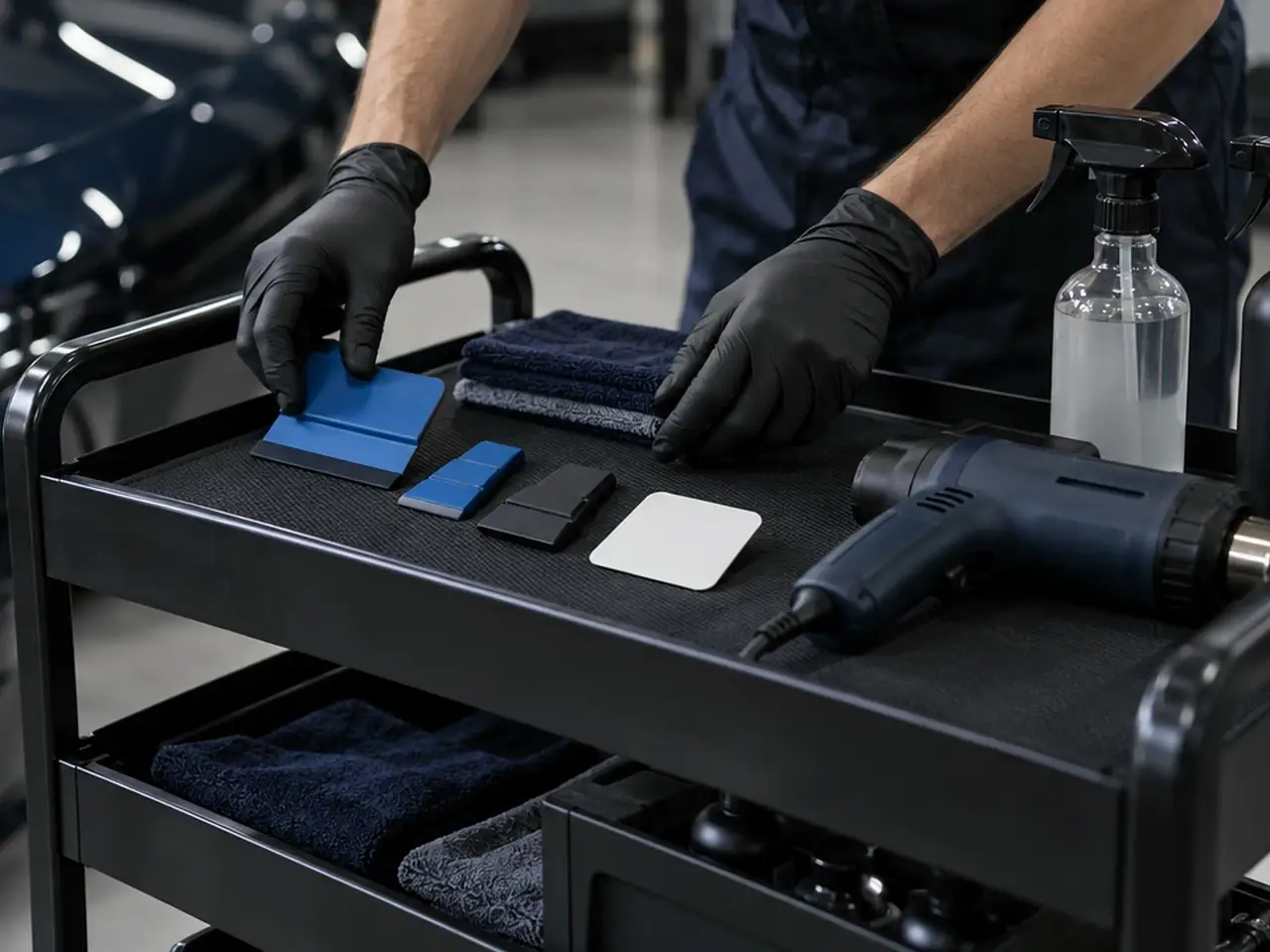
| Hand tools | Squeegees, hard cards, blades, scrapers, prep supplies | Installation tools | Every installer has a full kit |
| Blade disposal | Where used blades go | Blade disposal container | A container is mounted at each station |
| Cutting | Hand cut or plotter; 40 inch or 72 inch | Jaguar plotters, 40 inch and 72 inch | A test cut matches the pattern |
| Film stock | Which ceramic lines to hold first | Window film rolls | Rolls are labeled and stored flat or upright |
| PPF (optional) | Whether to offer paint protection film | Iceberg gloss and Blizzard satin PPF | You have chosen a finish to start with |
| Shade rules | Which limits apply in your state | Tint laws guides and FAQ | Your shade menu matches current state rules |
| Wholesale account | Who is the account holder; what to submit | Wholesale account and sales rep | Account is approved; samples requested |
| Customer handoff | What you tell customers after install | Aftercare guide for customers | A handout or message is ready |
What kind of space does a tint bay need?
A tint bay is an enclosed, clean, well-lit space with room to walk all the way around a vehicle. Dust and wind are the enemies of film work, so the room matters as much as the equipment.
Plan the bay around the vehicles you expect to take in, not the other way round. The shop buildout planning guide walks through layout, plotter placement and tool stations so this page does not repeat it.
How should I light a new tint bay?
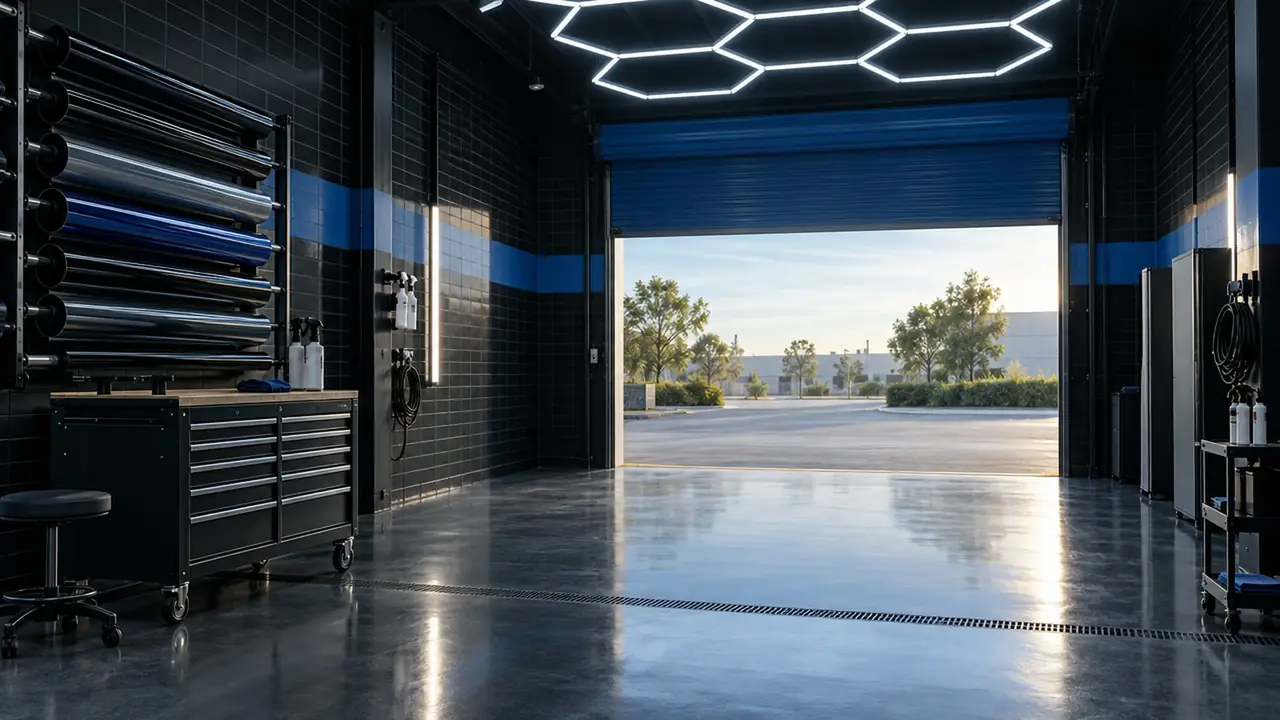
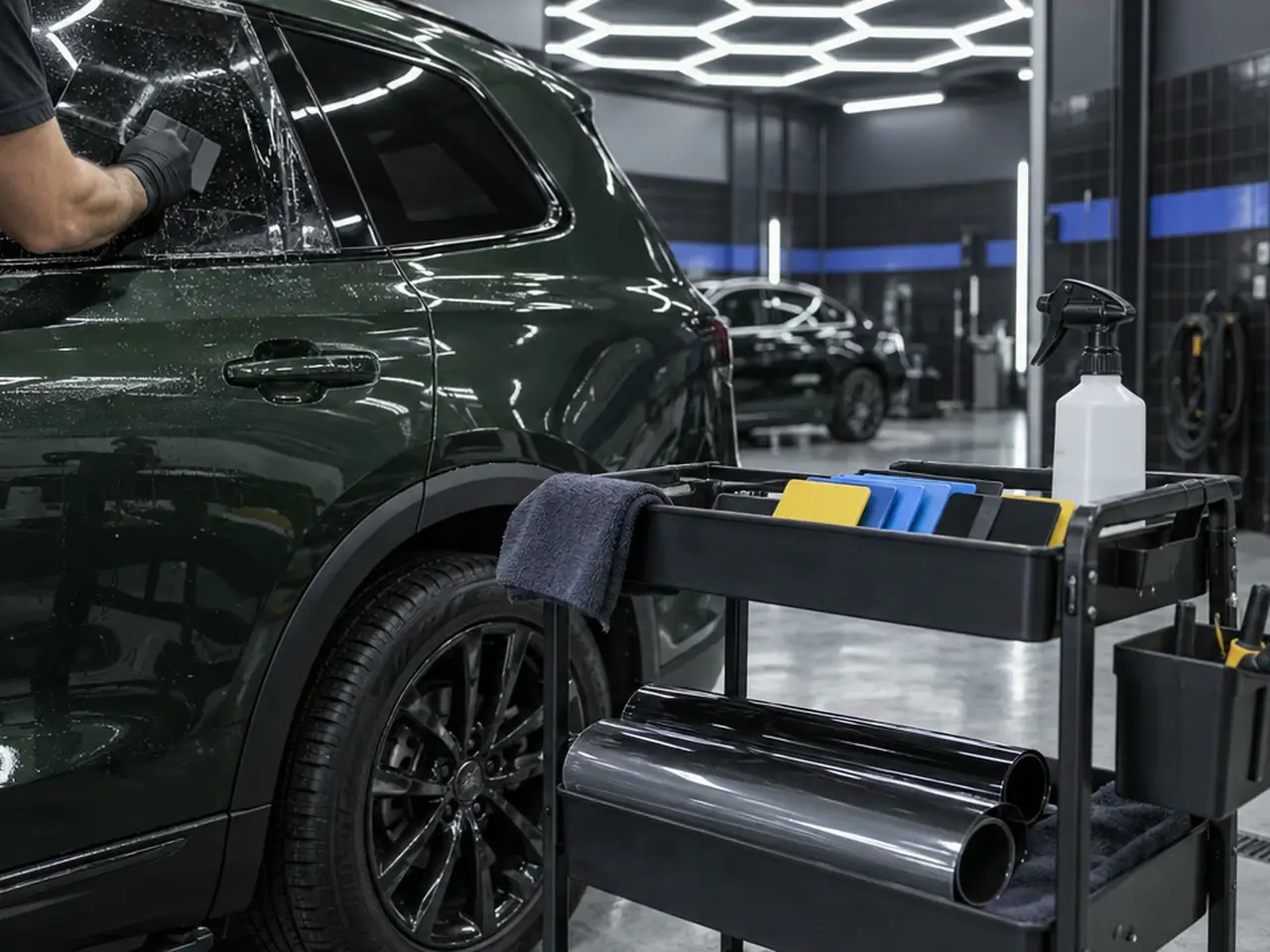
Use hexagon lights to fill the ceiling and straight lights along the walls. The ceiling lights spread even light over the whole vehicle, and the wall lights add light at the sides, where edges and seals need checking.
See the shop lighting page for the range, or ask a Glacier rep.
What floor should a new tint shop have?
Glacier sells modular interlocking polypropylene floor tile. It is tile, not epoxy: it is sold per tile, the tiles lock together.
That matters for a new shop that may rearrange bays as the work mix changes, or that rents its space. Check your lease for what you can install. The modular vs epoxy flooring guide compares the two approaches.
Which tools and plotter does a new shop need?
Start with the hand tools every installer uses: squeegees, hard cards, blades, scrapers and glass prep supplies. See the installation tools pages for each family.
A plotter is optional on day one, because film can be cut by hand. Shops that cut patterns on a plotter get consistent cuts and can track scrap more easily. Glacier carries Jaguar plotters in 40 inch and 72 inch widths; a Glacier rep can help match the width to your bay and work.
- 1. Buy the hand tool kit first so every installer can start.
- 2. Decide between hand cutting and a plotter based on the vehicles you will tint.
- 3. If you buy a plotter, run a test cut and calibrate before the first customer job.
- 4. Keep blades, pens and spare film near the plotter.
What film should a new shop stock first?
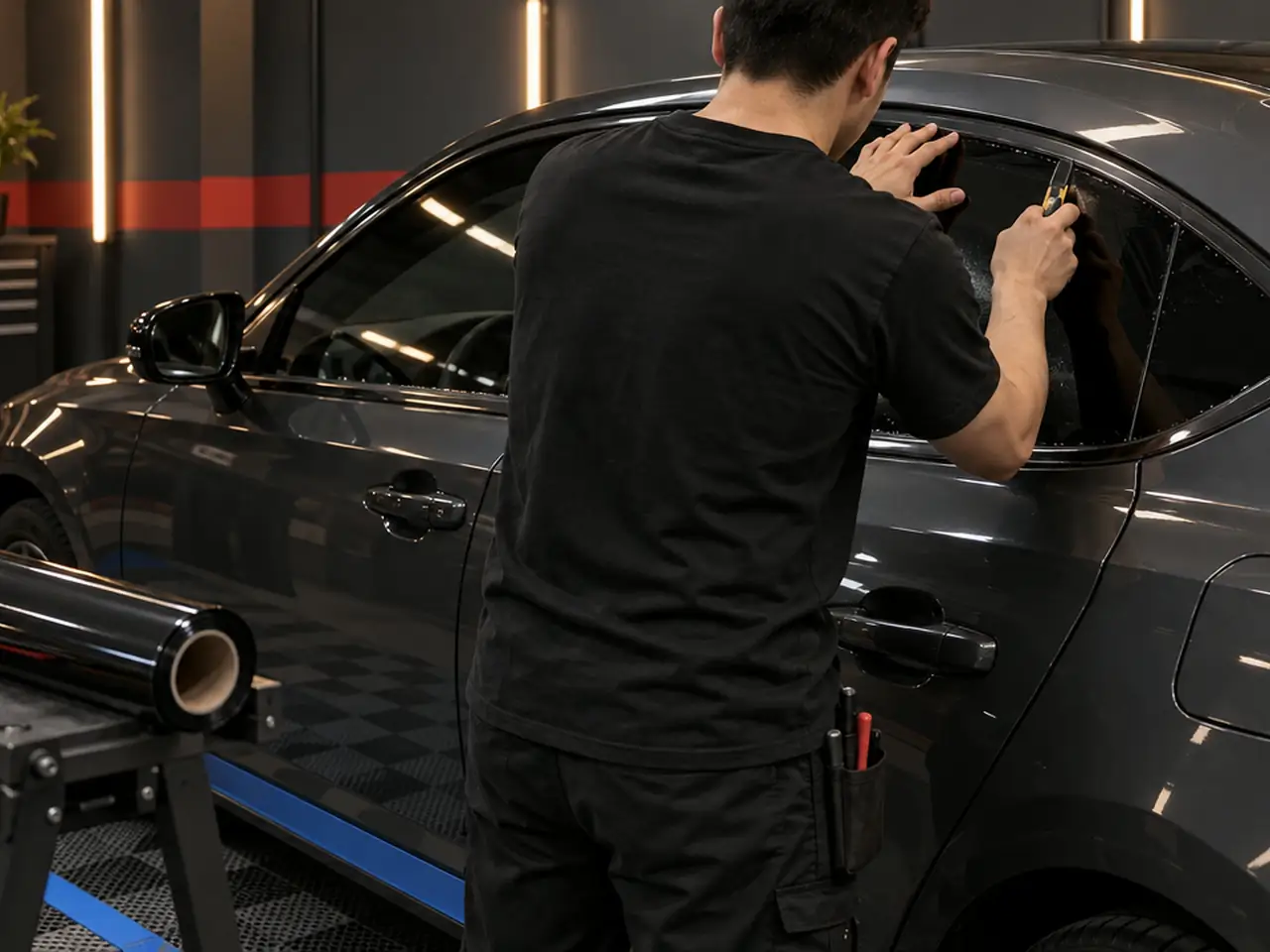
Glacier's window film is ceramic-only and non-dyed, so a shop can stock one construction across its range. Glacier's automotive film comes in three ceramic lines: Premium Ceramic, Ceramic Plus and Ceramic Ultimate Plus. Compare their spec tables and ask a Glacier rep which suits your customers.
Sales reps provide samples. Ask your Glacier rep for the warranty terms on each automotive film line.
What should I check before the first customer job?
Know the shade limits for your state before you build a shade menu. Limits differ by state and by vehicle type, and they change, so use a current source.
See the window tint laws FAQ for the most common state and general questions, and the state tint laws guide for each state's page. Then put together an aftercare message for customers.
Who is this checklist for, and how do I order?
It is for people opening a tint shop, adding a bay or a PPF room, or outfitting a mobile or home-based setup. Glacier sells wholesale to shops, installers, detailers and dealers, not to drivers or homeowners.
Apply for a wholesale account or request a quote. Glacier ships nationwide. Ask your Glacier rep about availability and timing for your order.
In this guide
- What order should I set up a new tint shop in?
- What goes on a tint shop startup checklist?
- What kind of space does a tint bay need?
- How should I light a new tint bay?
- What floor should a new tint shop have?
- Which tools and plotter does a new shop need?
- What film should a new shop stock first?
- What should I check before the first customer job?
- Who is this checklist for, and how do I order?
Quick answers
12 questions. Select one to open it.
In what order should I set up a new tint shop?
Plan the space, services and local rules first, then build the bay floor and lights, then add tools and a plotter, then stock film, then open. Each phase sits on the one before it. Apply for a wholesale account early so you can ask for samples while you build.
Should I put the floor in before the lights?
Usually the floor goes in first, because the bay layout decides where lights and the plotter go. Modular interlocking tile locks together, so check the layout against your floor plan before you order. Mount the hexagon ceiling lights and straight wall lights once the layout is set.
Can I open a tint shop in a rented unit?
Many shops do. Check your lease for what you may install. Glacier's floor is modular interlocking polypropylene tile, not epoxy.
How many install bays should a new shop start with?
Start with the number of bays you can keep clean and fully equipped. One well-lit, well-equipped bay is a better starting point than two that share tools and dust. Add bays as the work mix grows; the shop buildout planning guide covers layout.
Do I need a plotter on day one, or can I cut film by hand?
You can start by cutting by hand. A plotter adds repeatable pattern cuts, which helps as volume grows. Glacier supplies Jaguar plotters in two widths. Ask your Glacier rep what product information is available.
Which plotter width should a new shop buy, 40 inch or 72 inch?
It depends on the film widths you cut and the room you have. Glacier carries both widths. Ask your Glacier rep to match the plotter to your bay and the vehicles you expect to tint.
What film should my new shop stock first?
Hold the ceramic lines you expect to sell most. Glacier's window film is ceramic-only and non-dyed, and its automotive range has three lines: Premium Ceramic, Ceramic Plus and Ceramic Ultimate Plus. Compare the spec tables and ask a rep for samples.
Can I get film samples before I order rolls?
Sales reps provide samples. Apply for a wholesale account or request a quote and ask your rep.
What local rules should I check before I sell tint?
Check the shade limits for your state, plus any city or state business, licensing and insurance requirements that apply to your shop. Tint limits differ by state and by vehicle type. The window tint laws FAQ points to the most-asked states and the state guide.
Can a mobile or home-based tinter use this checklist?
Yes, for the film, tool and plotter phases. The bay floor and lighting phases apply only if you have a fixed work space. Check local rules for where you may operate.
Does Glacier help with shop setup or training?
Ask your Glacier rep. This page covers the products Glacier supplies: film, tools, plotters, flooring and lighting.
How do I open a wholesale account for a new shop?
Apply on the wholesale page or request a quote. Ask your rep what to include in your application.