
What to carry in a mobile install kit
A mobile install kit should carry everything you cannot borrow on site: install tools, prep and slip supplies, protection for the customer's property, film on rolls or pre-cut, a light, cleanup supplies and paperwork. Pack by layer and check the list before you leave. Glacier supplies installation tools and film to installers.
How is a mobile install different from a shop install?
In a shop you can walk to a shelf. On site you have only what you brought, in someone else's space. The kit has to make up for the bay.
- You do not control dust, water or light, so you bring your own.
- You cannot fetch a missing tool, so you pack spares.
- You are working on the customer's property, so you protect it.
- You leave the site clean, so you pack the cleanup.
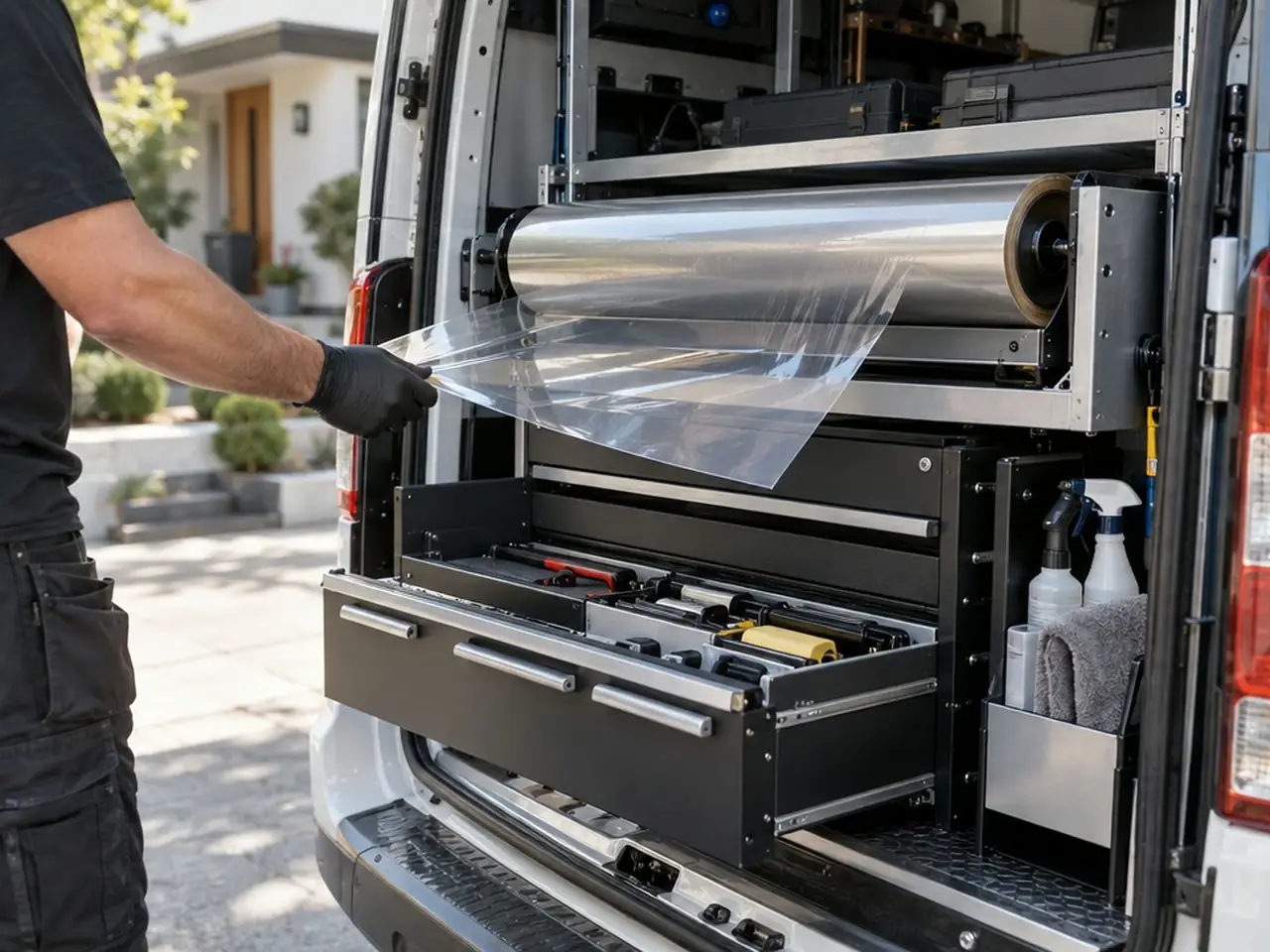
What goes in the kit, layer by layer?
Pack in layers, so the tools used on every job sit within reach and the ones you rarely need sit underneath.
| Layer | What goes in it | Glacier page |
|---|---|---|
| Core install tools | Squeegees, hard cards, blades, scrapers | Squeegees |
| Cutting | Blades, cutting surface, scissors, a way to cut on site or pre-cut panels | |
| Prep and slip | Spray bottles, slip solution, cleaning supplies, scraper, clean towels | See the prep and slip category for what Glacier lists. |
| Protection | Towels and sheets for the customer's surfaces and floors | Not a Glacier item |
| Light | A bright handheld light and a work light | Not a Glacier item |
| Film | Rolls or labeled cut panels for the job | Window Film |
| Cleanup | Waste bag, blade disposal container, spare towels | Installation tools blade disposal container |
| Paperwork | Quote, condition note, aftercare sheet | Not a Glacier item |
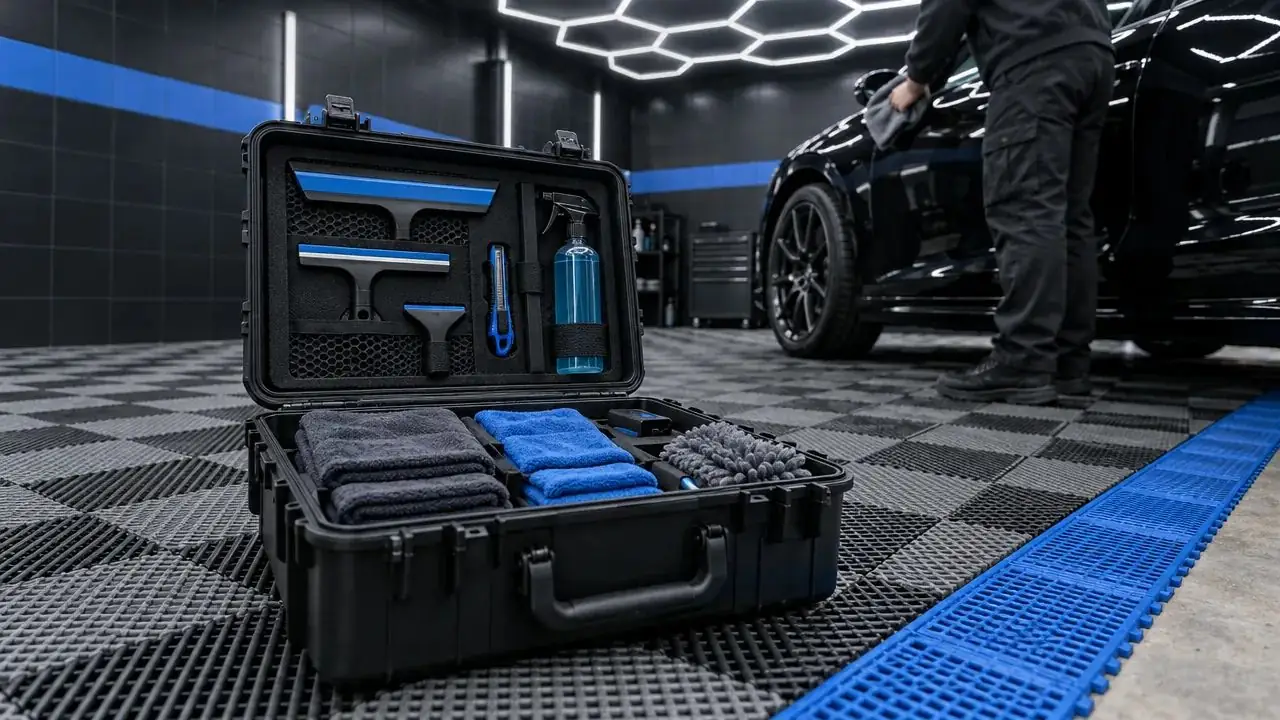
What changes by job type?
Pack for the job you booked, not for every job you might get.
See the tint and flat glass tool sets guide for more on planning a flat glass kit.
| Job type | Add to the core kit | Think about |
|---|---|---|
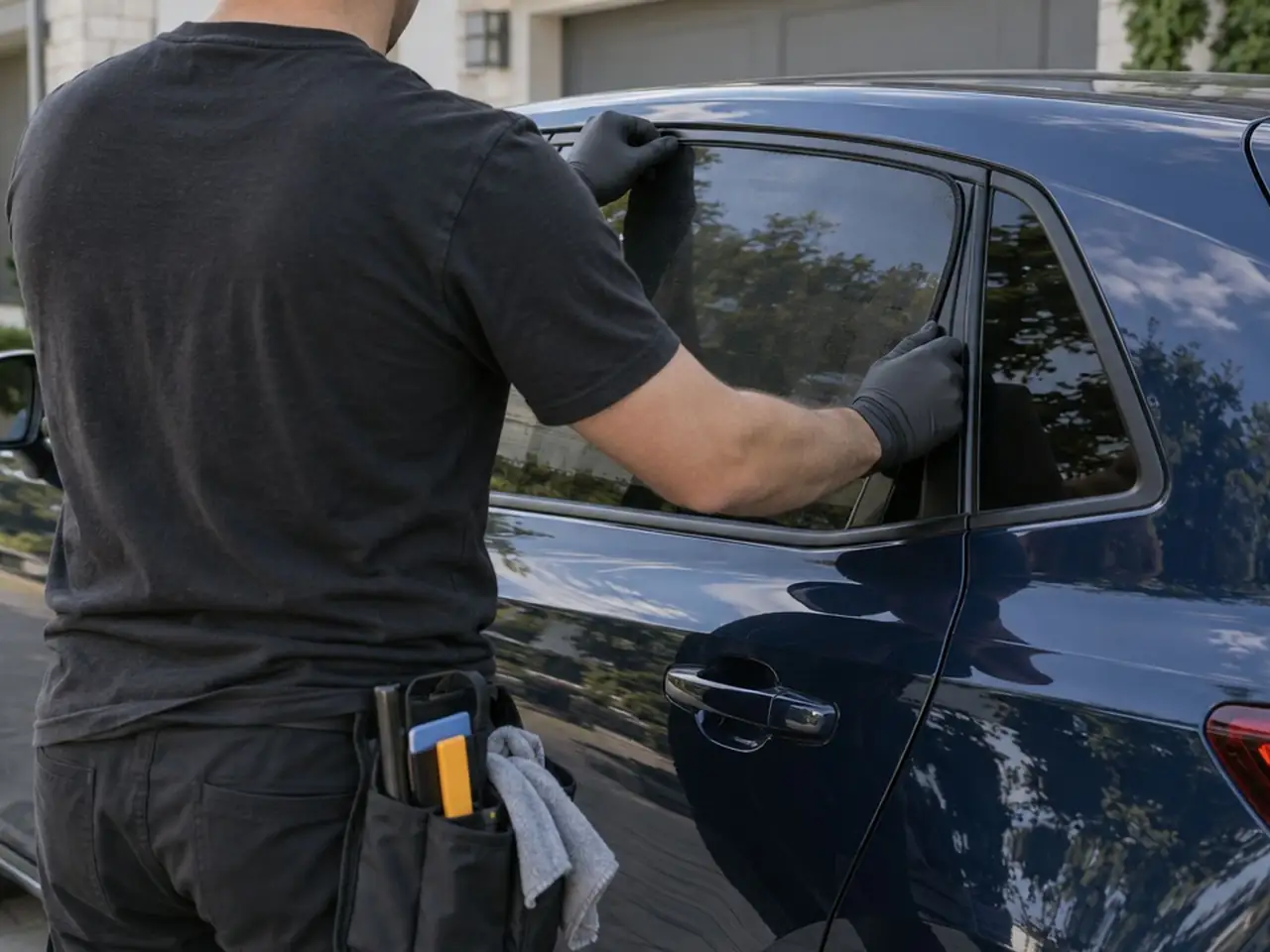
| Car window tint | Interior protection, edge tools, a gasket tool | Where the car will be parked and how clean the area is |
| PPF | Wash and decon supplies, masking, edge tools | A clean space and a place to wash |
| Flat glass film | Wide squeegees, floor and sill protection, ladders if needed | Access to the glass and what is around it |
Should I pre-cut panels or cut on site?
Pre-cutting can shorten the work on site but needs flat, labeled transport. Cutting on site gives flexibility but needs a clean bench.
| Choice | Good when | Watch for |
|---|---|---|
| Pre-cut panels | The vehicle or glass is known | Keeping them flat and labeled |
| Cut on site | Measurements are uncertain | A clean cutting surface and fresh blade |
| Both | Mixed jobs | Labeling what is pre-cut and what is not |
What about the surroundings?
The site is not yours. Look at what it does to the work before you start.
- Choose a sheltered, level spot where you can.
- Watch for wind, dust and spray from other work.
- Keep film and tools off the ground.
- Ask the customer where you may work and where water may go.
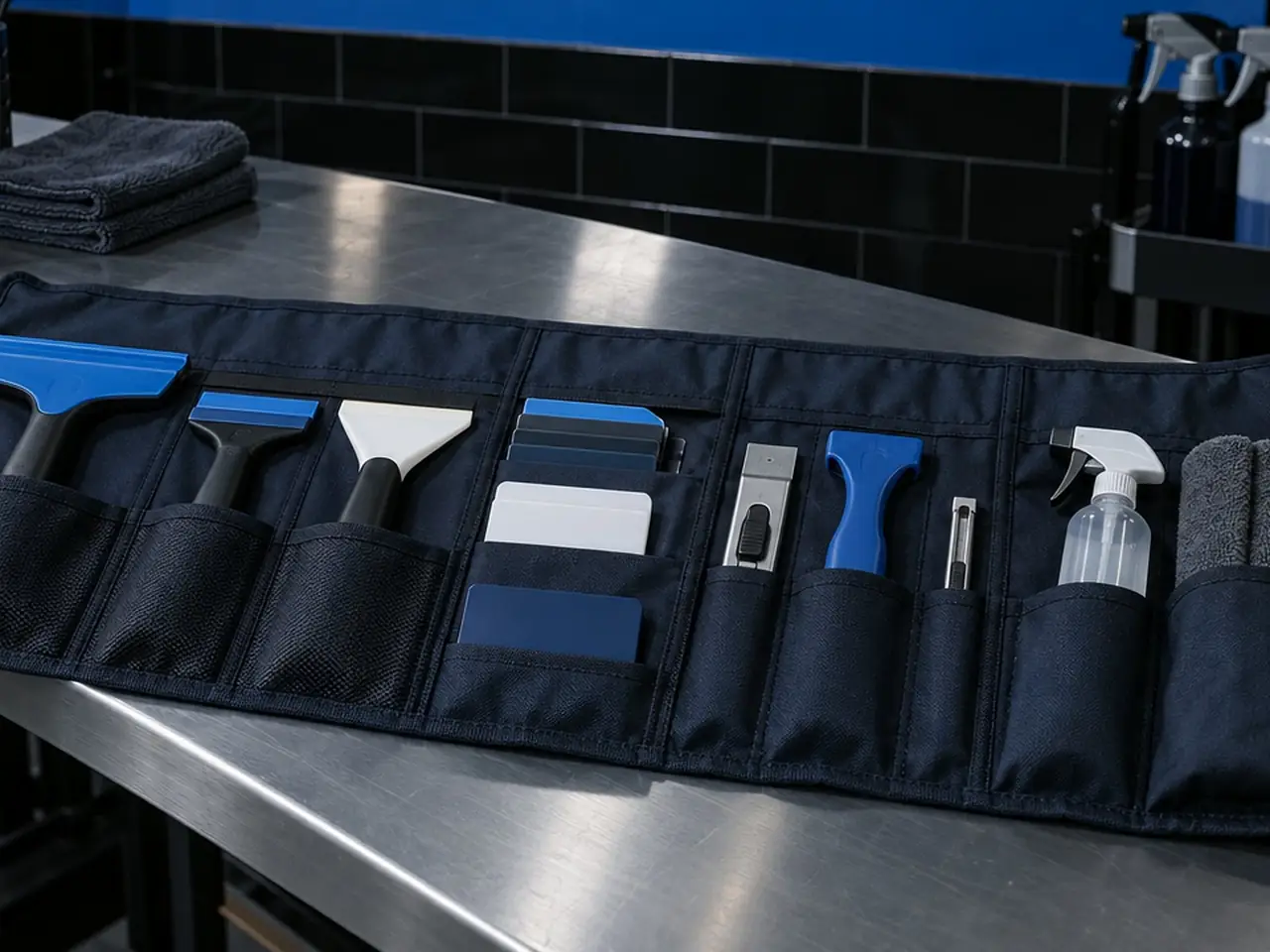
What should I check before I leave?
Run the same checklist every time. Missing one item costs more than the minute it takes.
- Confirm the address, the vehicle or glass and the scope from the quote.
- Check film: right line, finish and shade, labeled and flat.
- Check tools: edges clean, blades fresh, spares packed.
- Check slip solution and water supply.
- Check lights and any power you need.
- Check the paperwork and aftercare sheet.
- Check your phone and the customer's contact details.
How do I set up on site?
Walk the space before you unpack. Choose where you will work, then set up in the same order each time.
- Look at the glass or vehicle and note its condition.
- Choose a clean, level, sheltered spot if you can.
- Lay protection over anything the customer wants kept clean.
- Set out tools and film on a clean surface, not the ground.
- Set up your light so you can see dust and edges.
- Check the glass or paint under light before you lay film.
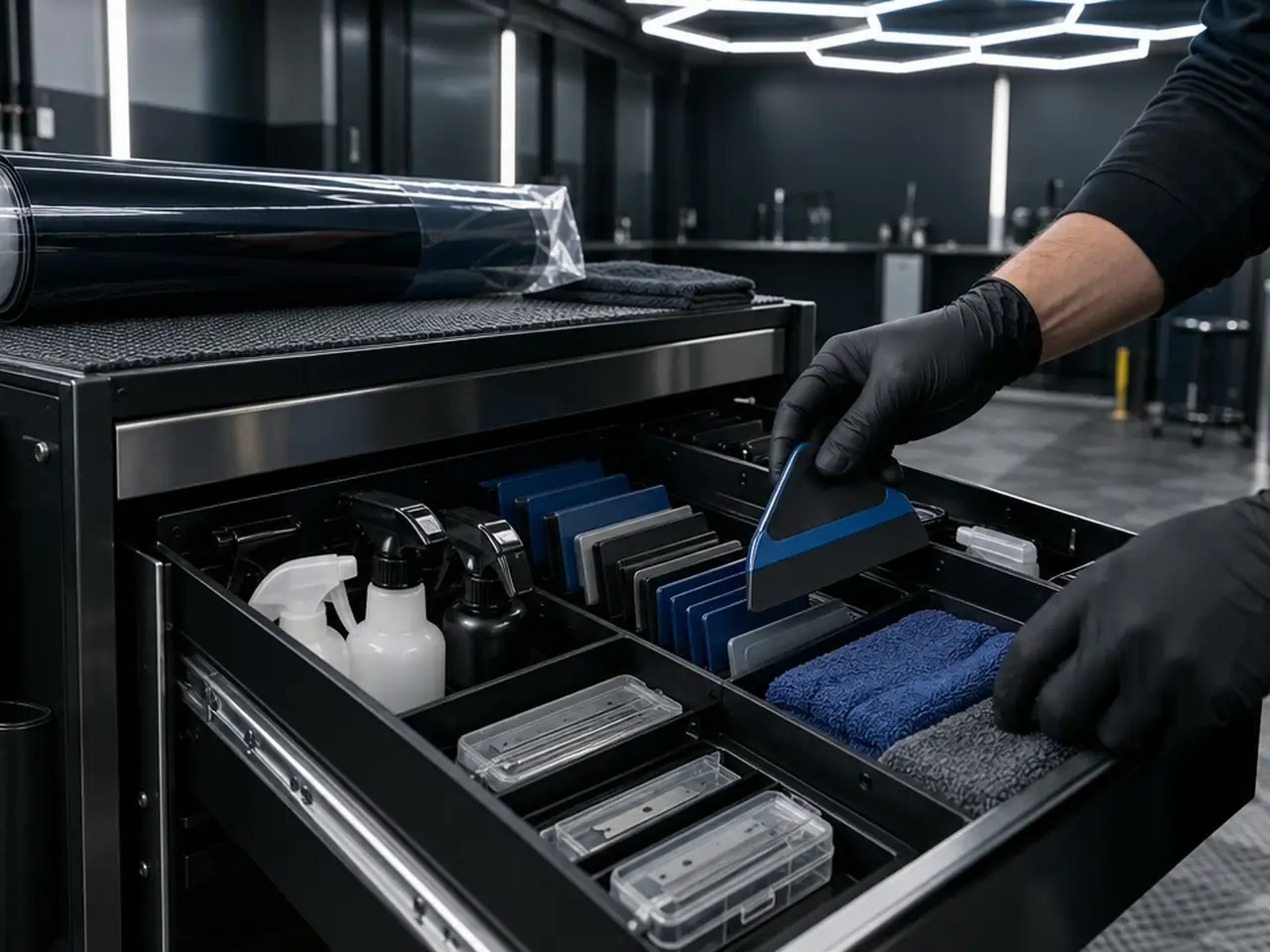
How do I leave the site clean?
The customer remembers the mess as much as the film. Leave the space better than you found it.
- Gather scrap film and used towels.
- Put used blades in the disposal container.
- Wipe up water and wipe down surfaces.
- Remove protection and check nothing was marked.
- Hand over aftercare notes and explain them.
How do I handle questions from the customer on site?
Customers watch. Be ready to explain what you are doing in plain terms and to say when you do not know.
- Explain what you are doing without breaking your rhythm.
- Tell them how long to keep away from the work in plain terms.
- Hand over the aftercare sheet and walk through it.
- Take a note of questions you cannot answer and get back to the customer.
How do I keep the kit organized?
A kit that is always packed the same way is a kit you can check in seconds.
Glacier supplies installation tools, window film and PPF to installers. Ask your Glacier rep what is available on a wholesale account. Apply for a wholesale account, and a Glacier rep will follow up.
- Use cases or bags with labeled sections.
- Keep a written packing list inside the lid.
- Reset the kit after every job, not before the next one.
- Replace consumables when they get low.
In this guide
- How is a mobile install different from a shop install?
- What goes in the kit, layer by layer?
- What changes by job type?
- Should I pre-cut panels or cut on site?
- What about the surroundings?
- What should I check before I leave?
- How do I set up on site?
- How do I leave the site clean?
- How do I handle questions from the customer on site?
- How do I keep the kit organized?
Quick answers
10 questions. Select one to open it.
What should be in a mobile window tint kit?
Install tools, prep and slip supplies, protection for the customer's property, film or labeled cut panels, a bright light, cleanup supplies and paperwork.
What tools do I need for a mobile PPF install?
Wash and decon supplies, masking, squeegees and cards, blades, slip solution, a light and cleanup supplies, plus a clean place to work.
How do I pack a mobile install kit?
Pack in layers: core tools first, cutting and prep below, protection and cleanup after that, and paperwork in an easy-to-reach spot.
Should I cut film on site or bring pre-cut panels?
It depends on the job and the space. Cut panels need to stay flat and labeled in transit. Cutting on site needs a clean surface and a test cut first.
What should I check before leaving for a mobile job?
The address, scope, film line and shade, tool edges and blades, slip solution, light, paperwork and aftercare sheet.
How do I protect the customer's property?
Lay towels or sheets over surfaces and floors you do not want marked, and remove them at the end after checking nothing was marked.
How do I keep dust off the work on site?
Choose a sheltered spot, keep film and tools off the ground and check the glass or paint under light before you lay film.
What goes on the paperwork for a mobile job?
The quote with the scope, a condition note for the glass or paint and an aftercare sheet for the customer.
How do I keep a mobile kit organized?
Use labeled sections, keep a packing list in the lid, reset after every job and replace consumables when they run low.
Does Glacier supply tools and film for mobile installers?
Glacier supplies installation tools, window film and PPF to installers. Apply for a wholesale account, and a Glacier rep will follow up.
Need tools for your mobile install kit? Apply for a wholesale account.