Tool sets for installers who do both window tint and flat glass film
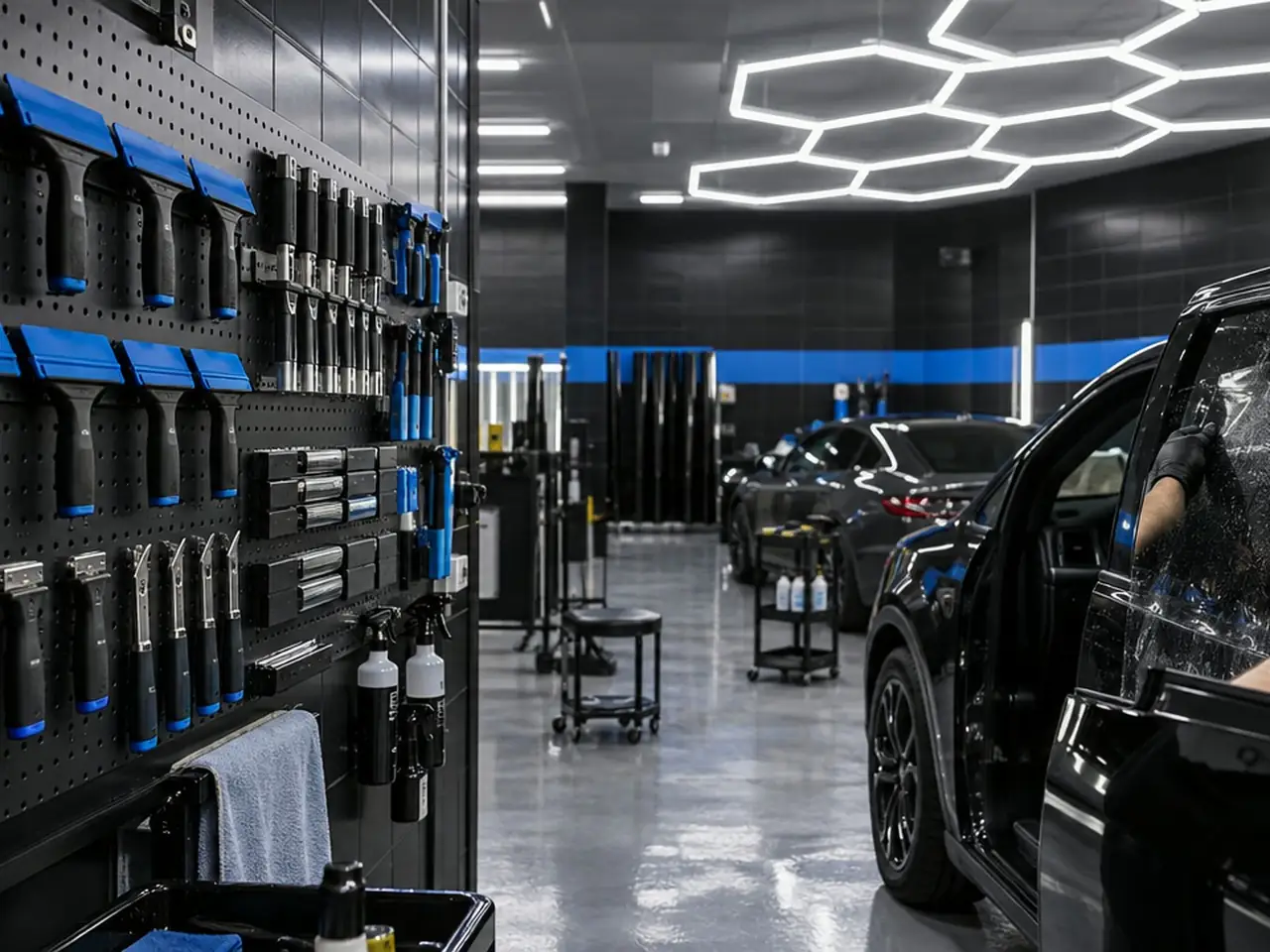
An installer who does window tint and flat glass film can share most of one tool set: squeegees, cards, scrapers, blades and slip solution. Flat glass adds larger panes, so it calls for wider squeegees and scrapers, floor and sill protection, and a plan for cutting. Glacier sells these tools to shops and installers.
How is flat glass work different from automotive tint for tools?
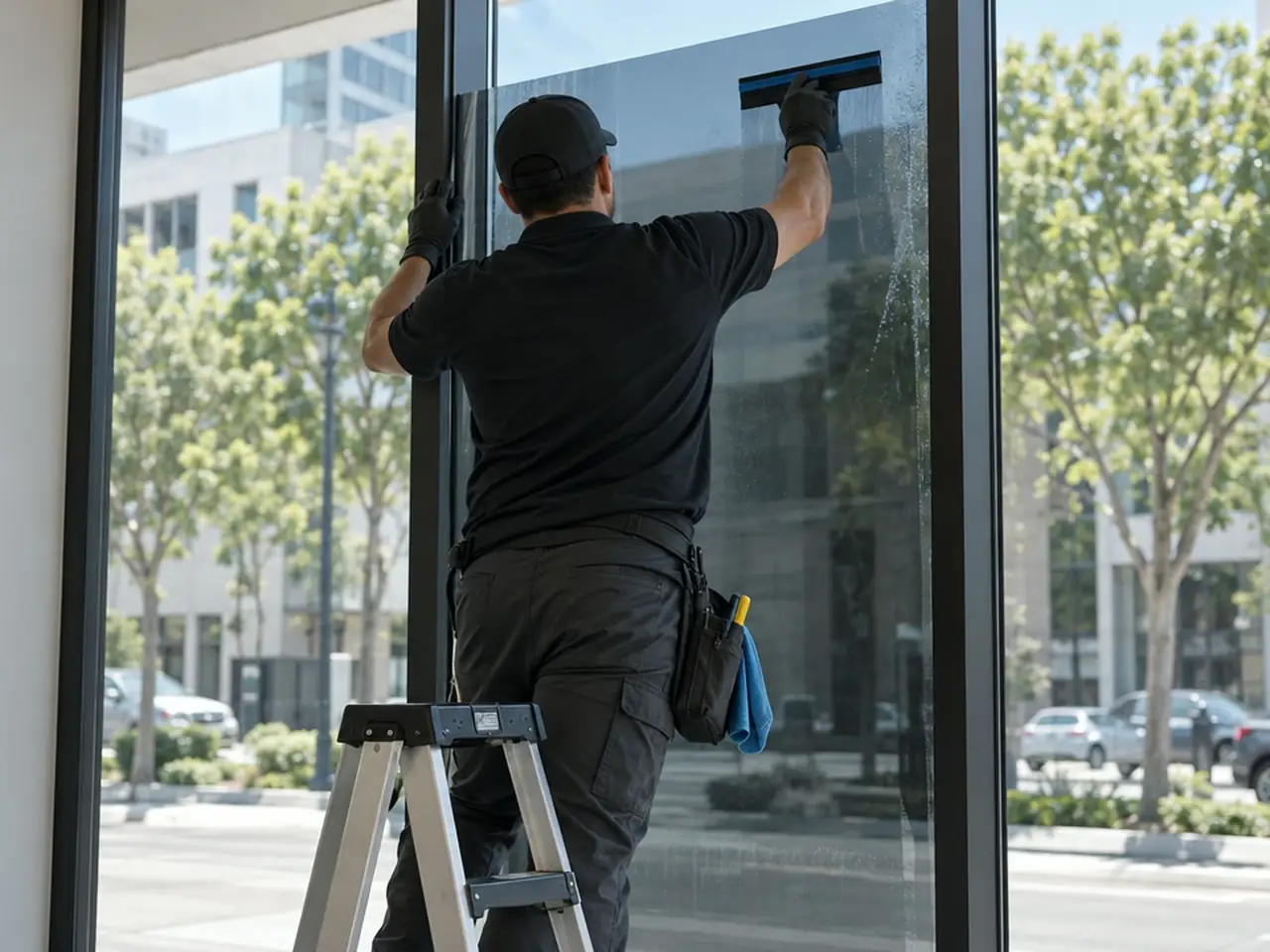
Building glass is larger and flatter than vehicle glass, and it is usually worked from a ladder or a lift, on site, with the customer's space around you.
That changes the kit more by size and logistics than by tool type. The same hard squeegees, cards and scrapers work on both.
What carries over from auto tint to flat glass?
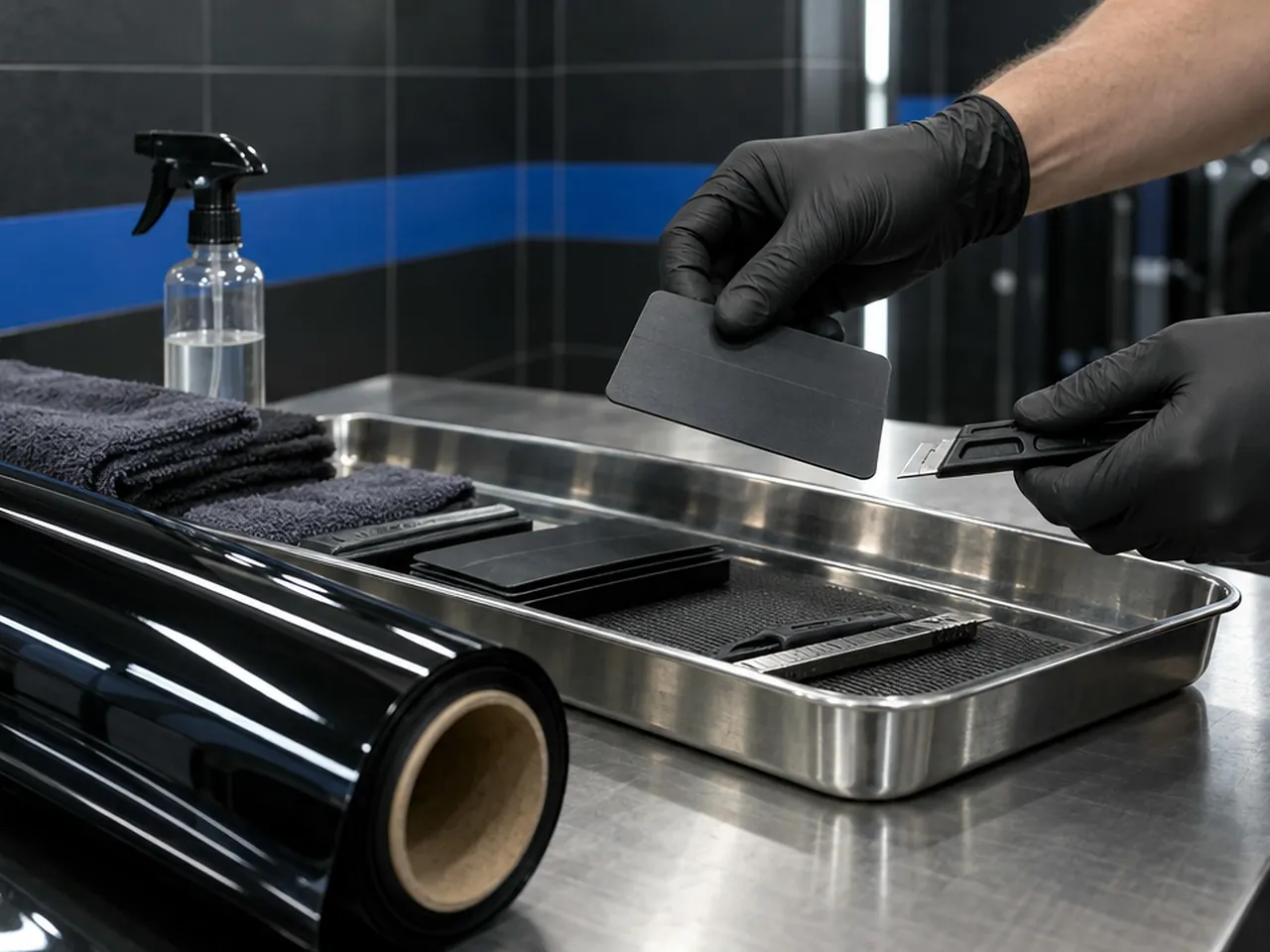
- Hard squeegees for tack-down.
- A hard card or smart card for frame edges and channels.
- Scrapers and replacement blades for prep and film removal.
- Slip and cleaning solution, spray bottles and lint-free towels.
- Snap-off utility blades for trimming.
What do I add for flat glass jobs?
The additions below are general practice for architectural work. Items not sold by Glacier are marked as such.
| Need | Why it matters on flat glass | Glacier option |
|---|---|---|
| Bigger squeegees | More coverage per pass on large panes | Big Titan Squeegee; Turbo Squeegee in the 6 inch size |
| Wide scraper | Clears larger flat areas of residue | 8 Inch Big Mouth Handle with 8 Inch Beveled or Pro Square Blade; Bulldozer |
| Plastic blades | Gentler where steel could mark treated glass | 1 Inch Plastic Scraper Blades |
| Surface protection | Keeps floors, sills and furniture clean | Plastic Masking with Tape |
| Reach and access | Ladders, extension handles, tape measure | Ask your Glacier rep what is available |
| Cutting | Cutting film to fit the glass | Jaguar plotters, 40 inch and 72 inch |
Should I cut flat glass film by hand or on a plotter?
Hand cutting suits one-off or irregular panes. A plotter saves time when a job has many panes of the same size, such as a row of storefront windows.
Glacier sells Jaguar plotters in 40 inch and 72 inch widths. Ask your rep which width suits your bay and the work you take on.
What should I check about the glass before I pick up a tool?
Tools do not fix a bad film choice. Check the glass first, because some types carry a risk of thermal stress or are covered by a window maker's warranty that film could affect.
- Identify single-pane, insulated, laminated, tempered or low-E glass.
- Ask the glass or window maker whether film is allowed and under what conditions.
- Check frames, seals and edges for damage before you start.
- Tell the customer in writing about any warranty effect.
How does a typical large-pane install go?
- 1. Clean and scrape the glass, using plastic blades where the glass needs a gentle touch.
- 2. Mask floors, sills and furniture.
- 3. Cut the film to size with a small margin.
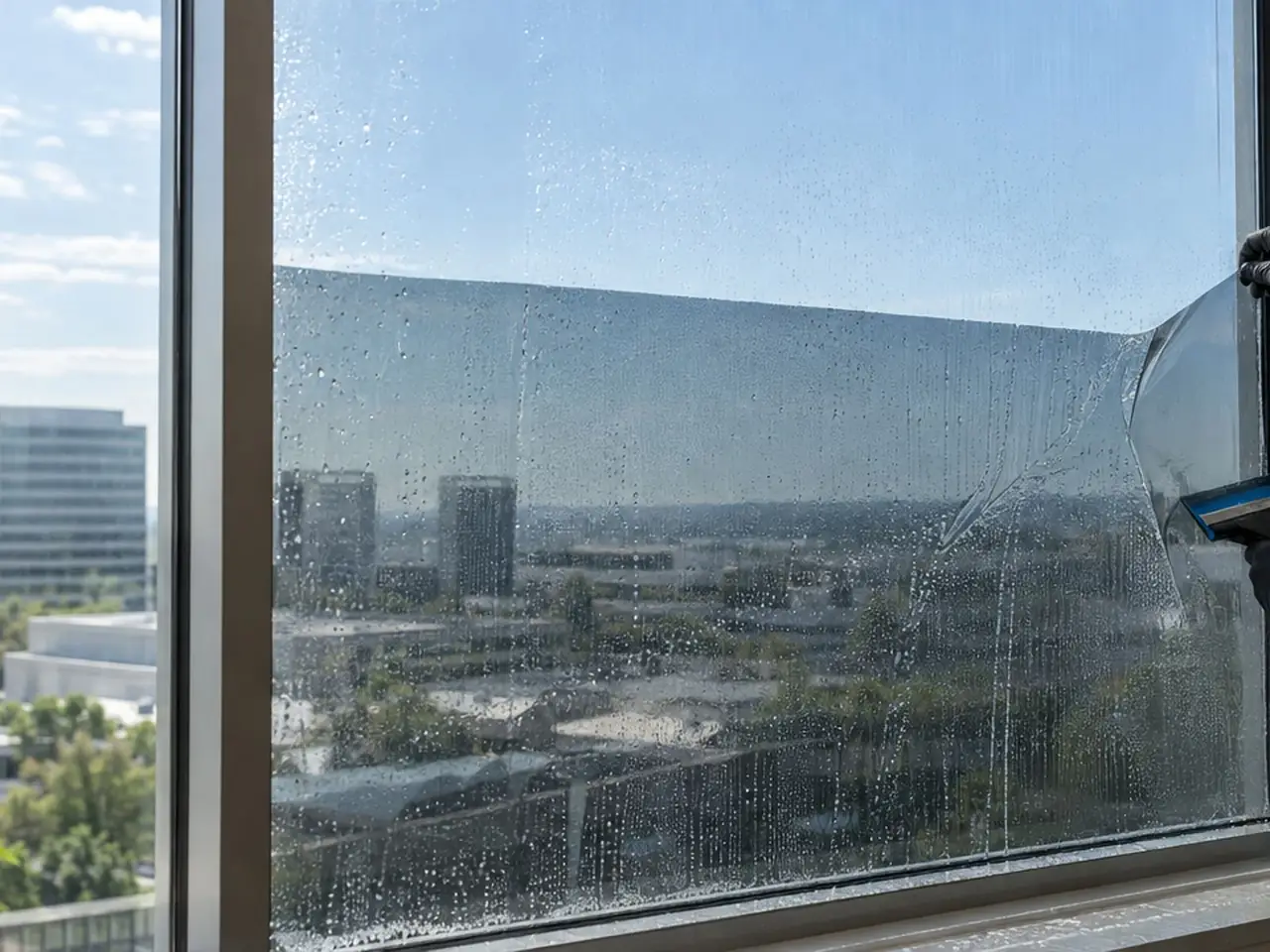
- 4. Wet the glass and the film, then position the film.
- 5. Work with a hard squeegee from the center out, using a card at the frame edges.
- 6. Trim, wipe the edges and give the customer care instructions.
What mistakes cost the most on flat glass jobs?
- Skipping the glass check, especially on insulated or low-E glass.
- Scraping dry or with a dull steel blade.
- Leaving floors and sills unprotected.
- Cutting film too tight to the frame.
- Running out of a blade type halfway through a large job.
How do I plan the kit from a site visit?
A site visit tells you what to pack. Note the pane sizes, how high the glass sits, what surrounds it and how many panes repeat.
Use those notes to decide how many wide tools, how many blades and how much masking the job needs, and whether a plotter will save time.
How do two-person jobs change the kit?
On two-person jobs, give each person a matching set of squeegees and cards so the job does not stop while one tool is shared.
Keep the extra blades and a disposal container at the base of the ladder where both can reach them.
How do I organize a shared kit?
- Keep a fixed core kit that travels on every job, auto or flat glass.
- Add a flat glass bag with wide tools, masking and extra blades.
- Label blades by type so plastic and steel never get mixed.
- Keep spent blades in a disposal container, never loose in the bag.

Who buys tool sets from Glacier?
Tint shops that also do buildings, architectural installers, PPF shops adding glass work, and mobile installers. Glacier sells wholesale to shops, installers and dealers and ships nationwide. Ask your Glacier rep to help scope a kit.
In this guide
- How is flat glass work different from automotive tint for tools?
- What carries over from auto tint to flat glass?
- What do I add for flat glass jobs?
- Should I cut flat glass film by hand or on a plotter?
- What should I check about the glass before I pick up a tool?
- How does a typical large-pane install go?
- What mistakes cost the most on flat glass jobs?
- How do I plan the kit from a site visit?
- How do two-person jobs change the kit?
- How do I organize a shared kit?
- Who buys tool sets from Glacier?
Quick answers
10 questions. Select one to open it.
What tools do I need for tint plus flat glass film?
A core set of hard squeegees, a card, scrapers, blades and slip solution covers both. Flat glass adds wider squeegees and scrapers, masking and a plan for cutting and access.
Can I use the same squeegees for car windows and building glass?
Yes, the same hard squeegees work on both, though larger panes call for a bigger blade to cover more glass per pass.
What squeegee size works for large windows?
A full-size hard squeegee such as the Big Titan or a 6 inch Turbo covers more glass per pass. Choose the size that gives you control.
Should I use plastic or steel blades on architectural glass?
Plastic is gentler where steel could mark treated or tinted glass. Wet the surface, keep a shallow angle and replace any blade that drags.
Does Glacier sell a complete tool kit?
Ask your Glacier rep which tool sets and kits are available.
Do I need a plotter for flat glass film?
Not for every job. Hand cutting suits one-off panes; a plotter saves time on repeated sizes. Glacier sells 40 inch and 72 inch Jaguar plotters.
Does Glacier sell extension poles or ladders?
Ask your Glacier rep what is available.
What should I check before installing film on double-pane or low-E glass?
Confirm with the glass or window maker whether film is allowed, since some glass types carry a risk of thermal stress or warranty limits.
How do I protect a customer's floors and sills during an install?
Mask floors, sills and furniture before wetting the glass. Glacier lists Plastic Masking with Tape for overspray and surface protection.
Where can tint and flat glass installers buy tools wholesale?
Apply for a Glacier wholesale account or request a quote. Glacier sells wholesale to shops, installers and dealers and ships nationwide.
Need tools for tint and flat glass work? Apply for a wholesale account.