Nevada window tint laws
Nevada window tint law keeps its restriction on the front. For sedans and SUVs, the front side windows need 35% and must be nonreflective, with a 7 percent tolerance (NRS 484D.440(3)(a)). Behind the driver, the data lists any darkness if outside mirrors on both sides show 200 ft; that covers the back side windows and rear window.
The windshield may carry a top strip with its lower edge 29+ inches above the seat, not red or amber. No numeric reflectance limit is listed for front side film beyond the nonreflective requirement.
Nevada's medical exemption has a hard limit in the data: applications go to the NHP with a sworn statement from the treating physician, and the NHP will not approve below 20% VLT. Approval lasts 4 years or is indefinite, and the exemption letter must be carried in the vehicle. No certificate is otherwise required by statute.
Where this page points: NRS 484D.440 and 484D.435, NAC 484D.280-.290 and the NHP Window Tint Exemption Application; the Nevada record carries a verification date of November 12, 2026.
Glacier supplies window film to tint shops and installers nationwide; see the shade and product pages for lines.
This is general information, not legal advice; check your state's current rules before choosing a shade.
Nevada VLT limits by window
Cars, sedans, SUVs, vans and trucks
Nonreflective; statute allows 7% tolerance
Any darkness if outside mirrors both sides show 200 ft
Any darkness if outside mirrors both sides show 200 ft
Windshield. Top strip only, lower edge 29+ in. above seat; not red/amber
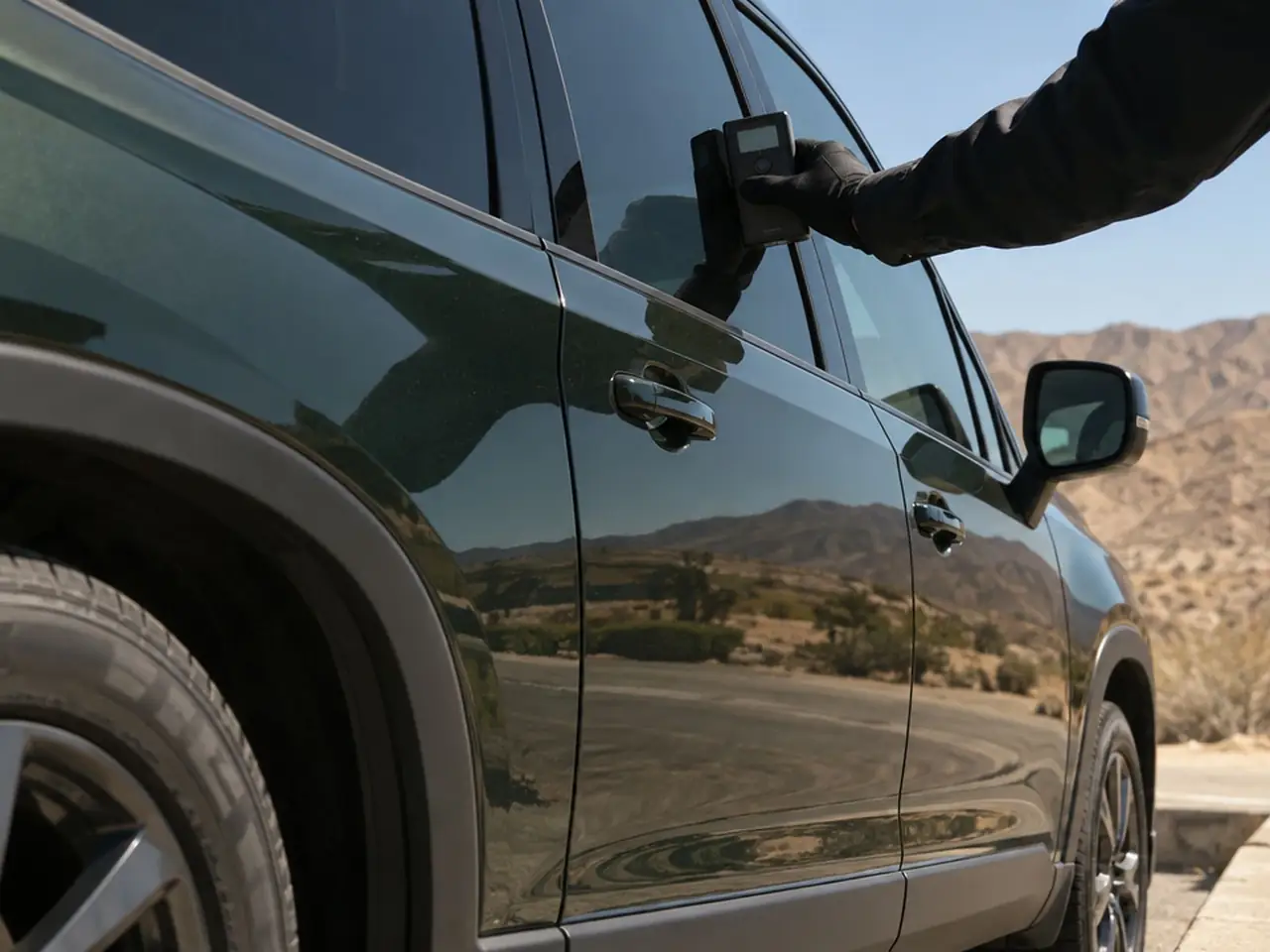
Official sources
A guide, not legal advice: tint laws change, so confirm the current rules with Nevada before you install. Last verified November 12, 2026.
Film lines for Nevada shops
Glacier sells automotive window film in several visible light transmission (VLT) options. Compare the three ceramic lines (Premium Ceramic, Ceramic Plus and Ceramic Ultimate Plus), see the full window film range, or open a wholesale account. Not sure which shade fits Nevada’s limits? Check the table above and confirm with Nevada before you quote a film.
Nevada tint law questions
How dark can front side windows be in Nevada?
Front side windows must allow at least 35% of light, and the statute (NRS 484D.440) allows a 7 percent tolerance. The film must be nonreflective, though no numeric reflectance limit is stated. Nevada makes no distinction between sedans and SUVs for this rule.
What are the rear window rules in Nevada?
Rear side and rear windows may be any darkness, provided the vehicle has outside mirrors on both sides that show 200 feet to the rear. This applies to sedans and SUVs alike. The windshield allows a top strip only, with its lower edge 29 or more inches above the seat, and it cannot be red or amber.
How does a Nevada medical tint exemption work?
The owner applies to the Nevada Highway Patrol with a sworn statement from the treating physician. The NHP will not approve tint below 20% VLT, a floor that comes from the agency form. Approval lasts 4 years or is indefinite, and the exemption letter must be carried in the vehicle.
Are there other exceptions installers should know in Nevada?
Vehicles from 1993 or older with tint applied before July 1, 1993 and factory-equipped glass are excepted. Ambulances, hearses and law-enforcement vehicles also have exemptions. Owners of vehicles of 10,000 pounds or more under 49 CFR 393.60(b) cannot apply for the medical exemption permit under NAC 484D.290.
Picking a shade? See choosing the right VLT, try it in the Film Studio or request a quote.