
How to choose a squeegee for each job
Choose a squeegee by the job in front of you: the surface, how much it curves, whether you are working a center, an edge or a corner, and whether the film is window film or PPF. Match firmness and shape to the task, trial it on scrap, and keep spares. Glacier supplies squeegees to tint shops and installers.
How do I match a squeegee to the job?
Start with the job, not the tool. Ask what the squeegee has to do on this surface, then pick the shape and firmness that does it.
Glacier page: /products/installation-tools/squeegees/.
| Job situation | What the tool needs to do | Type of squeegee to reach for |
|---|---|---|
| Large flat glass | Move a lot of water in long, even passes | A wide, firm squeegee |
| Curved rear glass | Follow the curve without creasing the film | A flexible squeegee, often softer |
| Edges and channels | Push water out at the boundary | A hard card or a narrow edge tool |
| Tight corners and trim lines | Reach where a wide blade cannot | A small contour or corner tool |
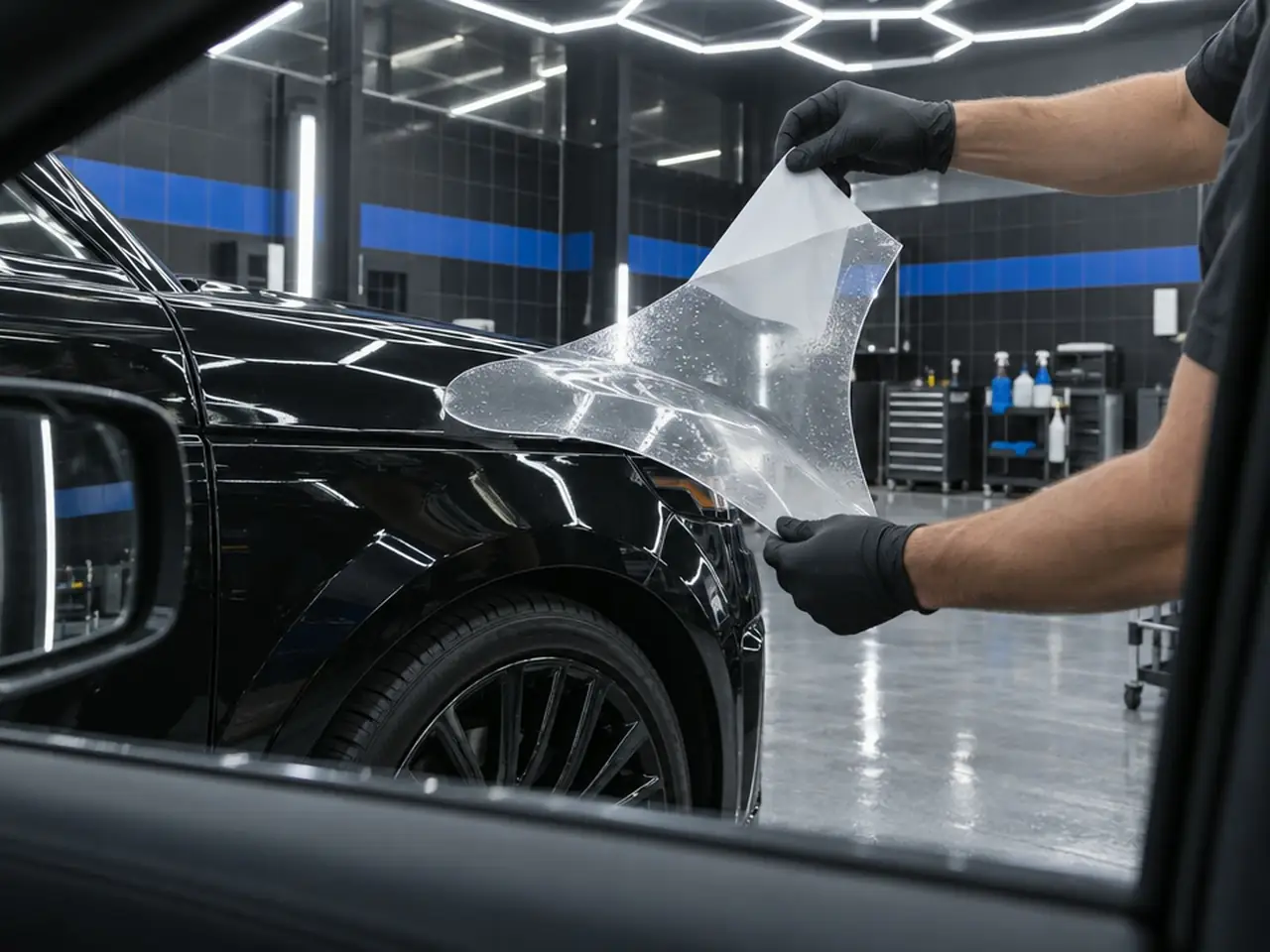
| PPF on flat panels | Push slip solution out in controlled strokes | A PPF squeegee |
| PPF on curved panels | Work film over a curve without scratching | A PPF squeegee suited to curves |
| Flat glass film on buildings | Cover a large pane quickly | A wide squeegee plus a card for edges |
| Final water removal | Clear what is left near the edges | A card or small squeegee |
What makes one squeegee firm and another soft?
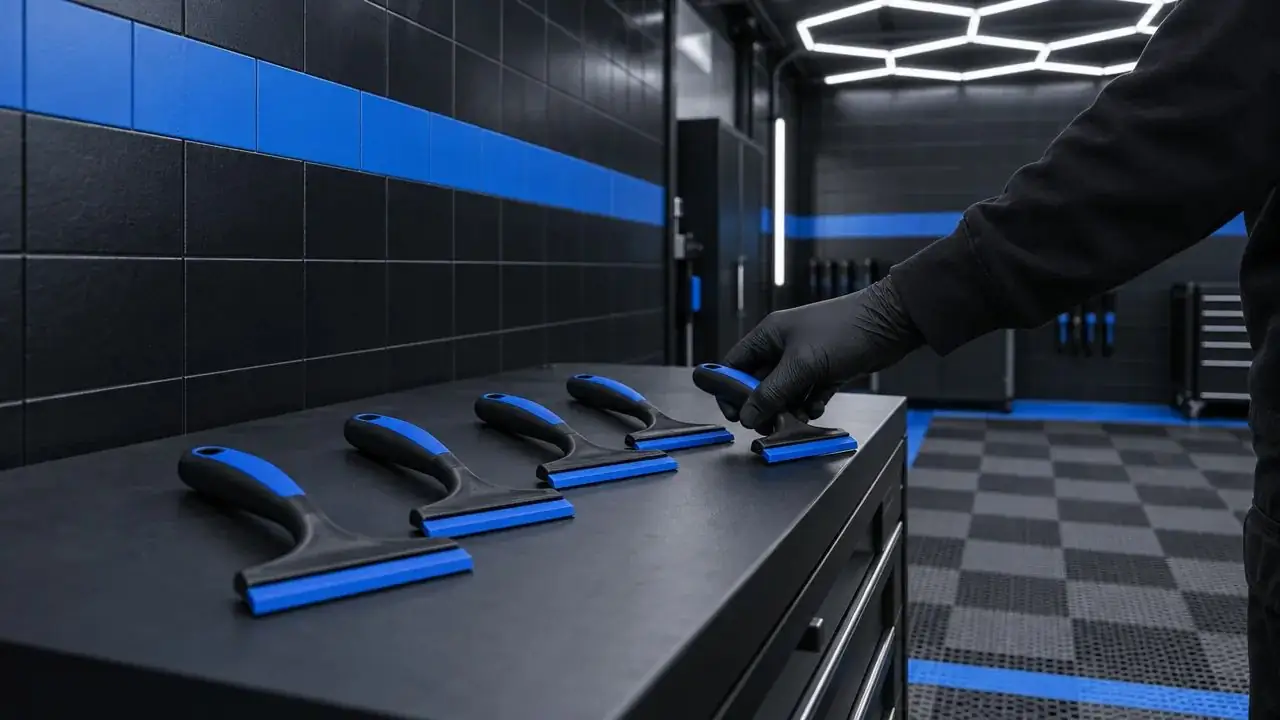
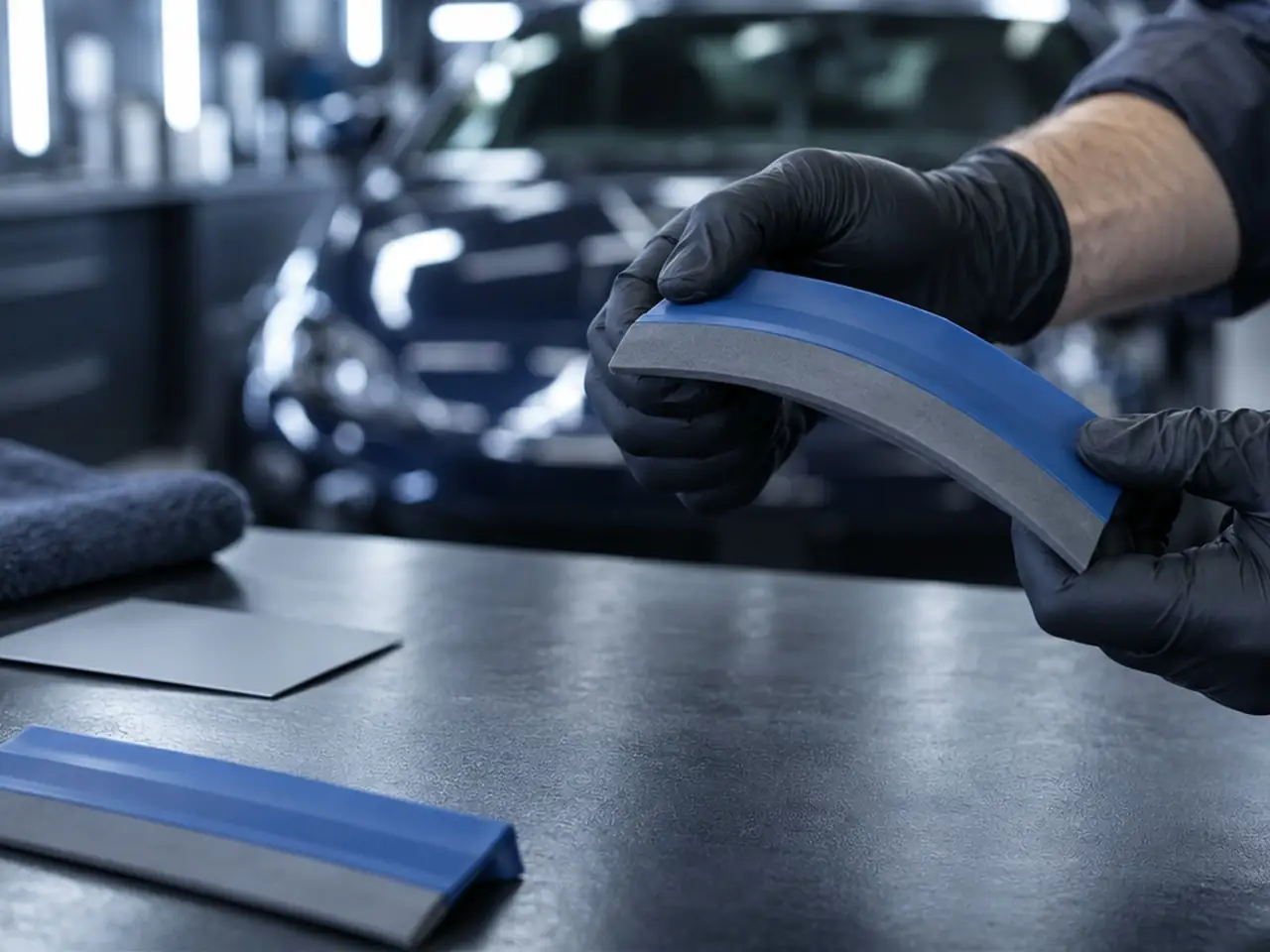
As a general rule, firmness decides how hard the edge pushes. A firm tool moves water well on a flat surface. A soft tool follows a curve and is gentler on the film.
Some installers use more than one squeegee on a single pane.
- Firm: better for flat glass and for pushing water out under pressure.
- Soft: better for curves and for film that scratches easily.
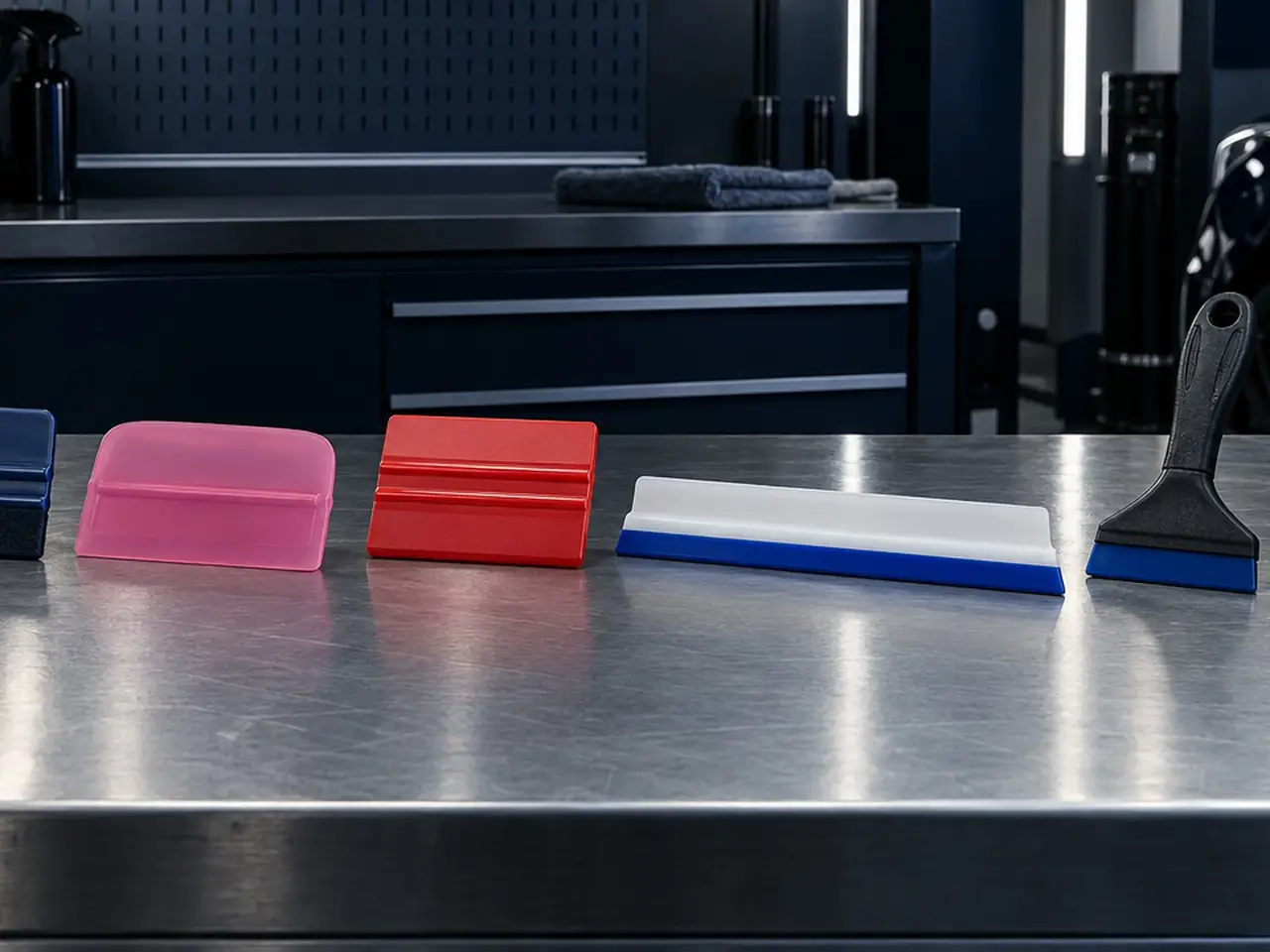
- Narrow: better for edges, channels and corners.
- Wide: better for large flat areas.
What should I think about on large flat glass?
For tools for large flat panes, see the tint and flat glass tool sets guide linked below.
Short handle, long handle or no handle?
Handle choice is about reach and control. Pick it for the space you are working in.
A long handle trades feel for leverage. On a tall pane it lets you keep your feet planted and your arms low, but you feel the edge less, so streaks and nicks can go unnoticed until the pass is done. Many installers use the long reach for the open middle and switch to a handleless tool as the blade nears the frame, where touch matters more than distance. If you notice your shoulders tiring before your hands do, the handle is probably too long for the glass you are working.
| Space | What helps | Why |
|---|---|---|
| Open flat glass | A longer reach and a wide blade | Covers more glass per pass |
| Tight interiors | A short or handleless tool | Fits where a long handle will not |
| PPF over a curve | A tool that suits your grip | Control matters more than size |
How do I trial a squeegee before I commit?
Do not judge a squeegee by looking at it. Trial it on scrap glass or a painted panel.
- Lay film on the surface with slip solution.
- Work a flat area, then an edge, then a curve.
- Notice whether it moves water cleanly or leaves tracks.
- Check for scratches or drag on the film.
- Write down which jobs it suits and which it does not.
What signs say I have the wrong squeegee?
Your hands and the film will tell you. Stop and change the tool when you see one of these.
A quick bench test separates a tool problem from a technique problem. Run the squeegee across clean, wet glass with no film on it. If it streaks or skips there, the edge is at fault, so clean it, check it for nicks or replace it. If it runs clean on bare glass and streaks over film, look at the solution, the film surface or the angle you hold the blade. Doing this before a job costs seconds and saves you from blaming a good tool.
| Sign | What it usually means | What to try |
|---|---|---|
| Water left behind in streaks | Edge worn or tool too soft | Replace the edge or try a firmer tool |
| Scratches on film | Grit on the edge or tool too hard | Clean or replace the edge, or use a softer tool |
| Film creasing on a curve | Tool too stiff for the shape | Use a flexible tool and lighter strokes |
| Water trapped at an edge | Tool too wide for the space | Finish the edge with a card or narrow tool |
| Hand fatigue | Tool too big or awkward | Try a different size or grip |
How do I keep squeegees working?
A good squeegee fails when the edge is nicked or dirty. Treat the edge as a consumable.
- Wipe the edge clean between panels so grit does not ride on the film.
- Store squeegees so the edge is not pressed against anything.
- Check the edge for nicks before each job.
- Keep spares of the tools you use most.
- Replace an edge before it starts to damage film.
What should I ask before I buy a new squeegee?
Ask these questions before you add a tool to the kit.
- Which job is it for, and what is my current tool doing wrong there?
- Is it for window film, PPF or both?
- Can I trial it before I buy several?
- What do I do when the edge wears?
- Ask your Glacier rep what is available on a wholesale account.
How does squeegee choice change between window film and PPF?
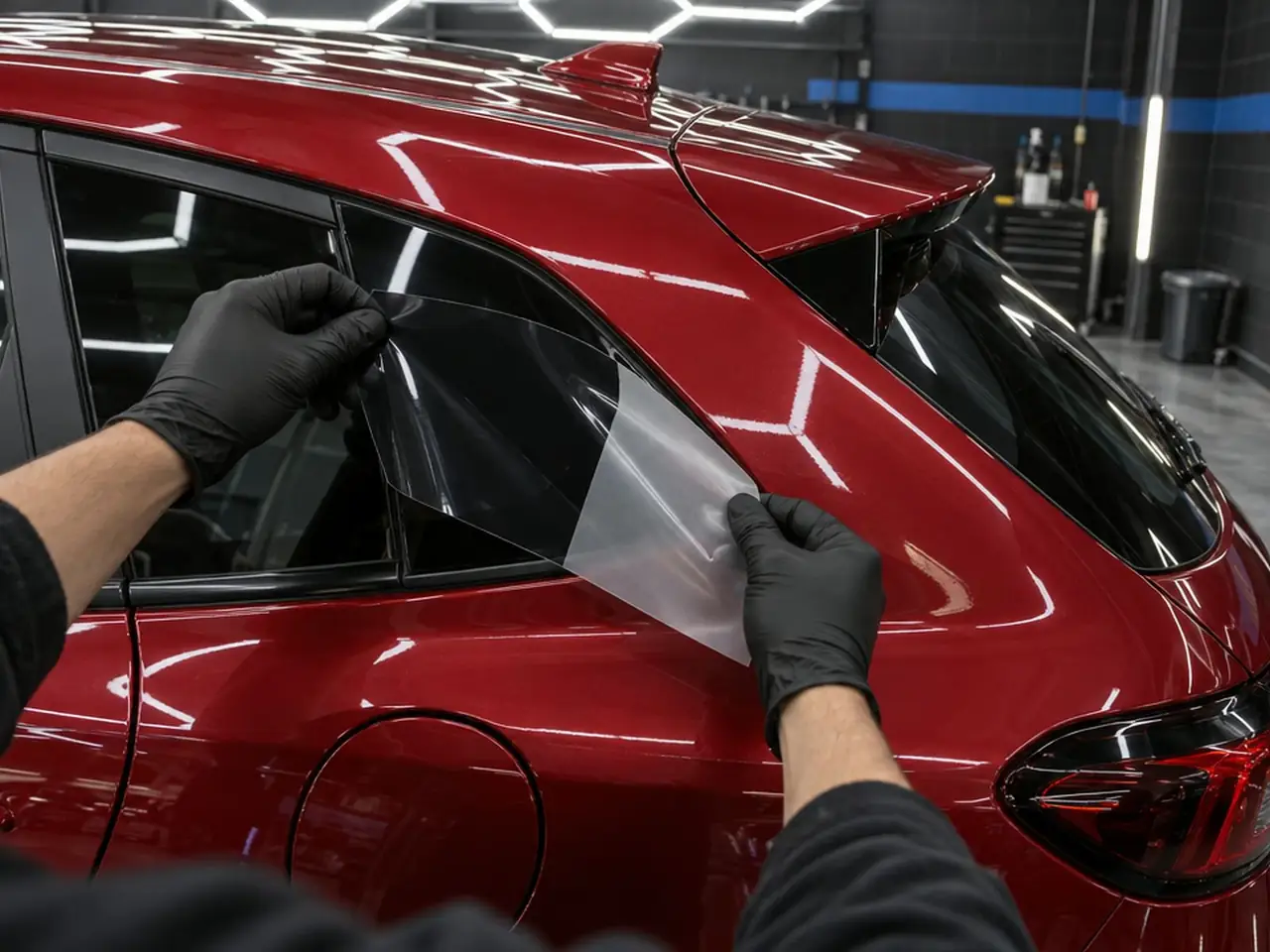
Window film and PPF are laid differently, so the tools differ. PPF uses shaped squeegees made for painted panels. Ask your Glacier rep which Glacier squeegees are meant for PPF. Window film jobs often lean on cards and contour tools for edges.
For tool-by-tool descriptions, see the squeegees, blades and hard cards guide linked below. Apply for a wholesale account, and a Glacier rep will follow up.
For tool-by-tool descriptions, choose How tint shops choose squeegees, blades and hard cards, and use Tool sets for installers who do both window tint and flat glass film when you are planning a whole kit instead of one tool.
Shops working on this topic also use how to prep glass for tint, the tint shop equipment checklist, modular shop flooring and the floor planner.
- Tell new hires which tools belong to PPF and which to window film.
- Mark shared tools so the grit of one job does not follow into the next.
- Ask your Glacier rep which squeegees are meant for PPF and which for window film.
In this guide
- How do I match a squeegee to the job?
- What makes one squeegee firm and another soft?
- What should I think about on large flat glass?
- Short handle, long handle or no handle?
- How do I trial a squeegee before I commit?
- What signs say I have the wrong squeegee?
- How do I keep squeegees working?
- What should I ask before I buy a new squeegee?
- How does squeegee choice change between window film and PPF?
Quick answers
12 questions. Select one to open it.
What should I write down after trialing a squeegee?
Write down which jobs it suits and which it does not, and whether it moved water cleanly or left tracks or scratches on the film.
What squeegee should I use for curved rear glass?
A flexible, often softer squeegee that follows the curve without creasing the film. Use lighter strokes and finish the edges with a card.
What is the difference between a firm and a soft squeegee?
A firm squeegee pushes harder and moves water well on flat glass. A soft one follows curves and is gentler on film. Both have a place in the kit.
Do I need different squeegees for PPF and window film?
Often yes. PPF uses shaped squeegees made for painted panels, while window film jobs lean on cards and contour tools. Ask your Glacier rep which tools are meant for each.
What are the signs I have the wrong squeegee?
Water left in streaks, scratches on the film, creasing on a curve, water trapped at an edge and hand fatigue are all signs. Stop and change the tool, replace a worn edge, or finish the edge with a card or narrow tool.
How do I test a new squeegee?
Trial it on scrap glass or a painted panel. Work a flat area, an edge and a curve, and note whether it moves water cleanly or leaves tracks or scratches.
Why does my squeegee leave streaks?
A nicked or dirty edge, or a tool that is too soft for the job. Wipe the edge, check it for nicks and try a firmer tool if needed.
How many squeegees should a shop carry?
Enough to cover the jobs you do, with spares of the ones you use most. Add shapes when a recurring job gives you trouble.
How do I stop squeegees scratching film?
Wipe the edge between panels, replace nicked edges and match softness to the film. Trial a new tool on scrap before it goes on a job.
Where can a shop buy squeegees wholesale?
Glacier supplies squeegees to tint shops, installers and dealers. Apply for a wholesale account, and a Glacier rep will follow up.
Can one squeegee handle both flat glass and a curved rear window?
A medium-flex tool can manage both passably, but it will be a compromise. A firmer tool moves water better on flat panes, while a softer one follows the curve. Keep a second tool for whichever job you do more of.
Does a longer handle make a squeegee better for tall windows?
It helps you reach and keeps your stance steady, but you give up feel at the edge. Use the long reach across open glass, then switch to a short or handleless tool near the frame, where precision matters more than distance.
Need squeegees for your shop? Apply for a wholesale account.