How to choose privacy window film
Choose privacy window film by deciding how much view you need to block, by day and at night, and which look fits the room: frosted, gradient, patterned or custom-cut. One-way perforated film is a separate product with different limits. Glacier supplies privacy film as rolls to tint shops, installers and dealers.
What are the types of privacy window film?
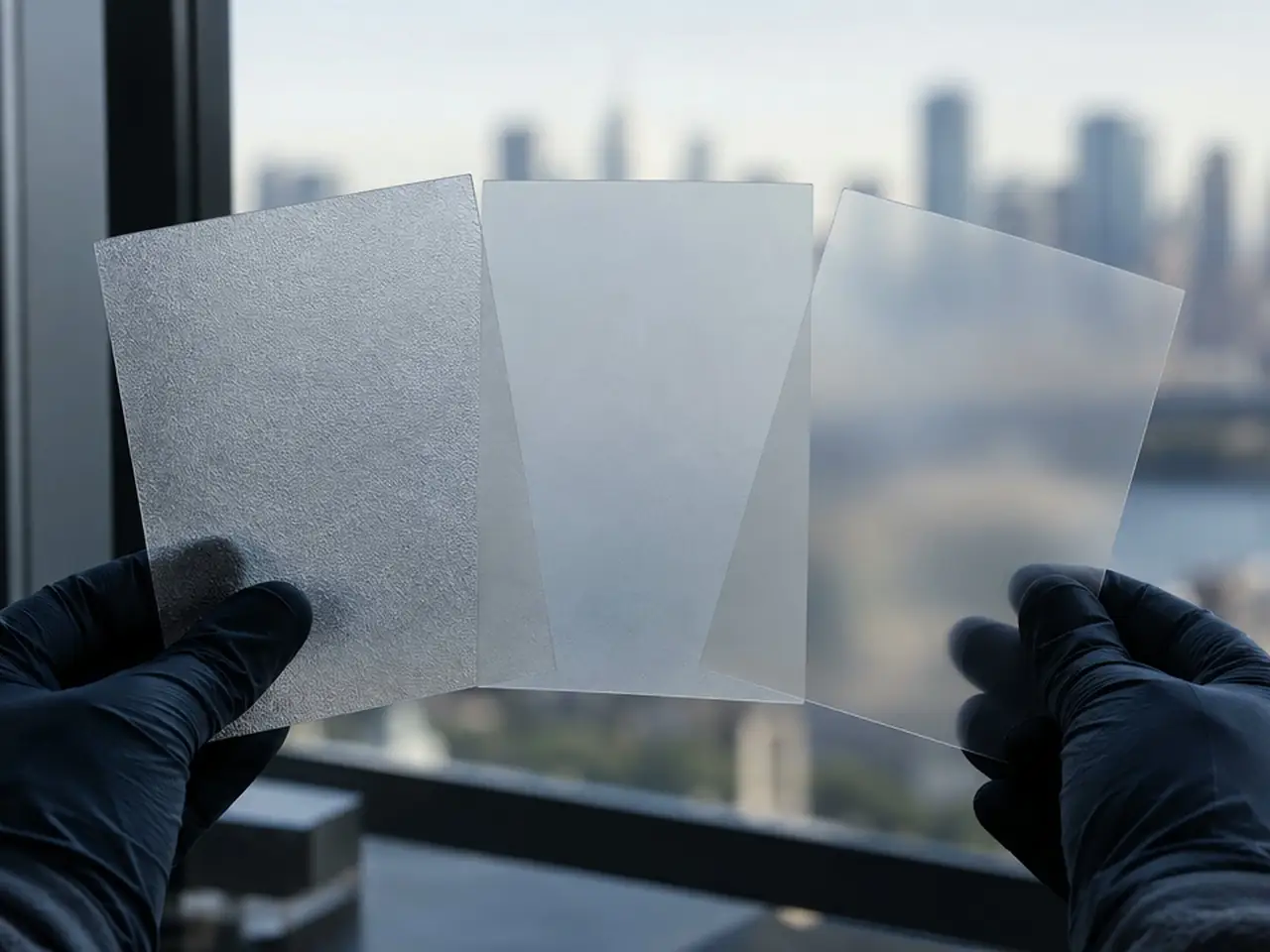
Privacy film differs mainly in how it hides the view and how much light it lets through. Choose the look that fits the room.
| Type | What it looks like | Privacy by day | Privacy at night with lights on | Suited to |
|---|---|---|---|---|
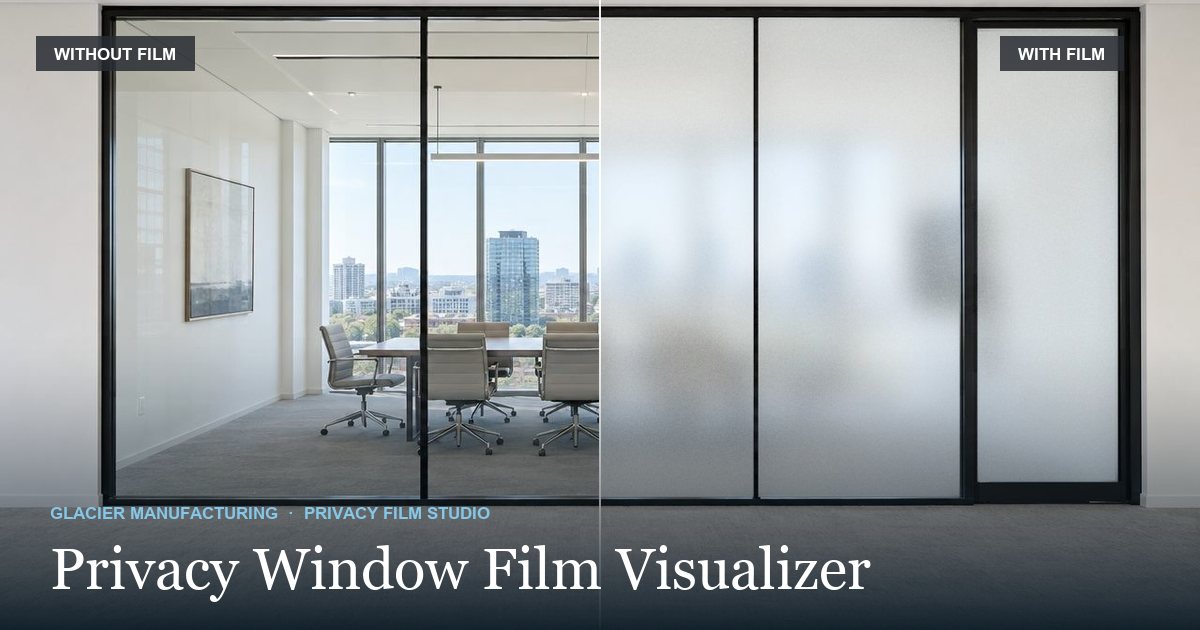
| Frosted | Even, milky, like etched glass | Strong | Strong | Bathrooms, offices, conference rooms |
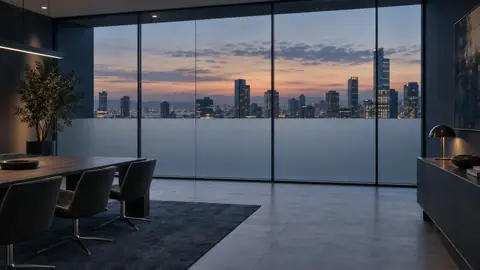
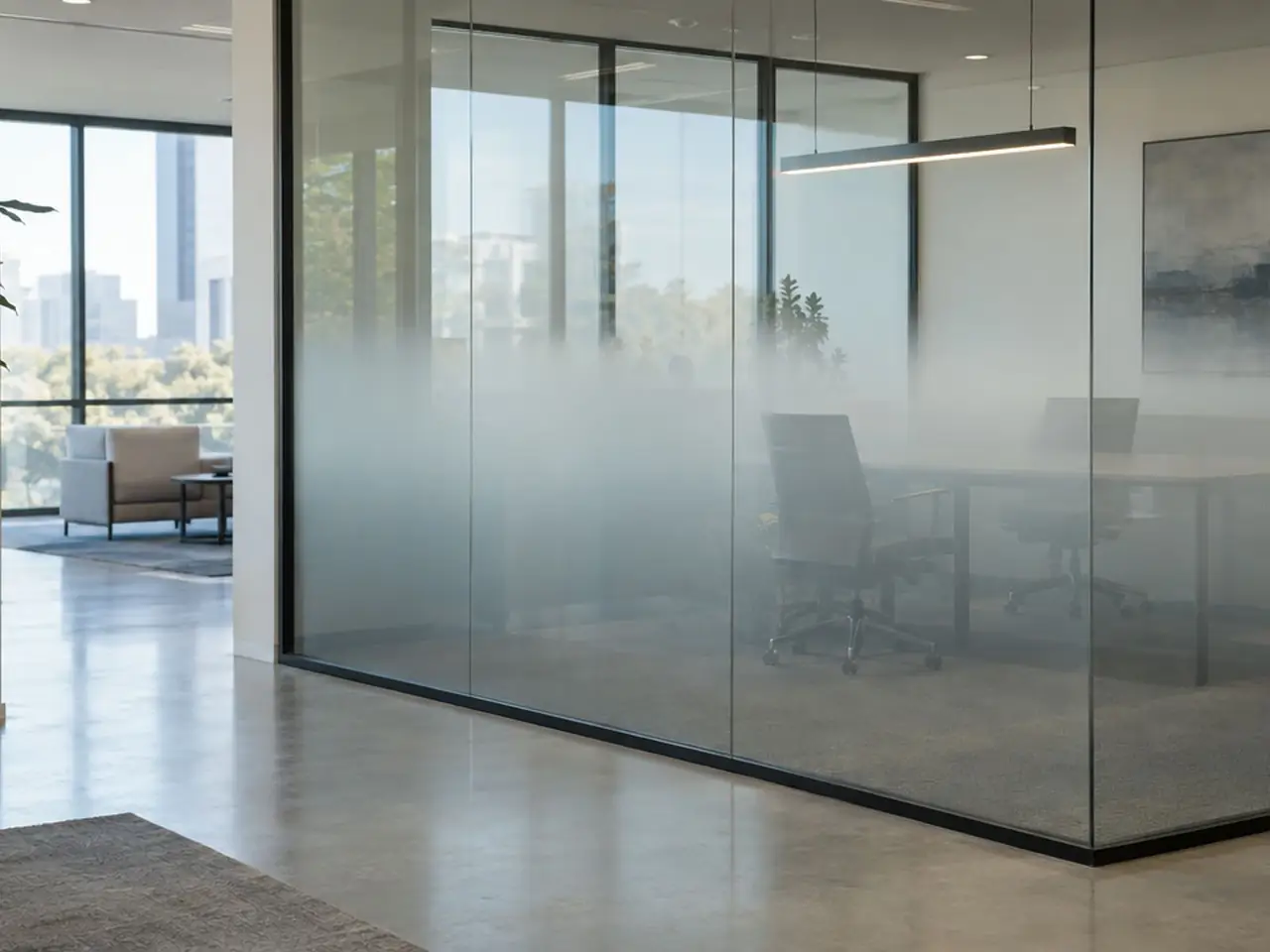
| Gradient | Fades from solid to clear across the glass | Partial, strongest where solid | Partial | Storefronts and lobbies that want a light screen |
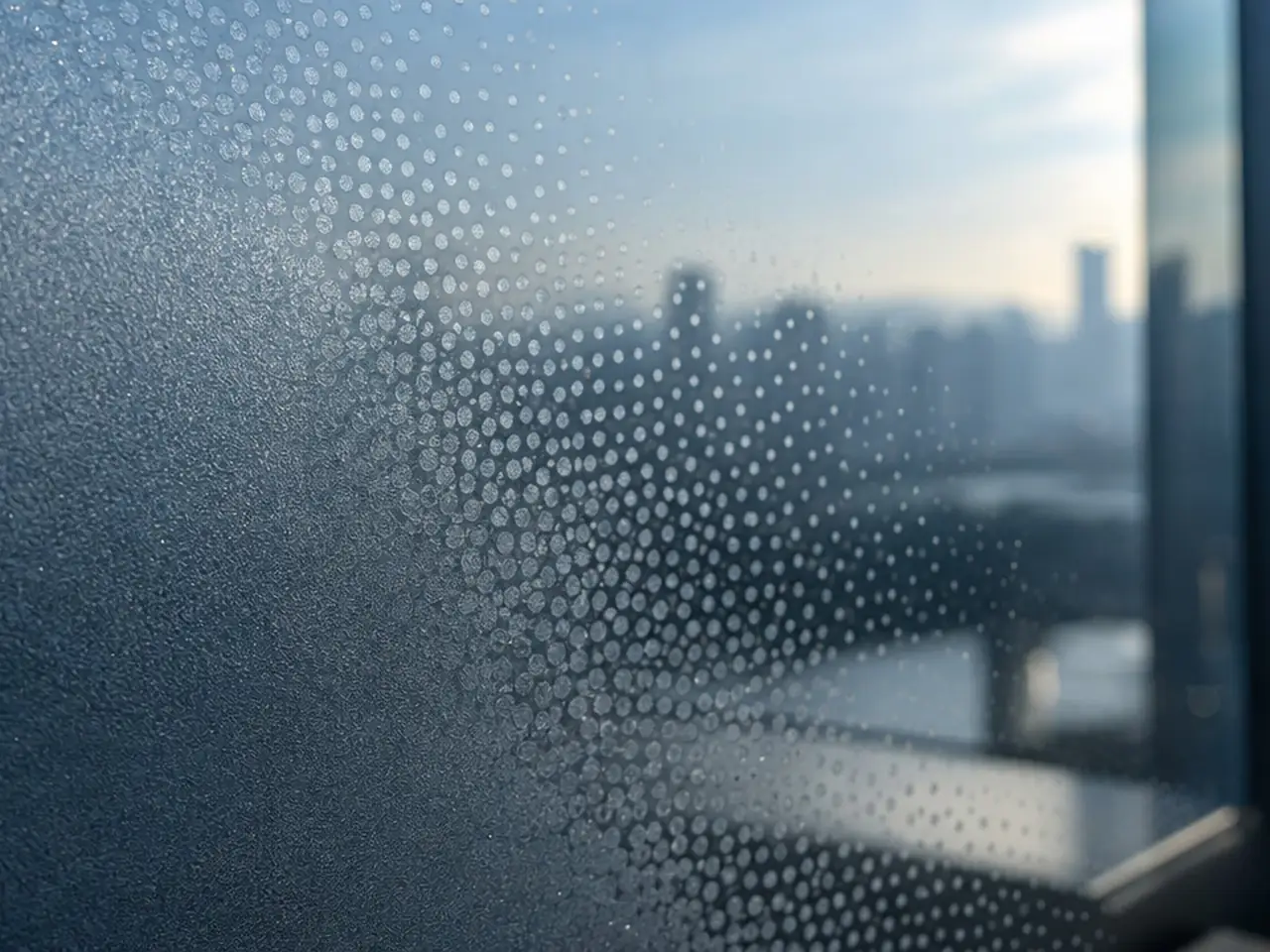
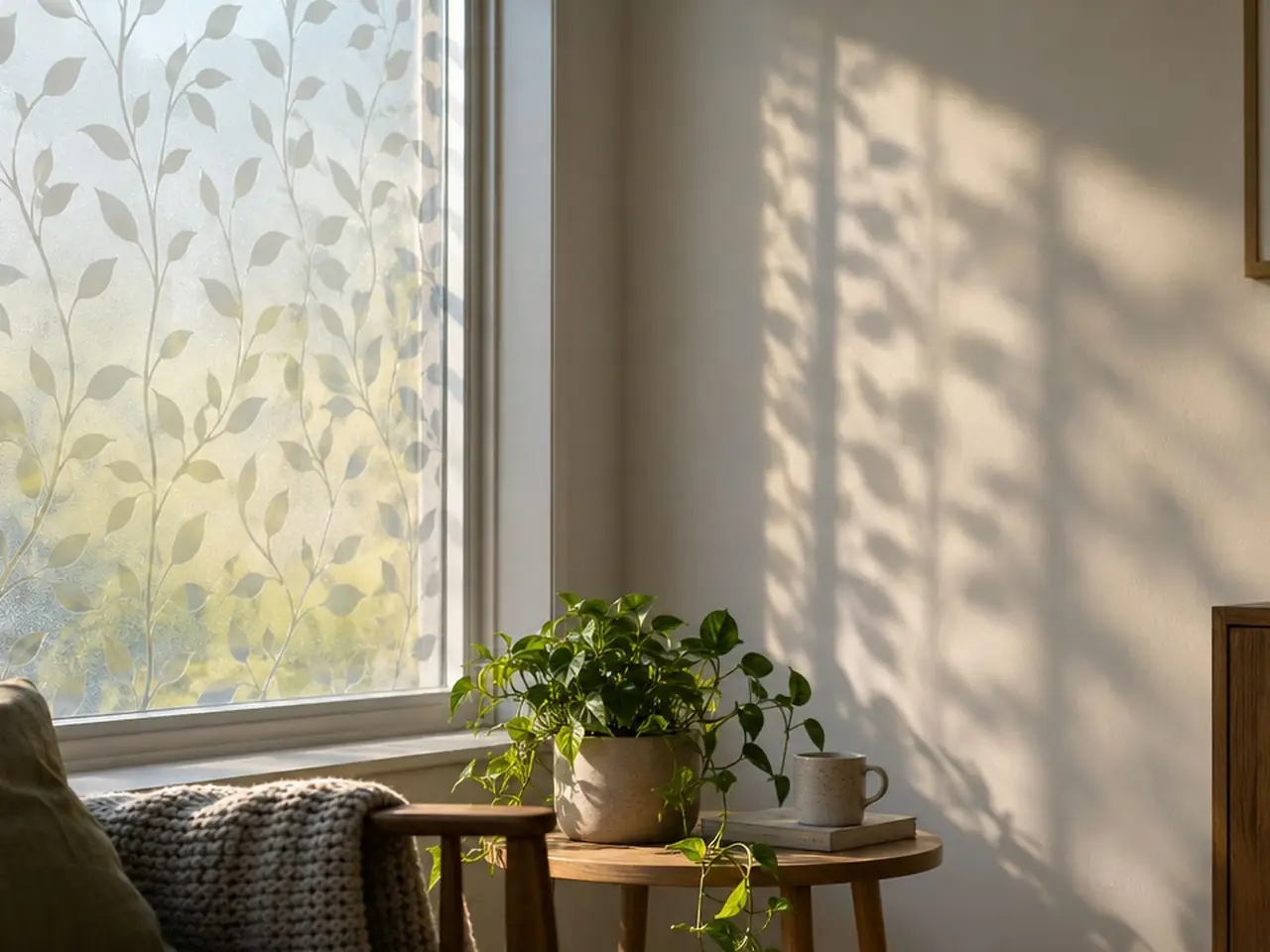
| Patterned | Lines, dots or textures | Varies by pattern | Varies by pattern | Decorative partitions and doors |
| Custom-cut | Frost or pattern cut into logos, borders or shapes | Only where film is applied | Only where film is applied | Branded glass, meeting rooms |
| Perforated one-way | Printed graphic with tiny holes | Outsiders see the print; insiders see out | Reverses when it is brighter inside | Storefront and vehicle graphics |
How does one-way film differ from frosted film?
Frosted film gives strong privacy by day. It blocks the view because the film itself is not see-through.
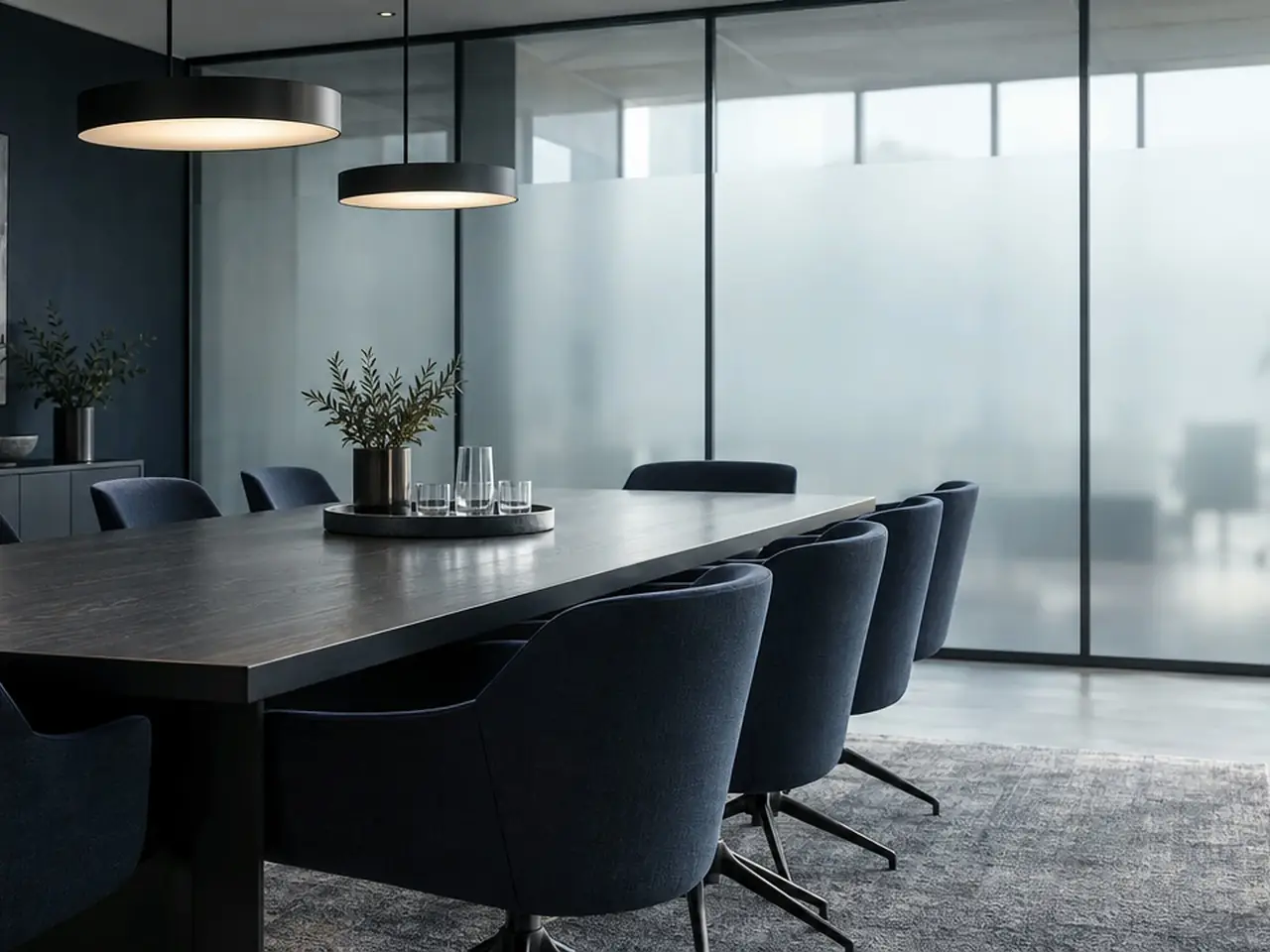
One-way film is usually perforated film. Tiny holes let people inside look out while the printed face shows a graphic outside. The effect depends on which side is brighter, so it fades or reverses at night with lights on inside.
Does one-way window film work at night?
Not the way most people expect. When it is brighter inside than outside, people outside can see in through the holes.
If a customer needs privacy at night, choose frosted film or another film that blocks the view in both directions.
How is frosted film different from etched glass?
Etched glass is treated permanently. Frosted film is an adhesive layer applied to the surface and can be removed later.
Film is usually quicker to install and can be cut into shapes. Etching is part of the glass and cannot be undone.
Where is each look used?
Match the look to the room, then confirm the glass.
Settle the clear band before you cut anything. On a frosted partition, mark the band with low-tack tape on the glass while someone sits and then stands in the room, since the band should sit where eyes actually land. Step back across the room to check it, then cut the film to leave the gap. Adding film later to cover a band cut in the wrong place leaves a visible seam, so the tape test is worth the extra minutes. Photograph the taped glass for the customer to approve.
- Offices and conference rooms: frosted film, often with a clear band at eye level.
- Bathrooms and shower areas: frosted film; confirm the glass and the exposure to water.
- Storefronts and lobbies: gradient or patterned film.
- Branded glass: custom-cut film with a logo cut by a plotter.
- Graphics on glass or vehicles: perforated film.
What should you check before you choose?
Privacy film is simple, but glass and safety questions come first.
- Glass type: single pane, double pane, laminated, tempered or special glass.
- Which side the film goes on, and how much daylight the room still needs.
- Whether any glass is safety glazing near doors or floors; privacy film is not a replacement for it.
- Whether the customer wants to remove it later.
- Whether the customer wants a clean frosted look or a pattern.
What should you ask a privacy film supplier?
Use the list for any supplier, Glacier included.
- Which finishes do you stock, and in which roll widths?
- Can I get samples to hold against the real glass?
- Is the film approved for the glass types my jobs use?
- How do you handle reorders for the same finish later?
- What support does your rep give installers?
Can customers preview privacy film?
Yes. The Glacier privacy simulator shows a customer how a frosted or patterned look appears on glass before the job is quoted. Samples from your rep are the second check.
How is privacy film installed?
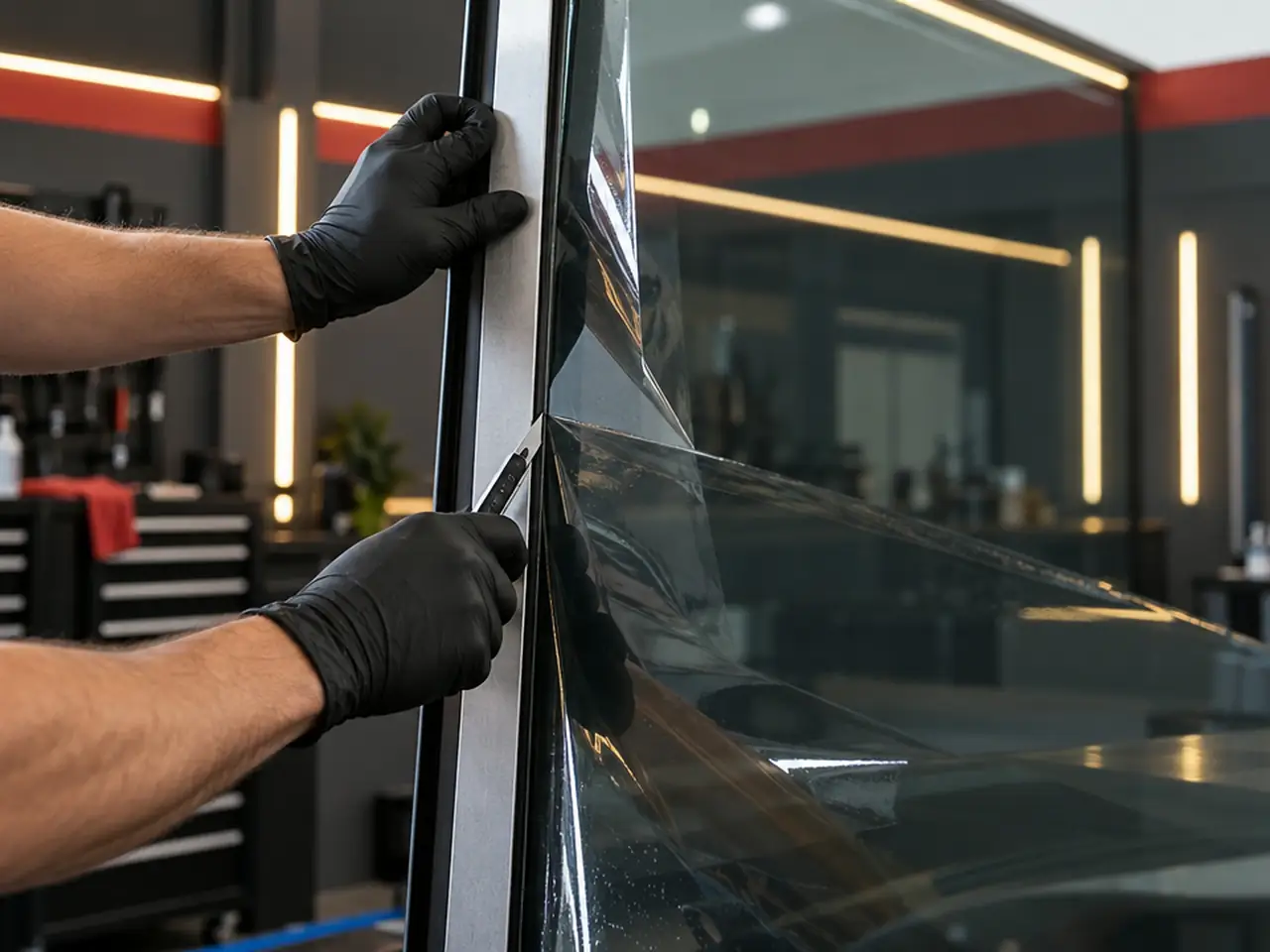
The method is the same as any flat-glass film. Clean glass is the most important step.
- 1. Clean the glass thoroughly.
- 2. Measure and cut the film, or cut a logo or pattern with a plotter.
- 3. Apply slip solution, place the film and squeegee out the water.
- 4. Trim the edges and check for dust and bubbles.
- 5. Give the customer care instructions.
What mistakes should you avoid?
A few simple mistakes cause most unhappy privacy jobs.
Patterned film adds one more mistake: panes that do not line up. Lines, dots and textures repeat, so cut neighboring panes from the same roll, the same way up and check the repeat across the joint before the film touches glass. Gradient film has a right way up too. Decide which end is solid, and where the privacy has to be, then mark the upper edge of each cut piece so nobody applies one pane upside down. Treat these marks as part of the work order, not an afterthought.
- Selling one-way film for night privacy.
- Choosing frosted film without asking how much daylight the room needs.
- Skipping a sample on the real glass.
- Treating privacy film as safety glazing.
- Skipping the glass check on double-pane or special glass.
How do you choose between frosted, gradient and patterned film?
Start with the room and how much privacy the customer needs, then show samples.
Frosted suits rooms that need full privacy. Gradient suits spaces that want a light screen and still want to see out. Patterned film suits decorative glass where privacy is secondary. Custom-cut film suits branding, since a plotter can cut logos and borders from the roll.
How do shops order privacy film from Glacier?
Open a wholesale account or request a quote. Glacier ships nationwide. Ask your Glacier rep about availability and timing for your order.
If the customer wants a printed graphic with a view out instead of a screen, Perforated window film for sign shops and installers is the better page, and Privacy window film for home and office is written for the owner's side of the same decision.
To go further, read ceramic window film for tint shops, how ceramic and carbon tint differ and automotive window film rolls.
In this guide
- What are the types of privacy window film?
- How does one-way film differ from frosted film?
- Does one-way window film work at night?
- How is frosted film different from etched glass?
- Where is each look used?
- What should you check before you choose?
- What should you ask a privacy film supplier?
- Can customers preview privacy film?
- How is privacy film installed?
- What mistakes should you avoid?
- How do you choose between frosted, gradient and patterned film?
- How do shops order privacy film from Glacier?
Quick answers
12 questions. Select one to open it.
What are the types of privacy window film?
The main types are frosted, gradient, patterned and custom-cut film, plus perforated one-way film for graphics. They differ in how they hide the view and how much light they let through.
Which privacy window film suits office glass partitions?
Frosted film is the usual choice for partitions because it blocks the view by day and at night. Many offices leave a clear band at eye level. Check the glass type and ask your supplier for samples.
What is the difference between frosted and etched privacy window film?
Frosted film is an adhesive layer on the glass surface and can be removed. Etching alters the glass itself and is permanent. Film can also be cut into logos and shapes.
Where can I buy frosted or privacy window film rolls wholesale?
Glacier supplies privacy film as rolls to tint shops, installers and dealers on a wholesale account. Ask your Glacier rep about availability and timing for your order.
Does one-way window film work at night?
Not reliably. One-way film depends on one side being brighter. At night with lights on inside, people outside can see in. Use frosted film where night privacy matters.
Is privacy film the same as decorative film?
The terms overlap. Decorative film focuses on look, such as patterns and gradients. Privacy film focuses on blocking the view. Many films do both.
Can privacy film go on a shower door or bathroom window?
Often yes, with the right film and clean, suitable glass. Confirm the glass type and ask your supplier about use near water.
Does privacy film meet safety glazing codes?
Do not assume so. Privacy film is not a replacement for safety glazing. Check local code and ask your Glacier rep for any documentation.
Can privacy film be removed?
Yes, it can usually be removed later. How easily depends on the film, the glass and how long it has been on. Ask your rep about removal for a specific film.
Do you sell privacy film to homeowners?
No. Glacier sells wholesale to tint shops, installers and dealers. Homeowners can use the dealer finder to see Glacier dealers near you.
How do I make a patterned privacy film line up across several panes?
Cut the panes from the same roll, the same way up, mark the upper edge of each piece, and check the repeat across each joint before applying. Dry-hold each piece against the glass first, so a mismatch shows up before any slip solution goes on.
Which way should a gradient privacy film face?
Decide where the customer needs the solid end, then orient the film so that end sits there. Mark the upper edge on each cut piece and confirm with the customer against a small strip held to the glass before you apply.
Install privacy film? Apply for a wholesale account.