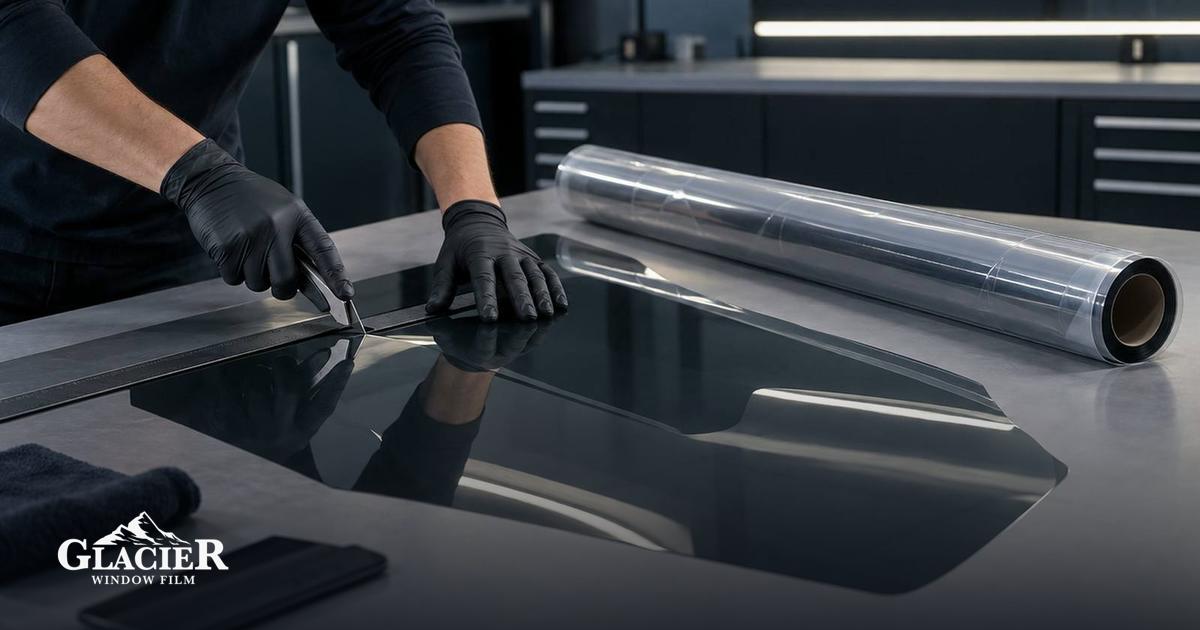
What film should a tint shop stock? Film types by customer need
A tint shop should stock film by the customers it serves: ceramic automotive window film in the shade categories its local rules and buyers call for, then add architectural, privacy, security or paint protection film as demand grows. Glacier's ceramic lines are Premium Ceramic, Ceramic Plus and Ceramic Ultimate Plus.
Which film types should a tint shop stock for each customer need?
Start from who walks in, not from the catalog. Each customer need maps to a film type, and a shop adds types one at a time.
| Customer need | Film type | Glacier line or page |
|---|---|---|
| Heat, glare and privacy on cars and trucks | Ceramic automotive window film | Premium Ceramic, Ceramic Plus, Ceramic Ultimate Plus |
| Sun and glare control on offices, stores and homes | Architectural (flat glass) film | Flat glass window film |
| Frosted, gradient or patterned privacy | Privacy film | Privacy window film |
| Glass that must hold together when broken | Security or safety film | Security Film |
| Scratch and tag protection on glass | Anti-graffiti film | Anti-graffiti film |
| Paint protection, gloss or satin | Paint protection film (PPF) | Iceberg (gloss/clear), Blizzard (satin) |
| Windshield protection | Windshield protection film | Glacier Guard |
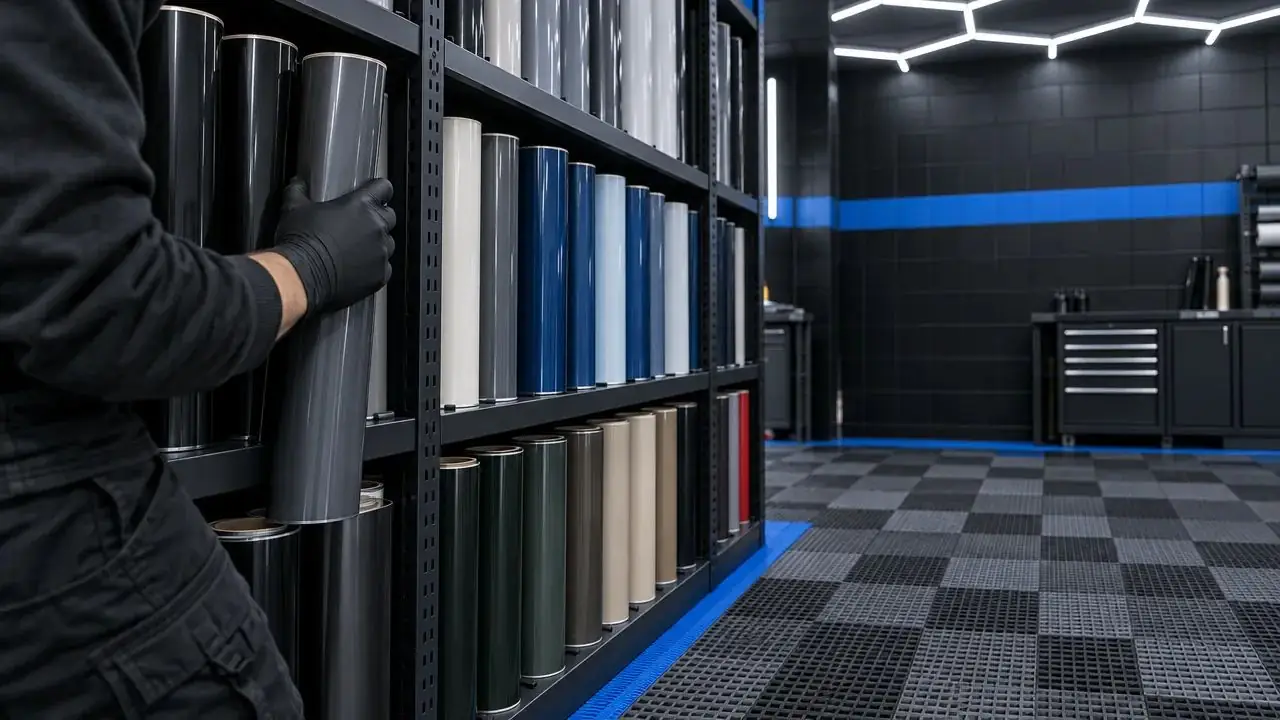
How do Glacier's three ceramic lines differ?
All three are ceramic and non-dyed. They are different grades, and each has its own spec table. Compare the tables rather than relying on a summary, and ask a Glacier rep which line suits your customers.
Compare the lines at the same shade, never across different shades. The grade count matters for shops in strict states. Premium Ceramic has four grades and no lightest grade, so a shop that relies on very light front-window shades should confirm what the table offers before making it the only line. Ceramic Plus and Ceramic Ultimate Plus each have five grades with a lighter one. Put the three spec tables side by side with your shade list.
| Line | Position in the lineup | Shade grades | Infrared and total solar rejection |
|---|---|---|---|
| Premium Ceramic | Base ceramic tier | Four grades, no lightest grade | Lowest of the three at comparable shades |
| Ceramic Plus | Core ceramic line | Five grades, including a lighter grade | Between the other two |
| Ceramic Ultimate Plus | Step up from Ceramic Plus | Five grades, including a lighter grade | Highest of the three at comparable shades |
How do I choose shades by VLT category?
VLT is the share of visible light a film lets through, and a lower VLT is darker. Think in categories first, then pick exact shades from the spec table.
Local rules decide what can go on each window, so check them before you stock deeply. The tint laws guide explains how limits are read, and the Film Studio previews shades.
- Very dark shades: privacy on rear windows where rules allow.
- Medium shades: the everyday choice for a balance of privacy and visibility.
- Light shades: front side windows and other places with stricter limits; check your state's rules.
- Lightest grade: only in the lines that carry it, as noted in the table above.
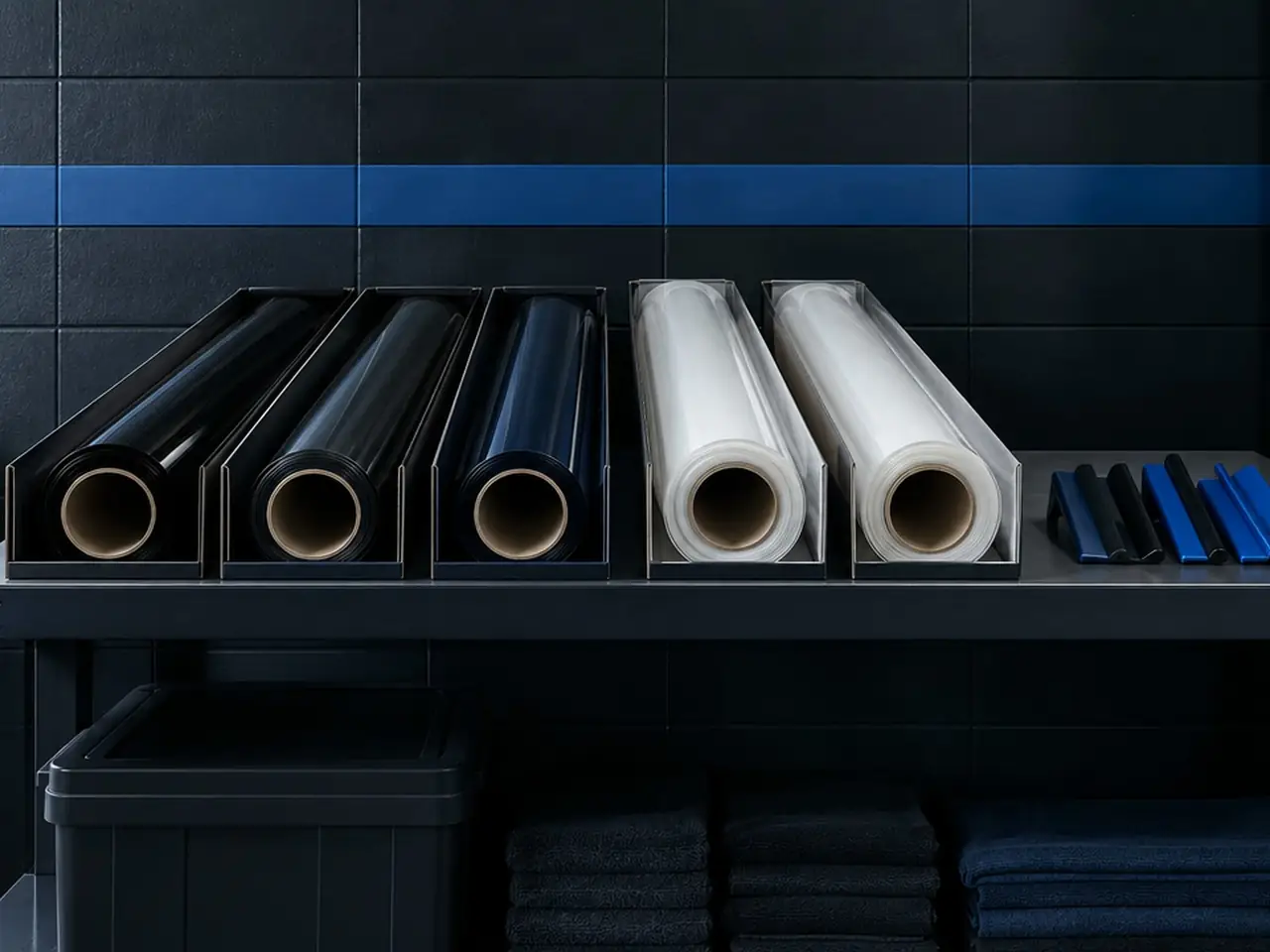
What add-on film types are worth considering?
Add-ons follow the jobs your customers ask about. Each uses the same plotter and many of the same tools.
Glacier's window film is ceramic-only and non-dyed. This guide does not describe architectural, privacy, security, safety or anti-graffiti film as ceramic; see each product page for what the line is.
- Architectural film for commercial and residential flat glass.
- Privacy film for frosted, gradient and patterned looks.
- Security and safety film to hold broken glass together.
- Perforated film for printable one-way-vision graphics, mainly for sign shops.
Should a tint shop stock PPF too?
PPF is a separate install skill and a separate bay routine, so add it when you have installers ready for it. Glacier's PPF is Iceberg for gloss and clear, and Blizzard for satin.
Glacier Guard is windshield protection film. It sits beside PPF but serves glass rather than paint.
What is the stocking approach for a new shop versus an established shop?
| Name | New shop | Established shop |
|---|---|---|
| Starting point | The vehicles and customers you expect to see first | Your own sales and reorder history |
| Film lines | One ceramic line that fits your customer mix, with a spread of shade categories | Review which lines and shades sell; add or trim from the data |
| Add-ons | Wait until the core automotive work is steady | Add one new film type at a time and test it first |
| Review | After the first few jobs, adjust shades to real demand | Set reorder points and revisit them each cycle |
| Support | Ask your Glacier rep about availability and timing for your order | Ask your Glacier rep about availability and timing for your order |
How do I build a stock list step by step?
Keep a short log of requests you could not fill: the shade, the window position and the vehicle. After a few weeks the log shows whether you are missing a grade, a shade category or a whole film type, and it is a more honest guide than a hunch. Count requests for shades your local rules forbid separately, since those are not a gap. Review the log each time you plan a reorder, then add one shade or one film type at a time.
- 1. Write down the customer types you serve: daily drivers, fleets, homes, storefronts, enthusiasts.
- 2. Check local tint rules for each window position before choosing shades.
- 3. Pick the ceramic line or lines that fit those customers, and compare the spec tables.
- 4. Choose shades by category and keep your most-used ones reliably available.
- 5. Add architectural, privacy, security or PPF only when you have the install skills and demand.
- 6. Test samples before committing to any new roll.
What should I ask a Glacier rep about stocking?
Ask your Glacier rep about availability and timing for your order, how to get samples and which line suits your customers.
Glacier sells wholesale to tint shops, installers and dealers and ships nationwide. Ask your Glacier rep for the warranty terms on each automotive film line.
If you are choosing between customer segments rather than shades, choose Window film for homes, commercial and auto: what a shop should stock, and use How many film lines should a tint shop carry? when the question is how many ceramic lines to run.
Related guides on this site include the tint shop supplier guide to film and tools and window tint laws by state.
In this guide
- Which film types should a tint shop stock for each customer need?
- How do Glacier's three ceramic lines differ?
- How do I choose shades by VLT category?
- What add-on film types are worth considering?
- Should a tint shop stock PPF too?
- What is the stocking approach for a new shop versus an established shop?
- How do I build a stock list step by step?
- What should I ask a Glacier rep about stocking?
Quick answers
12 questions. Select one to open it.
What types of window film should a new tint shop stock?
Start with ceramic automotive window film in the shade categories your local rules and customers call for, then add architectural, privacy, security or paint protection film as demand and install skills grow.
Is ceramic window film worth stocking over dyed or carbon film?
Ceramic film uses ceramic particles rather than dye or carbon, with no metal layer, so it avoids dye fade and metal signal concerns. Glacier's film is ceramic only and non-dyed. See the ceramic vs carbon vs dyed guide for the full comparison.
What window film options suit automotive shops?
It depends on the customers. Glacier's automotive options are three ceramic lines, Premium Ceramic, Ceramic Plus and Ceramic Ultimate Plus, which differ by grade and spec table. Ask a Glacier rep which suits your shop.
How do I choose which film lines to stock?
Start from your customer mix, then compare the lines in their spec tables. Ask your Glacier rep which line suits your customers.
What is nano ceramic window film and who sells it to shops?
Nano ceramic film uses very small ceramic particles in place of dye, with no metal layer. Glacier's window film is ceramic-only and sells it wholesale to tint shops, installers and dealers.
What roll widths do window tint shops usually buy?
It depends on the vehicles and glass the shop sees. Ask your Glacier rep for roll widths, and a rep can help match widths to your work.
How do I decide what film to buy first for a new shop?
Base it on the vehicles and customers you expect to see and the shades you will use most. Ask your Glacier rep about availability and timing for your order.
What window film brands should a new tint shop carry?
Choose by consistency, roll quality, shade availability, spec sheets and support rather than by name alone. The supplier comparison guide gives a scorecard. Glacier supplies Premium Ceramic, Ceramic Plus and Ceramic Ultimate Plus.
How do I add PPF to an existing tint shop?
Treat it as a new service: train installers, set up a clean bay routine and start with one finish. Glacier's PPF is Iceberg, gloss and clear, and Blizzard, satin. See the PPF installation guide.
How do I add commercial and architectural film to an automotive tint shop?
Add it as a second service line. Learn flat-glass prep and measuring, check what the glass allows, and test samples first. Glacier supplies architectural, privacy, security and safety film to shops and installers.
Which Glacier ceramic line has no lightest grade?
Premium Ceramic has four grades and no lightest grade. Ceramic Plus and Ceramic Ultimate Plus each have five grades, including a lighter grade. Check each line's spec table against the shades your local rules allow on front windows.
Why should a tint shop track turned-away requests?
A log of requests you could not fill shows which shade, window position or film type is missing, so you add what customers actually ask for. Keep requests for shades your local rules forbid in a separate column, because they are not gaps.
Choosing film for your shop? Apply for a wholesale account.