Window tint percentages explained: how to read VLT rules
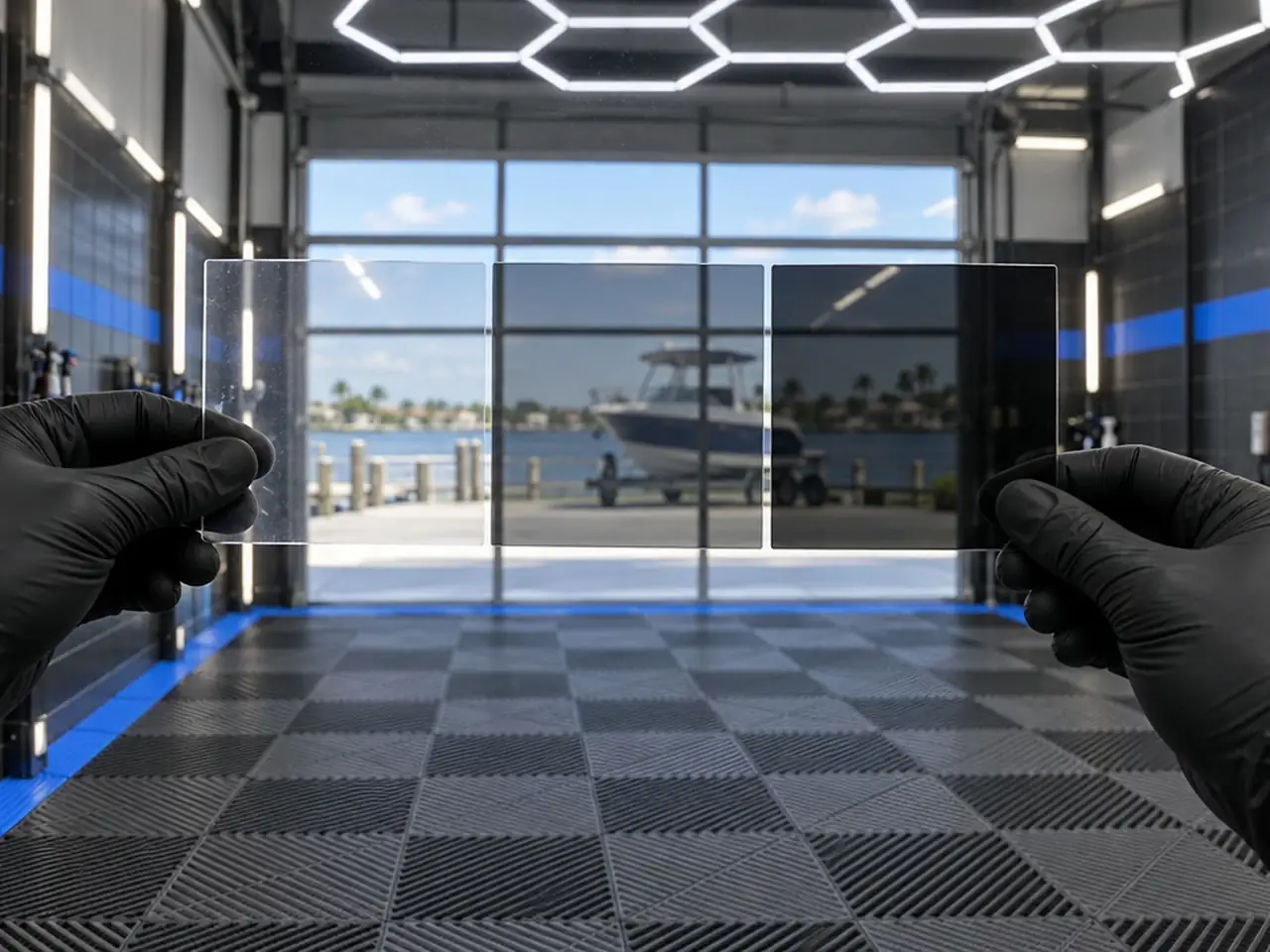
Window tint percentage is VLT, visible light transmission: the share of visible light that passes through the glass and film together. A lower number is darker. Each state sets its own VLT limits by window position, and front side windows are usually the strictest. This guide is general information, so check your state's current rules.
What does a tint percentage (VLT) mean?
VLT stands for visible light transmission. It is the percentage of visible light that gets through. Some rules are written for glass and film combined, while a film's spec sheet may list the film alone.
Lower VLT means less light passes through, so the window looks darker. A higher number is lighter. When a shop or a statute says "tint percentage", it almost always means VLT.
- VLT is about visible light only. It does not describe heat, glare or UV performance.
- Two films with the same VLT can reject different amounts of heat. Look at the spec sheet for heat numbers.
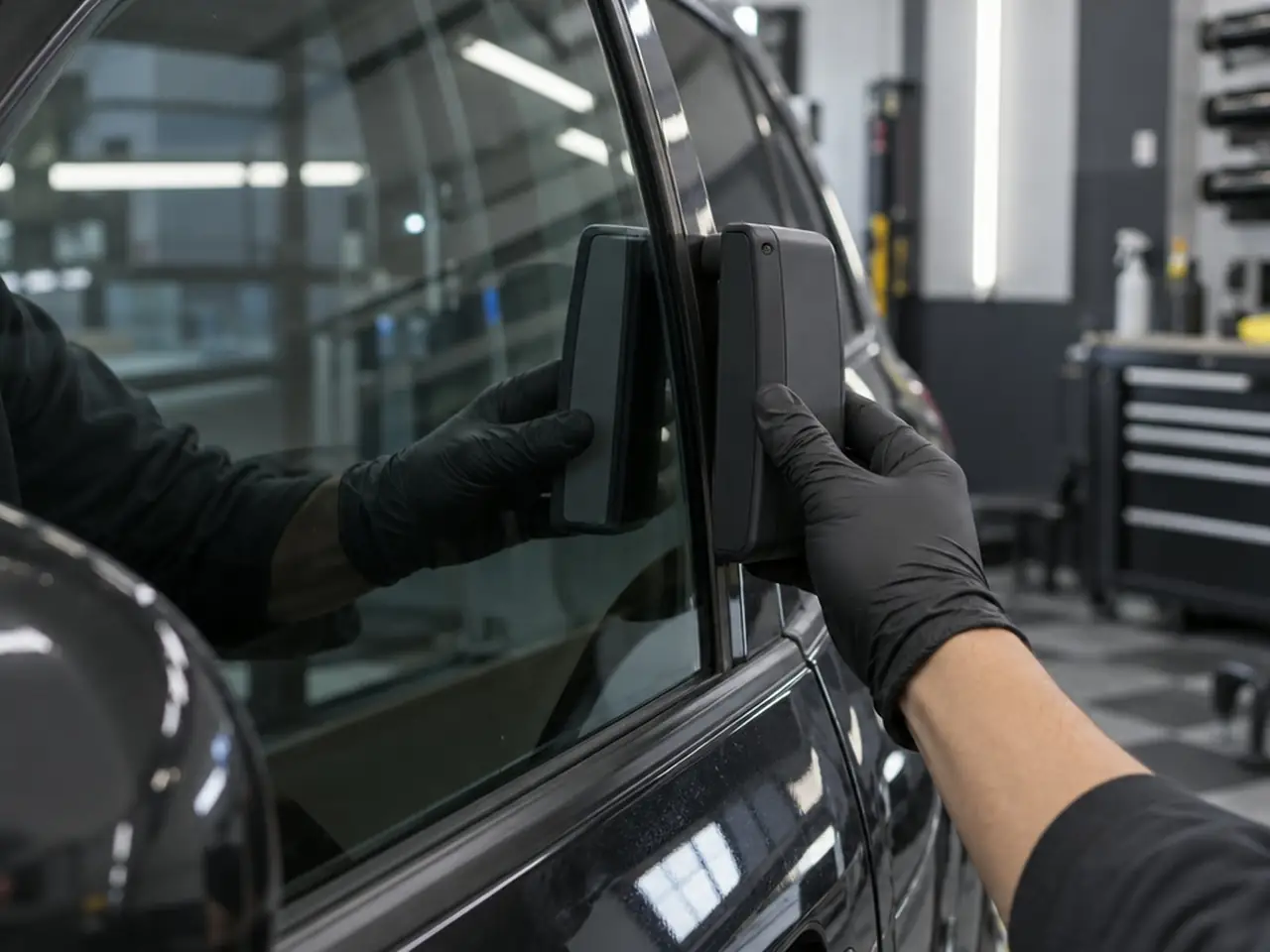
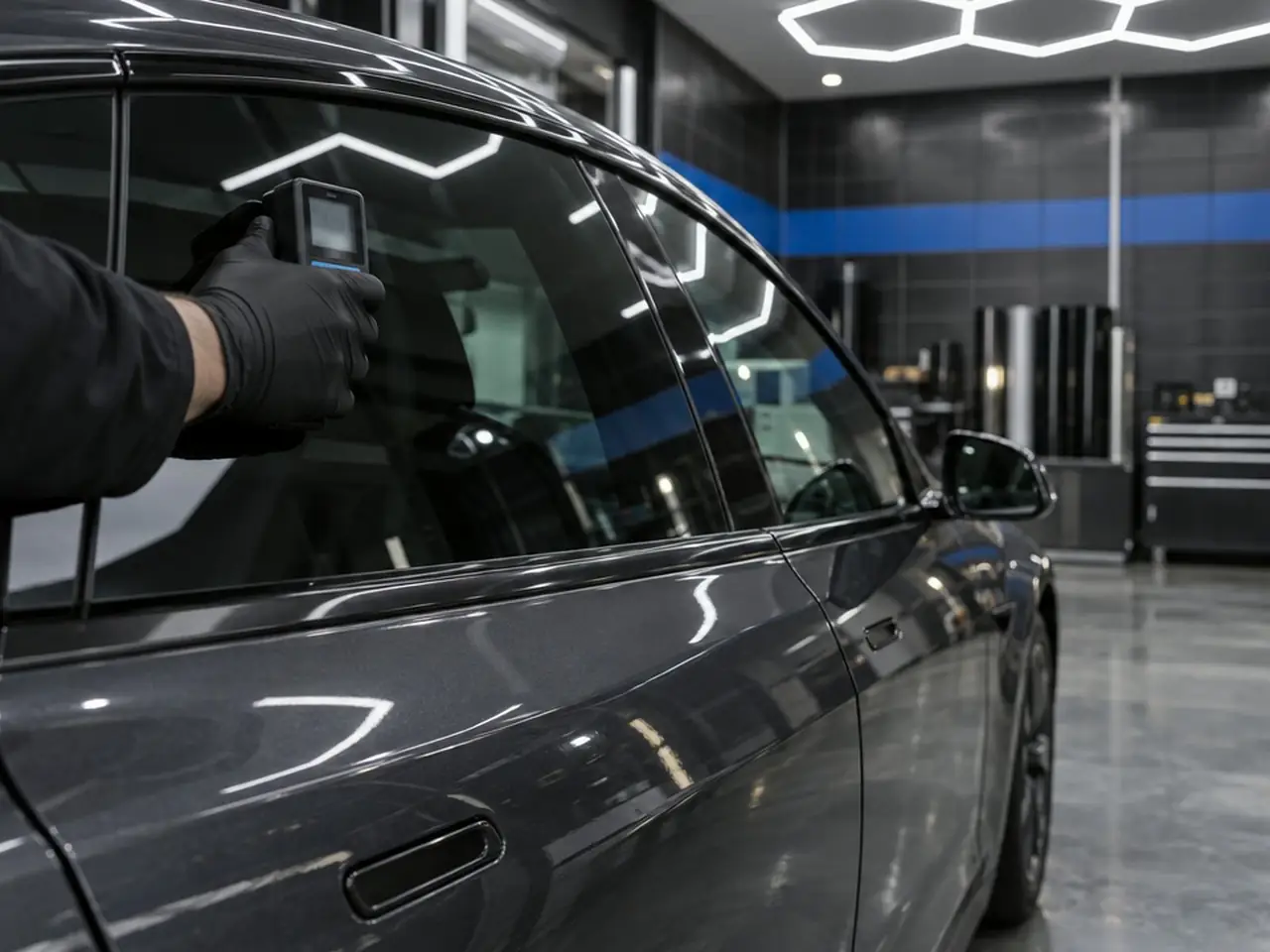
- VLT can be measured on a finished window with a handheld meter, which is why rules use it.
Why do tint laws set different limits for different windows?
Rules are usually strictest where the driver needs a clear view and where an officer needs to see in. Rules are usually looser behind the driver. Read the rule one window at a time.
| Window | Where it is | What a state rule usually addresses |
|---|---|---|
| Front side | Driver and front passenger doors | A minimum VLT, often the strictest limit on the vehicle |
| Back side | Windows behind the driver | A separate VLT, sometimes darker, sometimes different for SUVs, vans and trucks |
| Rear window | Back glass | A VLT, sometimes with a requirement for two outside mirrors |
| Windshield | Front glass | Varies a lot by state; check your state page |
How are front side windows regulated?
Front side windows carry the limit most people look up. Most states set a minimum VLT for these windows. A few states allow only narrow clear film types.
Because the range between states is wide, a shade that is legal in one state may be illegal in the next. Use the state page, not a rule of thumb.
What about back side and rear windows?
Many states allow darker film behind the driver than in front. Some states apply the same limit to every window. Some split the rule by vehicle class, so a sedan and an SUV, van or truck can have different limits on the same window position.
If a state allows a darker rear window, it may require outside mirrors on both sides. Check for that line in the rule.
How are windshields regulated?
Windshield rules vary a lot by state: some allow a strip at the top (defined by a distance, a seat-height measure, a shade band or the AS-1 line), some allow only high-VLT film, and some allow none. Check your state page. Some states also bar red or amber film in a strip.
If you see "AS-1 line" in a rule, look for the small marking in the upper corner of the glass.
What is a reflectivity limit?
Many states also cap how mirror-like the film can be, expressed as a maximum percentage of reflectance. Reflectivity is separate from VLT. A film can be inside the VLT limit and still fail the reflectance limit.
Some states also restrict colors. Red and amber are the usual ones.
Read both numbers on a film's spec sheet before you promise a shade. VLT and reflectance are listed separately, and two films at the same shade can differ in how mirror-like they look from outside. In a state that caps reflectance, a film that fits the VLT limit can still fail the second one, so compare the reflectance figure across the films you are considering. If a spec sheet does not list it, ask before the film goes on the window. A shop that checks both numbers avoids a re-do on a finished car.
How does VLT combine with factory glass?
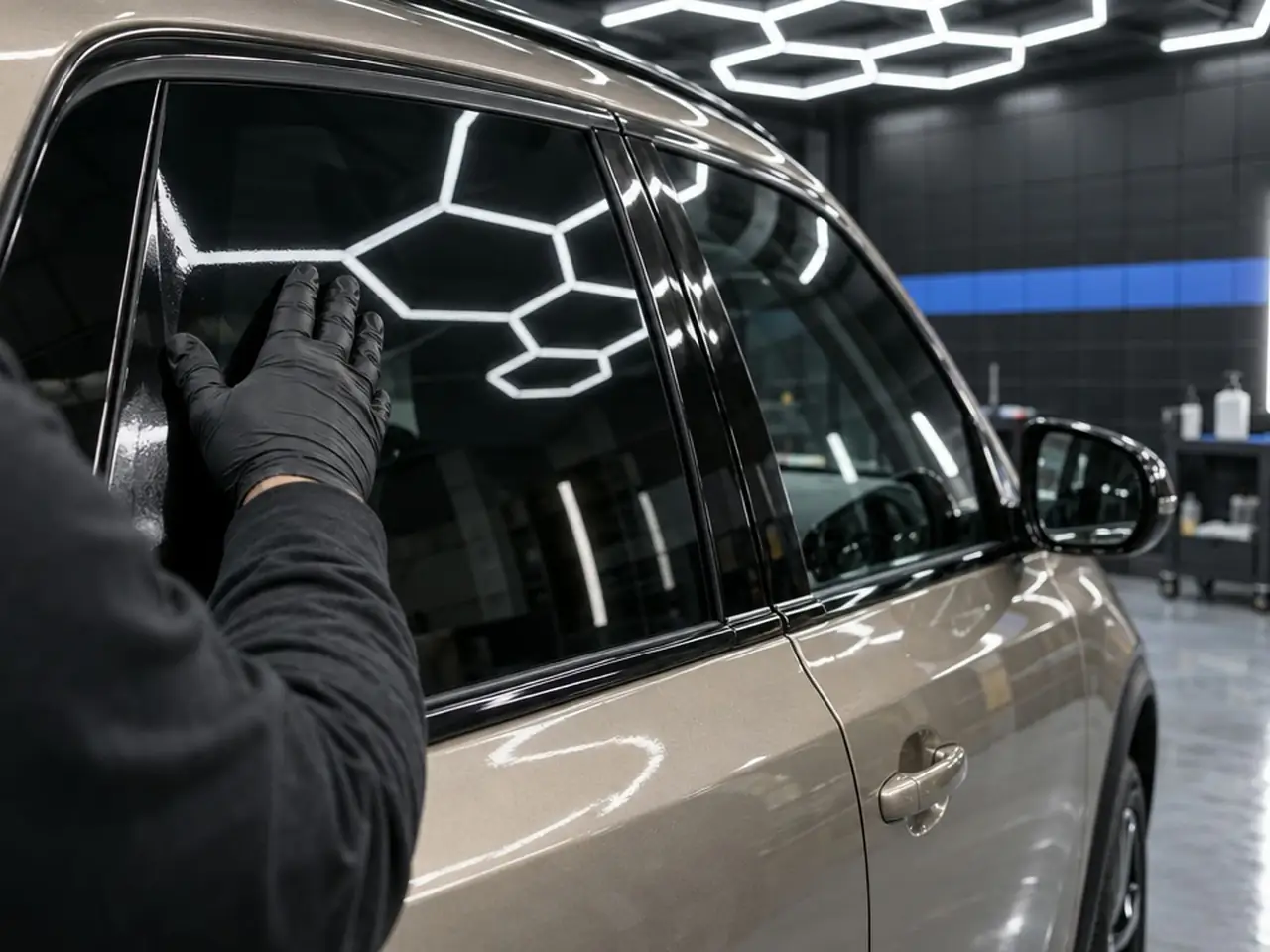
Most vehicle glass is not perfectly clear. Factory glass already passes less than all of the visible light, and rear privacy glass is darker still. Film adds to that. The meter reads the whole stack.
- 1. Treat VLT as a share. The film passes some fraction of the light and the glass passes some fraction of what reaches it.
- 2. The combined VLT is lower than either the film or the glass alone.
- 3. Factory privacy glass is already dark, so film on it makes a window darker than the same film on clear glass.
- 4. Some rules are written for glass and film combined; check how your state measures it.
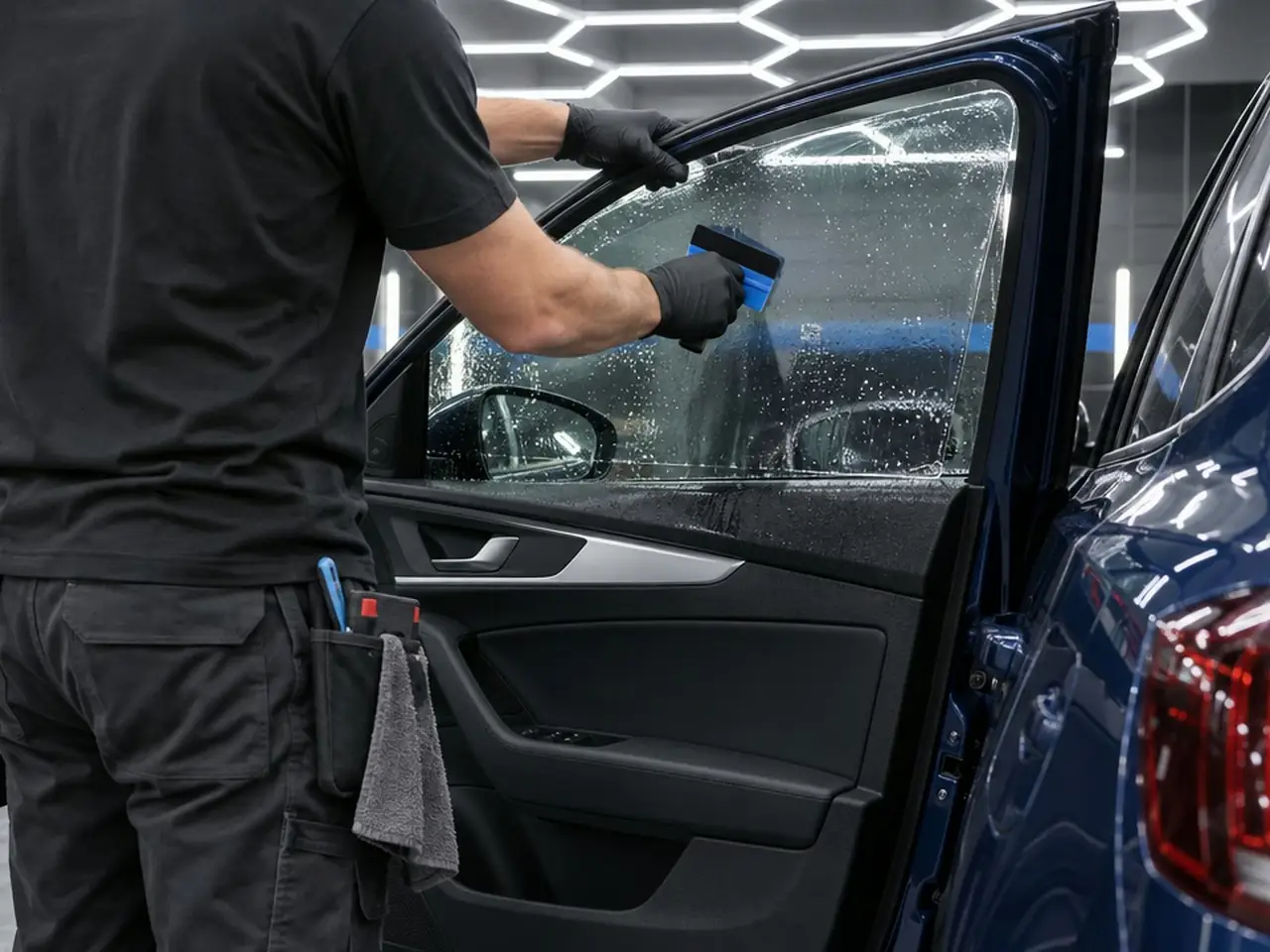
- 5. Ask your shop to meter the window before and after. A meter reading beats a calculation.
What is a medical exemption?
Many states let a driver with a documented medical need use darker tint than the general rule. The state sets who can certify the need, what paperwork to carry, and sometimes whether a decal or certificate is issued. Some states do not offer an exemption, or the rule is unclear.
A shop will usually ask for the paperwork before installing under an exemption.
What else should I look for in a state's rule?
- Vehicle class: sedan versus SUV, van, truck or multipurpose vehicle.
- Measurement tolerance: some states allow a small margin for meter error.
- Certificates and stickers: some states require an installer label or a certificate in the vehicle.
- Exempt vehicles: some states exempt certain vehicle types, such as limousines or buses.
- Penalties: fines and fix-it requirements differ by state.
How do I check my state's rule?
Open the state page, read each window line, then confirm against the official source linked there. Laws change, so check your state's current rules before you choose a shade. The state pages show the date they were compiled.
Read the sense of each limit. A minimum VLT means the glass and film together must pass at least that share of light, so a higher number is lighter and a lower number is darker than allowed. People often flip this and assume a minimum means a cap. Then look for a tolerance line: some states let a small margin for meter error, and the page may note it separately. Write the limit and which way it points on the work order beside the shade you choose.
- 1. Find your state in the state tint laws list.
- 2. Read front, back, rear and windshield separately.
- 3. Check reflectivity, colors, medical exemption and certificate lines.
- 4. Open the official source link and confirm the current wording.
- 5. Ask your tint shop which shade it will install and whether it meters the finished window.
Where does Glacier fit in?
Glacier's window film is ceramic-only and non-dyed, and Glacier sells it wholesale to tint shops, installers and dealers. It does not sell to drivers. If you want Glacier film, ask your tint shop for it, or use the dealer finder to see Glacier dealers near you.
For the actual numbers in a given state, choose Window tint laws by state instead of this explainer, and use Windshield Tint Strip Rules by State when the question is only the windshield.
For related reading, see automotive window film rolls, how ceramic and carbon tint differ, the start-a-tint-shop checklist and the tint shop supplier guide to film and tools.
In this guide
- What does a tint percentage (VLT) mean?
- Why do tint laws set different limits for different windows?
- How are front side windows regulated?
- What about back side and rear windows?
- How are windshields regulated?
- What is a reflectivity limit?
- How does VLT combine with factory glass?
- What is a medical exemption?
- What else should I look for in a state's rule?
- How do I check my state's rule?
- Where does Glacier fit in?
Quick answers
12 questions. Select one to open it.
What does tint percentage mean?
Tint percentage means VLT, visible light transmission: the share of visible light that passes through the glass and film together. A lower percentage is darker. It is measured with a meter and is the number most state laws use.
Is a lower tint percentage darker?
Yes. A lower VLT lets less light through, so the window looks darker. A higher VLT lets more light through and looks lighter.
Why are front windows regulated more than back windows?
Front side windows affect the driver's view and an officer's ability to see into the vehicle, so states usually set stricter limits there. Many states allow darker film on rear windows. Rules vary, so read each window's line in your state's rule.
Does window tint stack with factory glass?
Yes. Factory glass already passes less than all of the light, and film reduces it further. The combined VLT is lower than either alone. A meter reading is the reliable check.
Can I tint the windshield?
Windshield rules vary a lot by state: some allow a strip at the top, some allow only high-VLT film, and some allow none. Check your state page.
What is the AS-1 line?
The AS-1 line is a marking near the top of the windshield. Some state rules allow tint above it, so installers use it to place a windshield strip.
What is a reflectivity limit on window tint?
It is a cap on how mirror-like the film can be, given as a maximum reflectance percentage. A film can meet the VLT limit and still fail the reflectance limit, so check both.
Do medical exemptions let me use darker tint?
In many states, yes, with documentation from a qualified professional. The paperwork, who can certify it and whether a decal is issued vary by state, and some states have no exemption.
Do SUV and truck rules differ from car rules?
Often. Many states apply a different limit to SUVs, vans, trucks and multipurpose vehicles, especially behind the driver. Read the state page for your vehicle class.
Where do I find my state's tint law?
Use the state tint laws pages on this site, which list each state's rules with a link to the official source and the date compiled. Confirm against the official source, because laws change.
Does a minimum VLT in a tint law mean I can go darker?
No. A minimum VLT means the window must pass at least that share of light, so darker than the minimum is not allowed. A higher number is lighter and meets the rule. Read each window's line on your state page and note which way it points.
Can two films with the same VLT have different reflectance?
They can. VLT and reflectance are separate properties, so two films at the same shade can look different from outside. In a state that caps reflectance, compare that figure on each spec sheet as well as the VLT.
Need film for your shop? Apply for a wholesale account.