
Plastic razor blades for tint and PPF installs
Plastic razor blades, also sold as plastic scraper blades, are what many installers choose when a steel edge could scar tinted glass or the paint around the work. They lift film, decals and adhesive residue. Glacier lists a 100-pack of 1 inch plastic scraper blades for tint shops, PPF installers and detailers.
When do plastic razor blades beat metal?
Plastic is softer than steel, so a plastic edge is less likely to mark glass or paint. Steel often holds a sharper edge on hard residue. That is why many shops keep both and choose job by job. This is general practice, not a Glacier procedure.
| Situation | Usually reach for | Why |
|---|---|---|
| Tinted glass | Plastic | A steel edge can scar tinted glass, so plastic is the safer first pick |
| Rear window with defroster lines | Plastic | Steel blades should stay off the defroster lines |
| Edges of paint or trim near the work | Plastic | A steel edge can mark painted surfaces |
| Hard, stuck-on residue on plain glass | Steel, if the surface allows | A sharper edge can lift stubborn residue that plastic leaves behind |
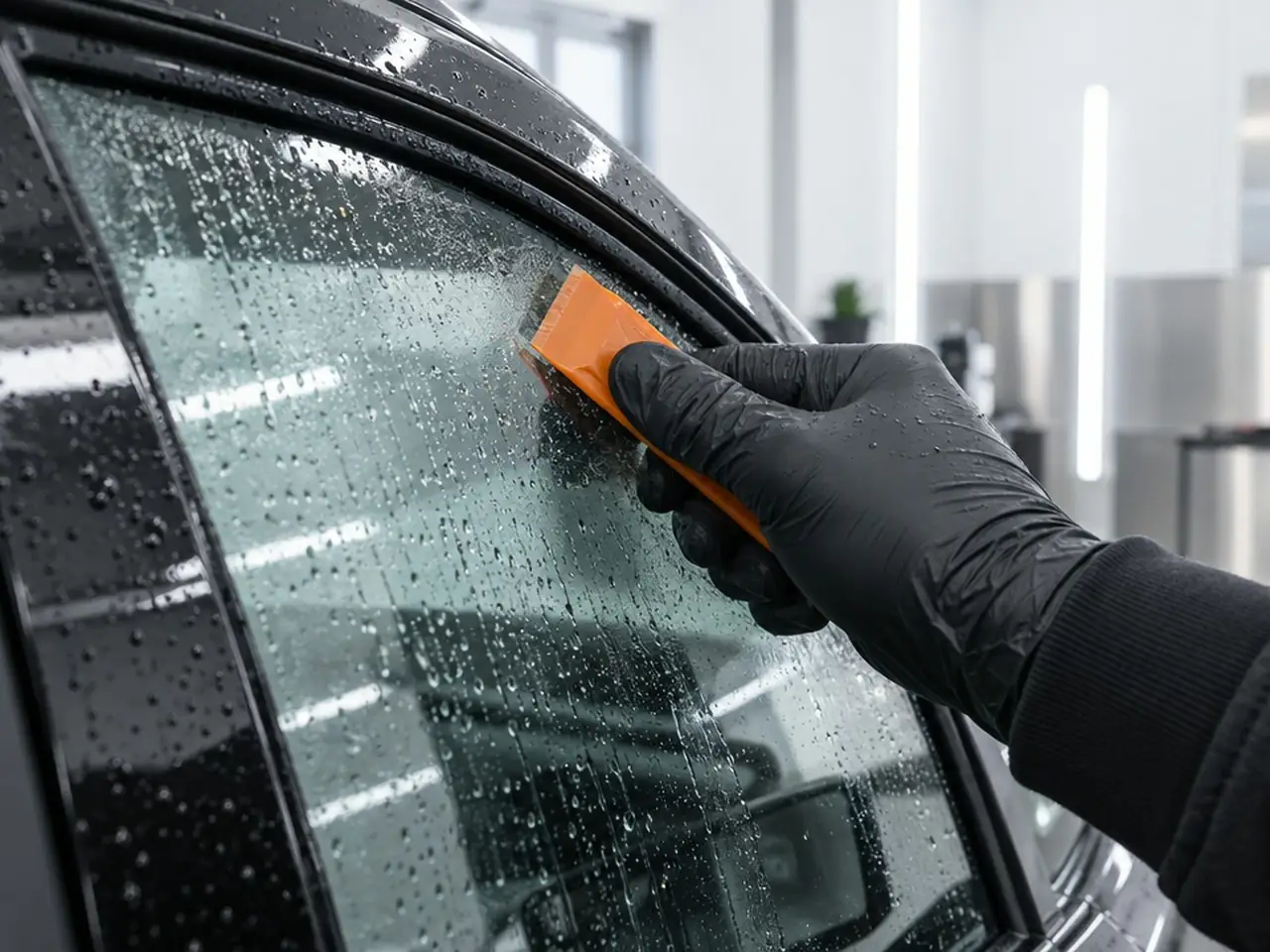
How do you use a plastic razor blade without marking the glass?
Plastic lowers the risk of marking a surface. It does not remove it. Follow the same routine you would with steel.
- 1. Load a plastic blade in the handle and check it is held firmly.
- 2. Wet the surface first and scrape gently at a shallow angle.
- 3. Test one inconspicuous patch before working a delicate surface.
- 4. Grit caught under the edge can still scratch, so keep both the glass and the blade clean and wet.
- 5. Replace the blade when the edge stops lifting residue or is nicked.
- 6. Drop spent blades into a closed container, or follow your shop's disposal rules.
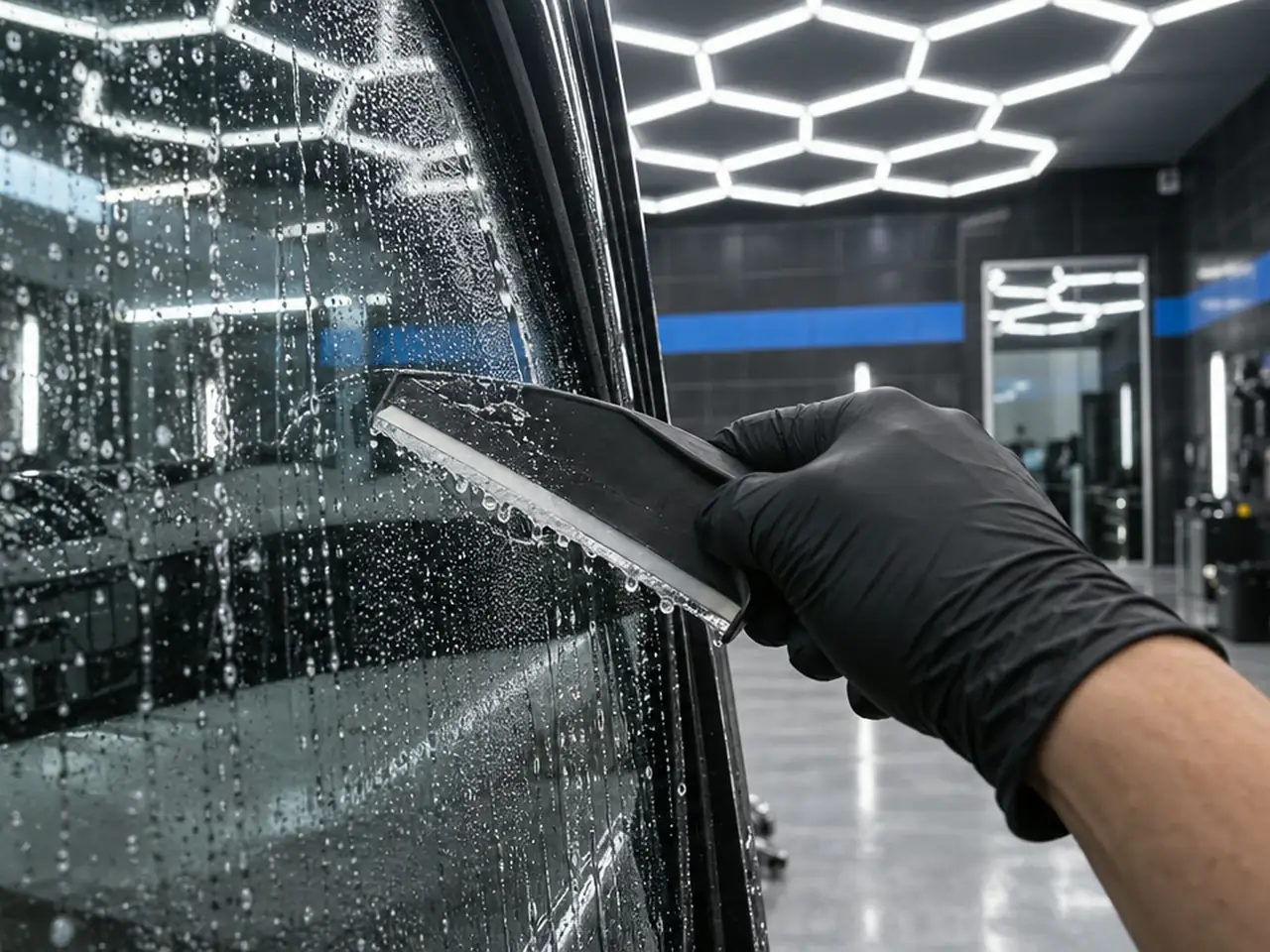
What plastic scraper tools does Glacier list?
The 1 Inch Plastic Scraper Blades are a 100-pack of orange plastic 1 inch replacement blades. The product page lists the 1 Inch Scraper Handle as the handle they pair with. The steel 1 Inch Scraper Blades use the same handle, so a shop can pick steel or plastic to suit each job.
Glacier's scrapers and blades page also lists two plastic scrapers: a wide one and a flexible one.
| Tool | What it is | Page |
|---|---|---|
| 1 Inch Plastic Scraper Blades | 100-pack of plastic 1 inch replacement blades | Installation tools 1in plastic scraper blades 100pack |
| 1 Inch Scraper Handle | Handle for 1 inch replacement blades | Installation tools 1in scraper handle |
| 1 Inch Scraper Blades | 100-pack of replacement blades | Installation tools 1in scraper blades 100pack |
| Bulldozer | Wide plastic scraper | Installation tools bulldozer |
| Gator | Flexible plastic scraper | Installation tools gator |
| Blade Disposal Container | Dedicated spent-blade container | Installation tools blade disposal container |
What mistakes mark glass even when you use plastic?
Most marks come from technique, not from the blade material.
The glass prep guide covers the full routine for cleaning glass before film goes on.
- Scraping dry glass instead of wetting it first.
- Pressing hard or holding the blade at a steep angle.
- Dragging a blade that has picked up grit or dust.
- Reusing a nicked blade because it still looks fine.
- Skipping a test on a small hidden spot before the first pass.
How often should a plastic blade be replaced?
Replace it as soon as it drags, skips, leaves a line or the edge is nicked. A dull blade can scratch glass and tear film, and a plastic blade that picks up grit can mark the surface it was meant to protect. This is general practice, not a Glacier rule.
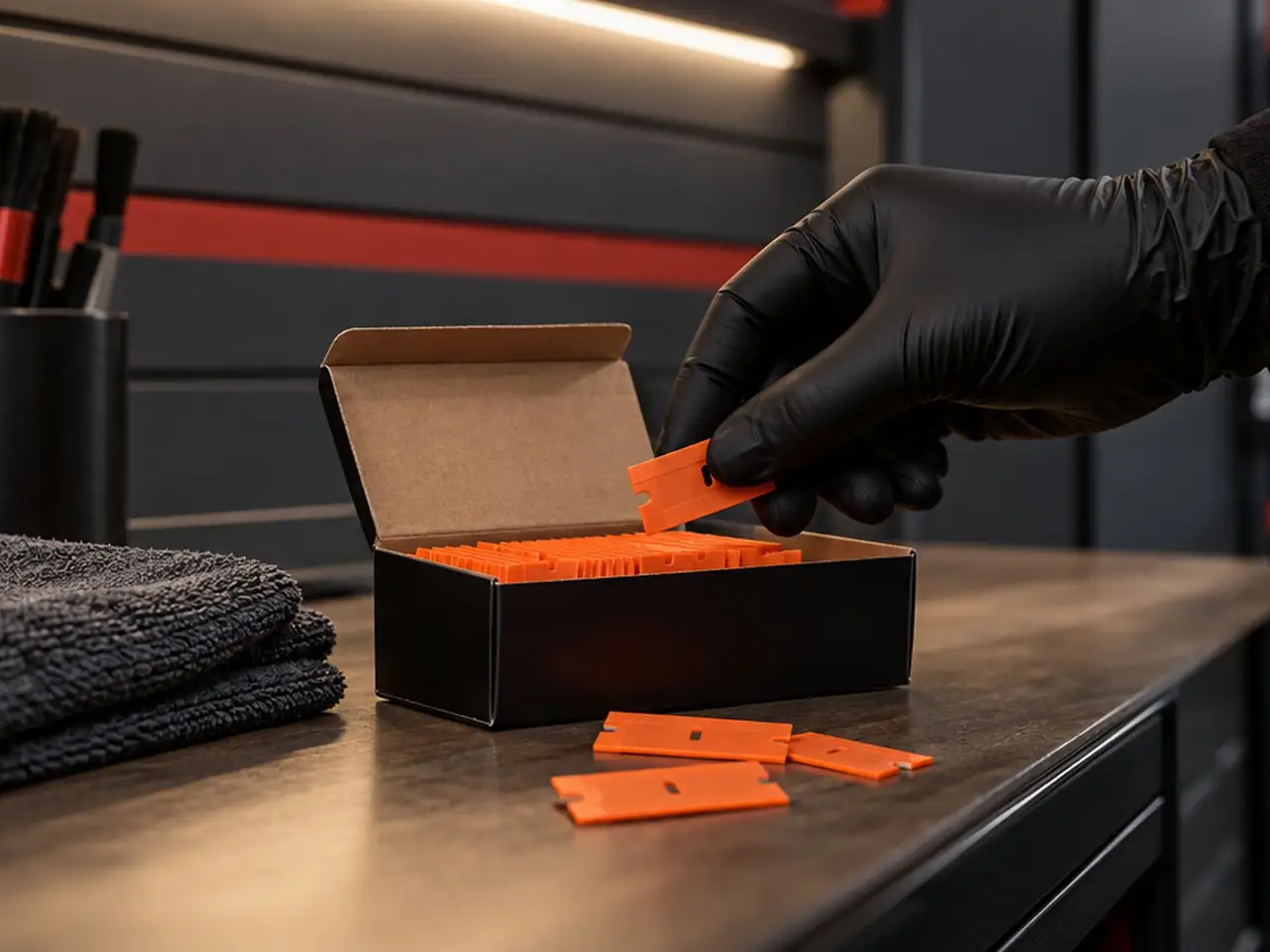
What should you check before you order plastic blades?
A short check keeps the wrong blade off the wrong surface.
- 1. Confirm you have the 1 Inch Scraper Handle, since the blades pair with it.
- 2. Decide which jobs get plastic and which get steel, and write it down for the bay.
- 3. Test on a small hidden area of delicate glass or paint before the first real job.
- 4. Plan where spent blades go before the first blade wears out.
- 5. Ask your Glacier rep about pack sizes, availability and timing.
Where do tint shops get plastic scraper blades?
Glacier sells wholesale to tint shops, installers and dealers. Plastic scraper blades suit tint shops working on tinted glass, detailers, installers removing residue gently and dealers.
Glacier ships nationwide. Ask your Glacier rep about availability and timing for your order.
Related guides on this site include tool sets for window tint and flat glass film, the tint shop equipment checklist, modular shop flooring and the floor planner.
In this guide
- When do plastic razor blades beat metal?
- How do you use a plastic razor blade without marking the glass?
- What plastic scraper tools does Glacier list?
- What mistakes mark glass even when you use plastic?
- How often should a plastic blade be replaced?
- What should you check before you order plastic blades?
- Where do tint shops get plastic scraper blades?
Quick answers
9 questions. Select one to open it.
Are plastic razor blades safe on window tint?
Plastic is gentler than steel but not risk-free. Plastic can still be dragged across grit, so keep the glass and blade wet and clean and test an inconspicuous patch first. This is general practice, not a Glacier procedure.
Can I use plastic razor blades on car paint?
A plastic edge is the usual first choice near paint, because a steel edge can mark it. Keep the surface wet and clean, use light pressure and test a hidden spot first. Glacier also lists a flexible plastic scraper called the Gator.
Do plastic blades work as well as steel?
They lift film, decals and adhesive on many jobs, but steel often holds a sharper edge on hard, stuck-on residue. Many shops keep both blade types and let the installer choose per job.
How many blades come in Glacier's plastic pack?
The 1 Inch Plastic Scraper Blades product page lists a 100-pack. Ask your Glacier rep about other pack sizes, availability and timing.
What handle do Glacier's plastic blades go in?
The product page lists the 1 Inch Scraper Handle. The steel 1 Inch Scraper Blades use the same handle, so one handle can carry either blade.
Can a plastic blade scratch glass?
Yes, if grit is trapped under the edge, the glass is dry or the blade is nicked. Wet the glass, keep the blade clean and replace it when the edge is worn.
Can I use plastic blades near rear window defroster lines?
Keep steel blades off defroster lines. Plastic is the usual choice there. Wet the glass, use light pressure and stop if the blade catches.
How should I dispose of used blades?
Drop spent blades into a closed container, or follow your shop's disposal rules. Glacier lists a Blade Disposal Container that keeps loose blades out of trash bags, pockets and floor mats.
Who can buy Glacier plastic scraper blades?
Tint shops, PPF installers, detailers and dealers can apply for a wholesale account. Glacier does not sell to drivers or homeowners.
Ready to order? Apply for a wholesale account.